
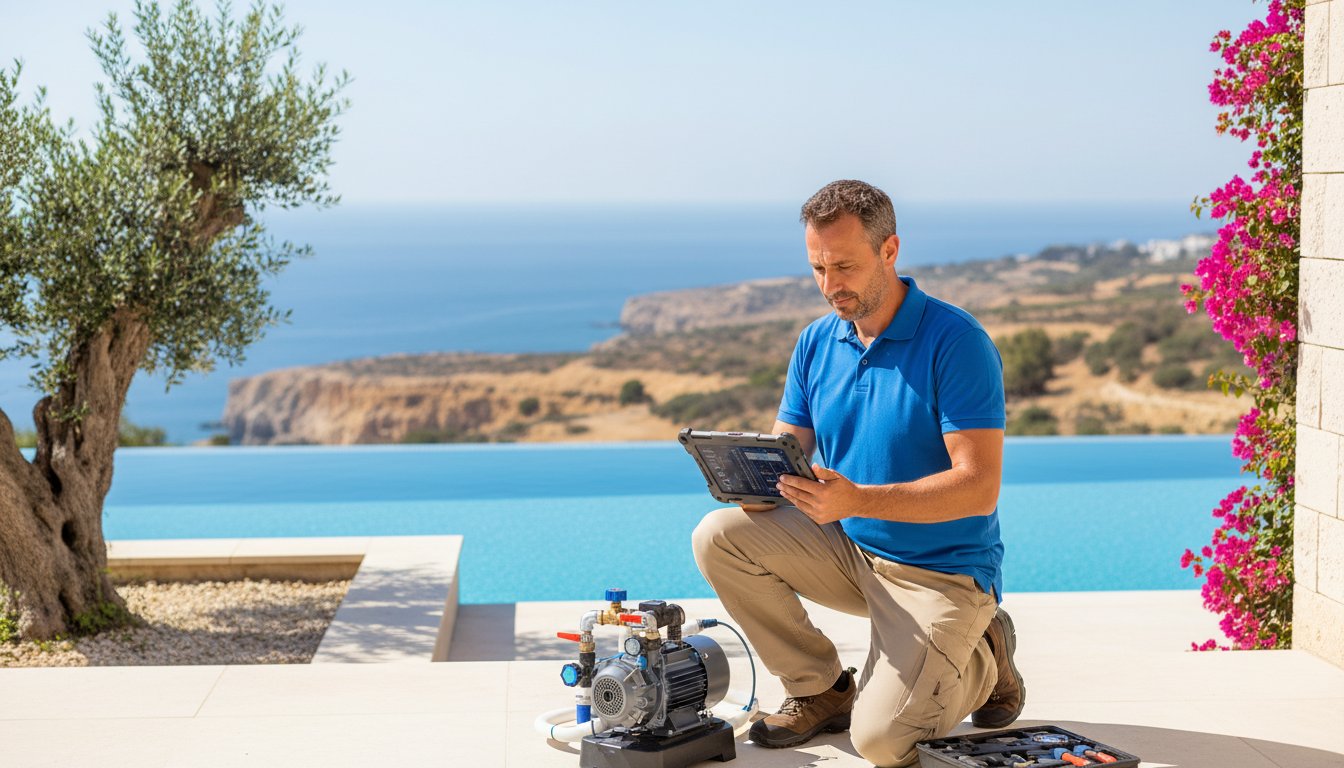
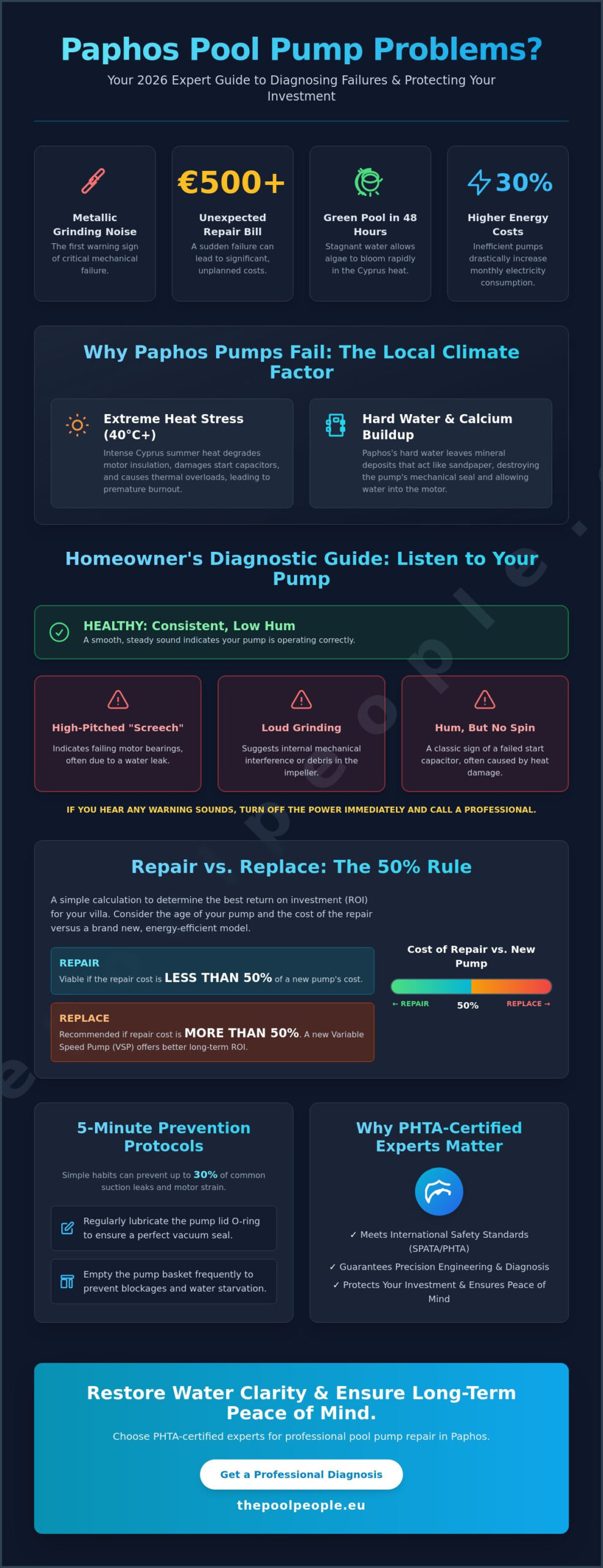
Imagine walking onto your sun-drenched terrace in Coral Bay only to have the tranquil Paphos morning shattered by a metallic grinding noise from your pump room. This sound is often the first warning sign of a mechanical failure that can lead to a €500 repair bill or a stagnant green pool within 48 hours. When you require the professional pool pump repair paphos families trust, you need an engineering solution that addresses the root cause of the noise and the high electricity costs. Local energy audits show that an inefficient pump can increase your monthly consumption by 30% compared to a calibrated system.
We understand that your swimming pool is the heart of your Mediterranean home. It’s frustrating when technical failures and rising utility bills disrupt your lifestyle. This 2026 expert guide provides the roadmap to identify and resolve pump failures using international SPATA standards. You’ll learn how our certified team restores water clarity and ensures long-term peace of mind through precision engineering. We’ll preview the latest diagnostic tools and energy-efficient upgrades that keep your pool inviting while protecting your investment.
Key Takeaways
- Understand how extreme Cyprus summer temperatures impact motor insulation and learn to identify critical warning signs like the “Screech of Death.”
- Master the “50% Rule” to determine when a repair is viable or if upgrading to a high-efficiency Variable Speed Pump offers a better ROI for your villa.
- Discover simple five-minute maintenance protocols, such as O-ring lubrication, that can prevent up to 30% of common suction leaks and motor strain.
- Ensure your circulation system meets international safety standards by choosing PHTA-certified experts for professional pool pump repair in Paphos.
- Gain total peace of mind by learning how elite engineering standards protect your investment and guarantee a crystal-clear, inviting swimming environment.
Why Pool Pumps Fail in Paphos: The Local Climate Factor
Your pool pump serves as the heart of your Paphos villa’s pool filtration and re-circulation system, working tirelessly to maintain water clarity and hygiene. In the demanding Mediterranean environment, this component faces environmental pressures that differ significantly from northern European climates. A pump failure isn’t just a mechanical inconvenience; it’s a direct threat to your swimming environment. When the “heart” stops beating, the chemical balance collapses rapidly, making pool pump repair paphos a high-priority service for any property owner.
The Professionals at The Pool People understand that Paphos pumps operate under extreme stress. During the peak of summer, ambient temperatures frequently exceed 40°C, forcing motors to run hotter for longer cycles. This constant thermal load degrades internal components, leading to a loss of efficiency or total system failure. If your pump stops, the risk of a “Green Pool” is immediate. In the Cyprus heat, algae can take hold within 24 to 48 hours of stagnant water, turning a minor mechanical issue into an expensive restoration project. Our PHTA-certified experts prioritize rapid intervention to provide the peace of mind that your investment remains protected.
Heat Stress and Motor Burnout
Cyprus summers are brutal on electrical components. High ambient temperatures often trigger thermal overload switches, a safety mechanism designed to prevent the motor from catching fire. While this protects the property, repeated tripping indicates that the motor insulation is failing. Many Paphos pump rooms lack adequate ventilation, trapping hot air and accelerating the degradation of the start capacitor. This small component is responsible for kick-starting the motor; once it fails due to heat, the pump will merely hum until the windings burn out. We also observe significant UV damage to external pump housings and plastic lids. Over time, the sun makes these components brittle, leading to air leaks that compromise the entire vacuum system. High temperatures also thin the grease in the motor bearings, causing the grinding noise often heard before a catastrophic seizure.
Calcium Buildup and Mechanical Seals
Paphos is known for its hard water, which contains high levels of dissolved calcium and minerals. As water evaporates or leaks slightly around the pump shaft, these minerals crystallize into hard deposits. These crystals act like sandpaper against the mechanical seal, which is the only barrier preventing water from entering the electrical motor. What begins as a minor, barely visible drip quickly evolves. If left unaddressed, the water reaches the front bearing, causing it to rust and eventually short-circuit the motor. It’s a common industry reality that pool leak detection in Paphos often starts at the pump. Identifying these calcium “crusts” early can save you the cost of a full motor replacement. Our engineering team focuses on identifying these early warning signs during routine checks, ensuring your system remains reliable and safe for your family.
Common Pool Pump Symptoms: A Paphos Homeowner’s Diagnostic Guide
Identifying a failing pump early can save you hundreds of Euros in avoidable motor replacements. In the Mediterranean climate of Cyprus, pool equipment works harder and longer than in northern Europe. When the system begins to struggle, it rarely fails silently. Recognizing these specific auditory and visual red flags is the first step toward a professional pool pump repair paphos service that restores your peace of mind.
Auditory Diagnostics: Listen to Your Pump
Your pump’s sound profile is the most reliable indicator of its internal health. A healthy motor produces a consistent, low-frequency hum. If that sound shifts into a high-pitched “screech of death,” you’re likely hearing bearing failure. This typically occurs when the mechanical shaft seal leaks, allowing chlorinated water to reach the motor’s front bearing. If you hear a loud, rhythmic grinding, it’s often a sign of internal mechanical interference.
Cavitation is another common issue in Paphos installations. It sounds like someone dropped a handful of marbles into the pump basket. This happens when the pump is starved for water, causing vacuum bubbles to implode against the impeller. If you hear this, or a low electric hum where the motor fails to spin, turn the power off immediately. A humming motor usually indicates a failed start capacitor or a seized impeller; leaving it powered on will quickly burn out the copper windings.
Visual Red Flags in the Pump Basket
Visual inspections often reveal the “why” behind a performance drop. The pump basket and lid assembly are the most frequent sites for suction-side air leaks. You should look for:
- Cracked Lids and Perished O-rings: The intense Paphos sun and heat can cause plastic lids to develop hairline fractures. If you see air bubbles dancing under the lid, the seal is compromised.
- Debris Blockages: We frequently find that Paphos gardens with Aleppo pines or bougainvillea cause specific issues. Pine needles are thin enough to bypass the basket and jam the impeller vanes, leading to a total loss of flow.
- Melted Components: If a pump “runs dry” because it lost prime, the internal water temperature can skyrocket. This often melts the plastic threaded heat sinks or the internal diffuser, leading to permanent structural damage.
If your pump loses its prime specifically after a filter backwash, it’s a definitive sign of a suction-side leak or a failing check valve. While modern ENERGY STAR certified pool pump models include protective sensors to prevent dry-run damage, older units require a vigilant eye. If you notice a drop in water pressure or persistent air in your system, seeking a professional pool pump repair paphos assessment can prevent a minor seal leak from becoming a major engineering failure.
Repair vs. Replace: Calculating Your ROI in 2026
Deciding whether to invest in pool pump repair paphos or opt for a complete system overhaul is a critical financial choice for any homeowner in Cyprus. By 2026, the industry standard follows the 50% Rule. If the cost of restoring your current motor exceeds half the price of a brand-new unit, the investment rarely makes sense. Repairing an eight-year-old pump often results in a false economy. These older units lack the hydraulic efficiency of modern systems and frequently suffer from cascading failures where one fixed component puts stress on another aging part.
Our engineers adhere to PHTA industry safety standards to ensure every assessment provides a clear path to long-term reliability. We look beyond the immediate fault to evaluate the total health of your filtration system. Choosing a replacement also unlocks modern warranty protections that aren’t available for refurbished units. Investing in new essential pool equipment in Paphos ensures you’re backed by full manufacturer support, which is vital for maintaining the long-term value of your home.
The Cost of Inefficiency
Old single-speed pumps are notorious energy consumers. In the intense Paphos heat, these motors run at high RPMs constantly, wasting hundreds of Euros annually. Switching to a Variable Speed Pump (VSP) allows the motor to run at lower speeds for longer periods. This transition offers a massive ROI, often paying for the entire installation within 24 months through reduced EAC bills. Modern VSPs are designed for the Mediterranean climate, offering quiet operation and superior filtration performance.
While an aging single-speed pump often costs €85 to €110 per month to operate during the peak Cypriot summer, a modern VSP typically reduces that monthly expenditure to approximately €18.
When Repair is the Right Choice
Repair remains the logical path for minor mechanical issues that don’t compromise the motor’s core integrity. We frequently replace capacitors, mechanical seals, and O-rings to extend a pump’s lifespan by several seasons at a fraction of the cost of a new unit. These targeted fixes are excellent for pumps under five years old that have been well-maintained.
Our diagnostic process involves assessing the overall condition of the wet end versus the dry end. If the plastic housing and impeller (the wet end) are structurally sound, replacing the motor (the dry end) can be a cost-effective middle ground. We maintain a robust inventory of genuine spare parts in the Paphos region for major brands. This local availability ensures that your pool pump repair paphos is completed with components that meet original manufacturer specifications, providing you with true peace of mind.
- Capacitors: Often the culprit when a motor hums but won’t start.
- Mechanical Seals: Essential for preventing water from entering the motor housing.
- O-Rings: Low-cost components that prevent air leaks and priming issues.
Preventative Maintenance: Protecting Your Pump in the Cyprus Heat
Paphos summers regularly see temperatures exceeding 40°C. This intense heat places an extraordinary thermal load on your pool’s circulation system. Maintenance in this climate isn’t about occasional checks; it’s about a disciplined engineering protocol that preserves your investment. By following a structured routine, you can avoid the most common causes of pool pump repair paphos, ensuring your water stays crystal clear during the high-demand July and August peak.
The “Clean Basket” protocol is your first line of defense. A basket restricted by pine needles or debris forces the motor to work harder to pull water, which increases internal operating temperatures. We recommend emptying the pump and skimmer baskets at least twice weekly during the summer. This prevents impeller clogs and reduces the risk of cavitation, a phenomenon where vacuum bubbles implode against the impeller, causing structural pitting and eventual failure.
O-ring health is equally vital. Applying a silicone-based lubricant to the pump lid O-ring every three months is a five-minute task that prevents 30% of all suction-side air leaks. When these seals dry out in the Mediterranean sun, they allow air into the system, leading to loss of prime and motor burnout. Additionally, managing calcium levels is critical. Cyprus has notoriously hard water; by mastering pool water chemistry, you prevent scale from forming on the mechanical seal, which is the primary barrier protecting your motor from water damage.
The Importance of Airflow
Housing your pump in a tightly sealed, unventilated plastic or stone box is a recipe for early failure. Motors generate significant internal heat and require a constant stream of fresh air to stay within safe operating parameters. If your equipment is “suffocating,” consider installing mesh side panels or a dedicated shade structure that blocks direct UV rays without restricting the cooling fan. You should also use a soft brush to clear dust from the motor’s rear cooling fins every month. This simple step prevents heat-soak, a condition where the motor retains enough heat to melt internal wire insulation.
Water Balance and Component Life
Mechanical longevity is directly tied to pH stability. When water becomes acidic (pH below 7.2), it becomes corrosive, eating away at copper heat exchangers and degrading the rubber components within your pump seals. This leads to slow, internal leaks that often go unnoticed until the bearings begin to scream. This is why professional pool maintenance in Paphos always includes a comprehensive pump health audit. We check for moisture trails and salt crystallization around the seal plate to catch minor issues before they require a full pool pump repair paphos service.
Ensure your system is ready for the upcoming season. Book a professional pump health audit with The Pool People today for total peace of mind.
Why PHTA/NSPF Certified Engineering Matters for Your Paphos Pool
When your pool pump fails, the temptation is to call any local handyman. In Paphos, where summer temperatures often exceed 35°C, your circulation system is under immense pressure. At The Pool People, we don’t just fix equipment; we set the standards for the entire island. As certified CPO trainers, our team possesses a level of technical depth that ensures your pool pump repair paphos is handled with engineering precision. We understand that a pump is the heart of your home’s outdoor oasis, and its failure can lead to stagnant water and health risks within 24 hours.
Our “Right First Time” philosophy isn’t just a slogan. It’s a financial strategy for villa owners. Correct diagnostics can save you hundreds of Euros in avoided repeat visits and premature motor failure. By identifying the root cause of issues like cavitation or electrical surges, we prevent the 25% increase in energy consumption typically seen in poorly maintained systems. Our Peyia-based team has mastered the specific plumbing configurations found in local developments since 2002, allowing us to provide a pool pump repair paphos service that is both technically sound and contextually appropriate for the Cyprus climate.
Certified Expertise in Every Repair
Holding a CPO certification in Cyprus represents the gold standard in aquatic facility operation. Our technicians are trained to identify systemic issues that standard repairmen often overlook. For example, a noisy pump might be more than a bearing issue; it could indicate poor hydraulic design within your property’s pipework. We use only genuine hardware and high-grade chemicals, ensuring that every component we install meets international PHTA and NSPF safety regulations for total peace of mind.
Booking Your Pump Health Check
Securing your pool’s longevity starts with a professional diagnostic visit. Whether you’re facing a total system failure or want a routine efficiency check, our process is transparent and methodical. We provide a detailed site visit, followed by a clear quotation that explains the technical requirements of the repair. You won’t find guesswork here, only engineering solutions designed for long-term reliability. Contact The Pool People today for expert pump repair in Paphos.
Secure Your Paphos Pool’s Performance for 2026
Your pool pump acts as the heart of your entire filtration system. In the demanding climate of Cyprus, where summer temperatures frequently climb above 35°C, ensuring your equipment operates at peak efficiency is vital for water safety and system longevity. We’ve detailed how proactive maintenance and understanding the ROI of a repair versus a full replacement can save you significant costs over the coming years. Since 2005, The Pool People have delivered the specialized pool pump repair paphos residents trust to withstand the local heat. Our team consists of PHTA and NSPF Certified Operators who apply rigorous international engineering standards to every diagnostic. This technical precision, combined with our industry-leading ‘Peace of Mind’ guarantee, ensures your investment remains protected. We’ve spent over two decades training the industry and maintaining the highest standards across the region. It’s time to move away from the stress of mechanical failure and toward a reliable, crystal clear swimming experience for your family.
Book Your Professional Pump Diagnostic in Paphos Today
We look forward to helping you enjoy a worry-free summer in the sun.
Frequently Asked Questions
How much does it cost to repair a pool pump in Paphos?
Repair costs for pool pump repair in Paphos typically depend on the specific component failure, with minor seal replacements or capacitor swaps being the most frequent interventions. While we provide bespoke quotes based on site inspections, industry data from the PHTA suggests that mechanical repairs often cost between 25% and 50% of the price of a new unit. Choosing a professional repair ensures your system maintains its energy efficiency and prevents premature motor burnout.
Why is my pool pump making a loud grinding or screaming noise?
A loud grinding or screaming noise usually indicates that the internal motor bearings have failed due to age or water ingress. This friction creates high-pitched sounds that signal the motor is working under extreme stress and may seize entirely. If you hear these sounds, you should turn off the system immediately to prevent a total electrical short. Our engineers use precision tools to diagnose whether a bearing replacement or a full motor overhaul is necessary for your peace of mind.
Can I replace my pool pump myself, or do I need a professional?
You should hire a professional for pump replacement because the process involves complex electrical wiring and pressurized hydraulic connections that must meet Cyprus safety standards. Incorrect installation often voids manufacturer warranties and can lead to dangerous electrical faults in a wet environment. The Pool People hold international certifications like SPATA, ensuring every installation is hydraulically balanced for maximum flow. This professional approach protects your investment and ensures your water remains crystal clear.
How long do pool pumps typically last in the Cyprus climate?
Pool pumps in the Cyprus climate generally last between 8 and 12 years when maintained according to manufacturer specifications. The intense Mediterranean heat and high calcium levels in Paphos water can accelerate wear on seals and internal components if the system isn’t serviced annually. We’ve found that pumps shielded from direct sunlight in ventilated housings often extend their operational life by 20% compared to exposed units. Regular preventative maintenance is the best way to ensure long-term reliability.
My pump is humming but not starting; what should I do?
A humming sound without water movement usually points to a failed start capacitor or a jammed impeller. The capacitor provides the electrical surge needed to kickstart the motor, and these components often fail during the peak summer months when temperatures exceed 40 degrees Celsius. Don’t leave the pump humming for long periods as this can melt the internal windings. A quick diagnostic visit can usually resolve this issue, restoring your pool’s circulation and safety.
Will a variable speed pump really save me money on my Paphos electric bill?
Yes, upgrading to a variable speed pump can reduce your pool-related electricity consumption by up to 80% compared to traditional single-speed models. By running the motor at lower speeds for longer durations, you utilize the affinity laws of physics to move water more efficiently. In the Paphos region, where electricity costs are a significant factor for homeowners, these units often pay for themselves through energy savings within 24 months of installation.
What happens if I ignore a small leak under my pool pump?
Ignoring a small leak under your pump often leads to catastrophic motor failure because the water eventually migrates into the front bearing. Once the mechanical seal is compromised, moisture enters the electrical housing, causing corrosion and eventual short-circuiting. Addressing a minor drip today prevents the need for a full pool pump repair in Paphos later in the season. Prompt action preserves the structural integrity of your pump room and keeps your filtration system running smoothly.
How quickly can The Pool People attend a pump emergency in Peyia?
We prioritize emergency calls in the Peyia and Paphos districts, aiming to have a qualified engineer on-site within 24 to 48 hours of your request. During the peak summer season, our fleet of service vehicles is strategically positioned to ensure rapid response times for critical filtration failures. We understand that a non-functional pump can turn a pool green in less than 48 hours in the Cyprus heat. Our goal is to provide immediate peace of mind through efficient, expert engineering.


Leave A Comment