
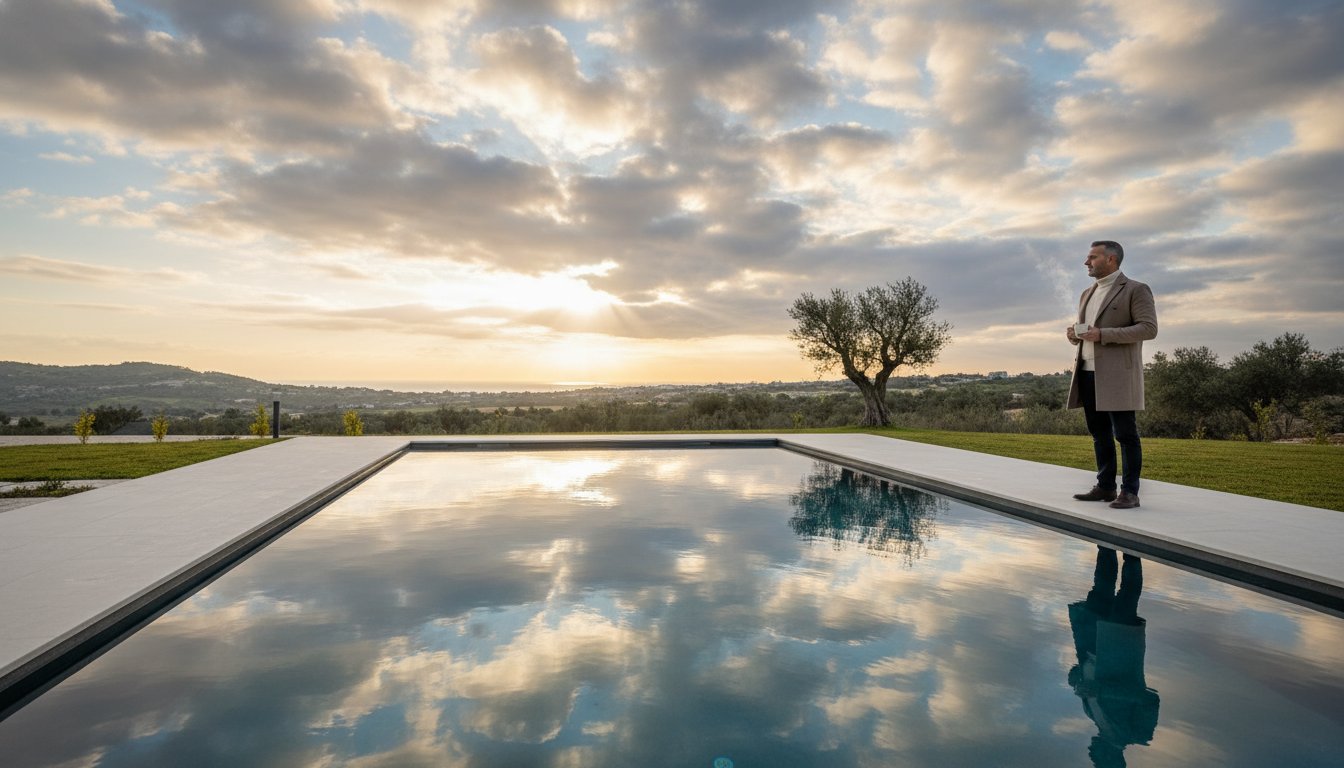
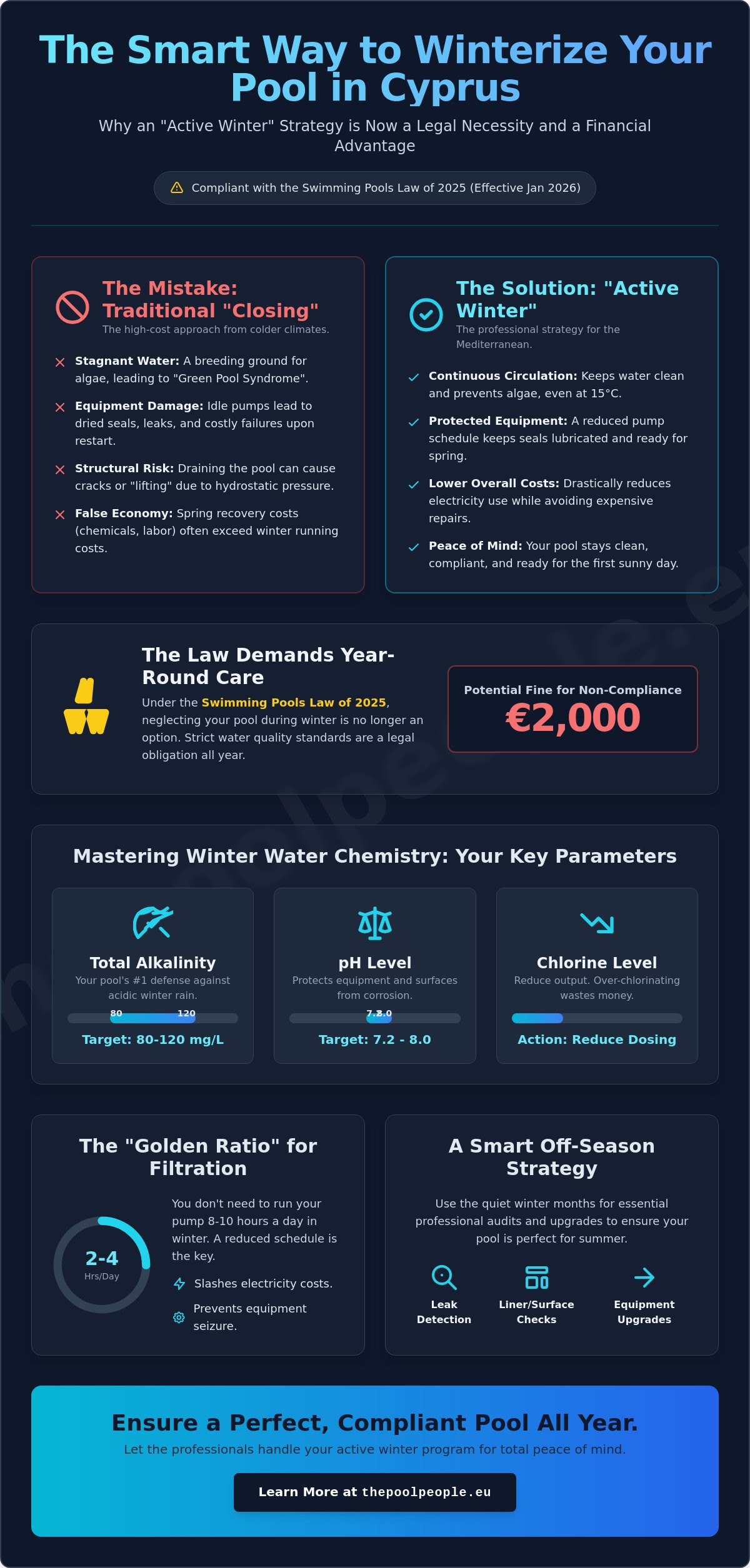
What if the traditional advice to “close” your pool for the season is actually the most expensive mistake you could make this year? In our unique Mediterranean climate, learning how to winterize a pool in cyprus doesn’t mean draining the water or shutting down the system until May. With the Swimming Pools Law of 2025 now in full effect as of January 2026, maintaining strict water quality and safety standards is a year-round legal obligation that carries potential fines of up to €2,000 for those who let maintenance slide.
We know it’s frustrating to watch electricity bills rise while the water sits idle, or to wake up to a green pool after the first heavy winter rain. You want a clean, inviting pool without the stress of constant chemical battling. This guide provides the professional clarity you need to achieve a crystal clear pool with minimal effort and lower costs. We’ll show you how to recalibrate your filtration for the cooler months, protect your equipment from seasonal storms, and maintain the mandatory pH levels of 7.2 to 8.0. It’s time to move toward an “active winter” strategy that protects your investment and provides total peace of mind.
Key Takeaways
- Discover why completely “closing” your pool is counterproductive in the Mediterranean and how an active winter state preserves your water quality.
- Learn how to winterize a pool in cyprus by balancing the chemical impact of acidic rainfall and maintaining Total Alkalinity to prevent algae blooms.
- Find the “Golden Ratio” for winter pump schedules to reduce electricity costs while providing enough circulation to protect your equipment.
- Identify the most effective safety covers and storm preparation techniques to safeguard your pool against high winds and winter debris.
- Use the off-season strategically for professional audits like leak detection or liner replacements to ensure your facility is summer-ready.
The Reality of Winterizing a Pool in Cyprus: Why “Closing” is a Mistake
Many homeowners arrive in Cyprus with maintenance habits formed in much colder climates. In the UK or Northern Europe, “closing” a pool involves draining water below the skimmer, adding heavy-duty winterizing chemicals, and cutting the power until spring. If you apply this logic to the Mediterranean, you’re inviting a biological disaster. Understanding how to winterize a pool in cyprus requires a fundamental shift from a “shutdown” mindset to a strategy of “active maintenance.”
In our experience as industry educators, we’ve seen that the biggest threat to your investment isn’t the cold; it’s the lack of movement. Stagnant water in a warm climate is a recipe for “Green Pool Syndrome.” Because our winters are mild, the biological processes that cause algae growth never truly stop. By keeping the system active, you ensure that your pool remains an asset rather than a swampy liability that requires a costly professional rescue in the spring.
Mediterranean Climate vs. Northern Europe
Algae doesn’t follow a calendar; it follows temperature and light. In Cyprus, water temperatures rarely drop into the single digits, often hovering around the 15°C mark. This is a critical biological threshold. Once water reaches 15°C, algae can still bloom if sanitation levels are neglected. When you combine these temperatures with the island’s high UV levels, even in mid-January, a pool without circulation becomes a breeding ground for bacteria within days.
Draining your pool to avoid maintenance is even more dangerous. Cyprus soil conditions can lead to “structural lifting” or hydrostatic pressure issues during the rainy season. If the water table rises after a heavy storm and your pool is empty, the entire shell can shift or crack. Adhering to professional pool sanitation principles means keeping the water in the pool to provide the necessary weight to counter this ground pressure.
The Myth of “Saving Money” by Turning Off the Pump
It’s tempting to flip the breaker to save on electricity, but this is a false economy. Stagnant water is the enemy of your pool’s infrastructure. When a pump remains idle for months, the rubber seals and gaskets within your filtration system can dry out or become brittle. This leads to expensive leaks and mechanical failures when you try to restart the system in May.
Consider the logistical reality of a “green pool recovery.” The cost of the heavy shock treatments, flocculants, and professional labor required to fix a neglected pool often exceeds the modest cost of running a pump on a reduced winter schedule. By learning how to winterize a pool in cyprus the right way, you protect your pump longevity and keep your pool liner supple. An active winter program is the ultimate “peace of mind” strategy, ensuring your water stays crystal clear and your equipment remains in peak condition for the first warm day of the year.
Mastering Winter Water Chemistry: Adjusting for Rain and Wind
Winter in Cyprus brings a unique chemical tug-of-war to your backyard. While the summer sun is your primary adversary in July, the winter months introduce acidic rainfall and wind-blown debris that can rapidly destabilize your water. Learning how to winterize a pool in cyprus requires you to look beyond simple chlorine levels and focus on the foundational balance of your water. If you ignore these shifts, you risk damage to your pool’s surfaces and a difficult recovery come spring.
Total Alkalinity is the most critical metric during the cooler months. It acts as a stabilizer, preventing the “pH bounce” that occurs when rainwater enters the system. According to the Swimming Pools Law of 2025, maintaining a Total Alkalinity between 80 and 120 mg/L is not just a best practice; it’s a requirement for compliant pool management. When your alkalinity is correctly buffered, your pH remains steady, protecting your pool liner and equipment from the corrosive effects of low-pH water.
Chlorine demand naturally drops as bather loads vanish and water temperatures cool. You should adjust your salt chlorinator or chemical dosing to reflect this change. Over-chlorinating in winter is a common mistake that leads to unnecessary wear on your covers and equipment. Instead, aim for a consistent, lower output that maintains sanitation without wasting resources. For those seeking a comprehensive professional winterization procedure, focusing on these technical adjustments is the first step toward a stress-free off-season.
Managing pH and Alkalinity During Heavy Rain
Rainwater in Cyprus is typically acidic, which can aggressively pull your pool’s pH below the mandatory 7.2 to 8.0 range. To buffer your water against this, you must test your levels every two weeks. If a storm is predicted, ensure your alkalinity is at the higher end of the 80-120 mg/L scale. This provides a “safety cushion” that absorbs the acidity of the rain without crashing your pH. If you find your levels constantly fluctuating, our team can provide the specific pool chemicals needed to restore balance and provide peace of mind.
Phosphate Control and Algaecide Strategy
Winter winds often dump organic debris, such as olive leaves and Saharan dust, into the water. This debris causes phosphate levels to spike. Phosphates are the primary nutrient source for algae in dormant pools. To prevent an outbreak, we recommend using a long-life winter algaecide. This acts as a secondary safety net, ensuring that even if your chlorine levels dip during a power cut or a heavy storm, the water remains clear. Combining phosphate removers with an active maintenance schedule is the most effective way to ensure your pool is summer-ready the moment the heat returns.
Optimising Filtration and Pump Schedules for 2026
Efficient mechanical operation is the silent partner to the chemical balance we discussed previously. While your pool requires less intervention during the cooler months, the filtration system must remain active to prevent stagnation. Many owners struggle with finding the “Golden Ratio” of run times. You want to circulate the water enough to maintain clarity without inflating your electricity bills. Understanding how to winterize a pool in cyprus involves transitioning your pump from its heavy summer workload to a leaner, more strategic winter schedule.
Residents in higher-altitude Paphos villages, such as Tsada or Tala, face a specific winter challenge: frost. While rare at the coast, temperatures in these hills can dip toward freezing on clear January nights. Running your filtration system during the coldest hours of the night is a professional safeguard. Moving water is significantly less likely to freeze than standing water, protecting your expensive PVC pipework and pump housing from potential expansion damage. This simple adjustment provides immense peace of mind during the occasional cold snap.
A critical but often overlooked component is the skimmer basket. Winter winds in Cyprus are notorious for depositing olive leaves, pine needles, and dust into the water. If these baskets become compacted with debris, the pump will struggle to pull water, leading to cavitation and eventual motor burnout. Clearing these baskets at least once a week is a non-negotiable part of your winter routine. It’s a five-minute task that can save you the significant cost of a new pump installation.
Reducing Run Times Without Risking Clarity
As water temperatures drop, the rate of bacterial growth slows down, allowing you to reduce your filtration hours. The goal is to achieve at least one full turnover of the pool’s volume every 24 hours. If you’ve upgraded to a variable speed pump, you can run the system at a lower RPM for longer periods. This approach slashes energy consumption while maintaining superior water quality. Use the following table as a general guide for 2026:
| Water Temperature | Recommended Daily Run Time |
|---|---|
| Above 20°C | 6 – 8 Hours |
| 15°C – 20°C | 4 – 6 Hours |
| Below 15°C | 3 – 4 Hours |
Winter Filter Health and Maintenance
The off-season is the ideal time for a deep clean of your filtration media. Whether you use traditional silica sand or high-performance glass media, oils and calcification can build up over the summer. We recommend a professional filter descale in November to ensure maximum flow efficiency. Before the heavy rains arrive, check your multi-port valve for any signs of weeping or stiffness. Addressing these minor issues now prevents them from becoming major leaks during a storm. Remember that mastering pool water chemistry is the best way to extend the life of your filter media, as balanced water prevents the scale and biofilm that often clog the system.
Protecting Your Investment: Covers and Storm Preparation
Physical protection is the final pillar of a professional winter strategy. While chemistry and filtration keep the water healthy, high-quality covers and storm readiness protect the structural integrity of your facility. Learning how to winterize a pool in cyprus requires a specific focus on the island’s unique weather patterns, particularly the sudden, high-velocity winds that characterize our coastal winters. Without a physical barrier, your carefully balanced water can be undone by a single afternoon of Saharan dust or falling debris.
A common error we see in Paphos is the continued use of solar blankets throughout December and January. These blankets are designed for heat retention, not for winter protection. The intense Mediterranean sun, even in winter, can cause rapid UV degradation of the bubbles if the cover isn’t submerged or cooled by frequent use. More importantly, a solar cover acts as a sail during a storm. High winds can easily lift these lightweight blankets, potentially damaging your pool fencing or the cover itself. If you want true peace of mind, it’s time to transition to a dedicated winter debris or safety cover.
The Coptic Storm Preparation Checklist
The Mediterranean is famous for its “Coptic Storms,” which can bring winds exceeding 80km/h. When a weather warning is issued, follow these professional steps to secure your investment:
- Clear the Deck: Remove all loose furniture, umbrellas, and pool toys. In high winds, these become projectiles that can tear a pool liner or break glass sliding doors.
- Secure the Pump House: Ensure your plant room door is locked and that any electrical components are elevated off the floor. Heavy rain can lead to localized flooding in sunken pump houses.
- Manage Water Levels: After a heavy Paphos downpour, your water level may rise above the skimmer line. This prevents the surface from being cleaned. Use the “waste” setting on your multi-port valve to lower the water back to the halfway point of the skimmer mouth.
Winter Covers: Pros, Cons, and Paphos Realities
A winter debris cover is your first line of defense against phosphate spikes. By keeping leaves and organic matter out of the water, you significantly reduce the workload on your chemicals. However, if you have children or pets, a certified safety cover is the superior choice. Under the new 2025 legislation, all non-operational pools must be securely fenced or fitted with a safety cover to prevent accidents. Staying compliant with pool safety regulations in Cyprus isn’t just about avoiding fines; it’s about protecting your family and guests. For the best results, ensure your cover is tensioned correctly to prevent water from pooling in the center, which can stress the anchor points. Explore our range of professional safety covers to find the perfect fit for your pool’s dimensions.
The Professional Winter Programme: Peace of Mind for 2026
Choosing a professional partner to manage your facility during the off-season is the most effective way to ensure long-term value for your property. While we’ve detailed the technical steps of how to winterize a pool in cyprus, the complexity of the new 2025 regulations makes expert oversight a strategic necessity rather than a luxury. A structured winter programme isn’t an expense. It’s a form of insurance that prevents the “Spring Shock”-that dreaded moment in May when you uncover a green, chemically imbalanced pool that requires hundreds of Euros in emergency treatments to fix.
Our approach integrates the core principles found in the ultimate guide to pool maintenance in Paphos, ensuring every chemical adjustment and mechanical check aligns with the highest international standards. By maintaining an “active winter” state under professional guidance, you ensure that your water remains healthy and your equipment stays lubricated. This proactive stance means your pool is ready for use the very first day the Mediterranean sun starts to sizzle, without the need for aggressive chemical “bombing” to clear away months of neglect.
Why Professional Oversight Saves Money
Early detection is where professional service truly pays for itself. During the quiet winter months, our PHTA-certified technicians can identify subtle signs of water loss that might go unnoticed during the heavy evaporation of summer. Specialized pool leak detection in Paphos is far more efficient when the pool isn’t in constant use, allowing for precision repairs before they become structural crises. We also utilize professional-grade chemicals with high concentrations of active ingredients. These are far superior to supermarket alternatives, which often contain fillers that can cloud your water and clog your filter media over time.
Planning Your 2026 Pool Upgrades
Winter is the ideal window for significant infrastructure improvements. If your pool requires a liner replacement or a high-efficiency pump upgrade, booking these services in January or February avoids the inevitable spring rush. You can enter the swimming season with a fully optimized, energy-efficient system that meets all current safety standards. Don’t leave your investment to chance during the rainy season. Secure your peace of mind with a professional winter maintenance plan and ensure your pool remains a crystal-clear sanctuary all year round. Learning how to winterize a pool in cyprus with the help of the professionals is the smartest move a property owner can make in 2026.
Secure Your Pool for the 2026 Winter Season
Transitioning to an active maintenance strategy is the most effective way to protect your swimming pool investment in the Mediterranean. As we have explored, the mild Cyprus climate requires consistent chemistry management and strategic pump schedules rather than a complete shutdown. By focusing on alkalinity buffering and storm-ready protection, you avoid the structural risks and biological disasters that come with stagnant water. Understanding how to winterize a pool in cyprus correctly keeps your facility compliant with the 2025 Swimming Pools Law while ensuring your equipment remains in peak condition for the years ahead.
With over 20 years of experience in the Paphos region, our PHTA and NSPF Certified Pool Operators provide the technical expertise needed for both private and communal pools. We offer comprehensive winter programmes designed to deliver total peace of mind throughout the rainy season. Don’t wait for a green pool to take action. Get a Professional Winter Maintenance Quote Today and enjoy the confidence that comes with expert oversight. Your pool will be crystal clear and summer-ready the moment the first heatwave arrives.
Frequently Asked Questions
Do I need to run my pool pump every day during a Cyprus winter?
Yes, daily circulation is essential to maintain water health. You should run your pump for 3 to 6 hours depending on the water temperature to ensure at least one full turnover of the pool’s volume. This prevents the stagnation that leads to bacteria growth and keeps your filtration system in peak condition during the cooler months.
Should I drain some water from my pool when it rains heavily in Paphos?
You should only lower the water level if it rises above the halfway point of the skimmer mouth. If the water level is too high, the skimmers cannot effectively pull debris from the surface. Use the “waste” or “backwash” setting on your multi-port valve to lower the level back to its optimal position after a heavy Paphos downpour.
Can I use a solar cover in the winter to keep the pool clean?
We do not recommend using a solar cover during the winter. These covers are designed for heat retention and are susceptible to UV damage and wind lift during the off-season. A dedicated winter debris cover or a safety cover is a much better choice for those learning how to winterize a pool in cyprus effectively.
How often should I test my pool water chemistry between November and March?
You should test your water chemistry at least every two weeks during the winter. Even though bather loads are lower, acidic rainfall and winter dust can quickly destabilize your pH and alkalinity. Consistent testing ensures you remain compliant with the mandatory pH range of 7.2 to 8.0 required by the Swimming Pools Law of 2025.
What is the best way to prevent algae if I am away from Cyprus for the winter?
The most reliable strategy is to engage a professional maintenance service for bi-weekly visits. If the pool is left unattended, ensure your pump is on a reliable timer and add a high-quality, long-life winter algaecide. This provides a chemical safety net that helps prevent “Green Pool Syndrome” while you are away from the island.
Is it safe to swim in a Cyprus pool during the winter months?
It is safe to swim as long as the water is chemically balanced and clear. However, water temperatures often drop below 15°C, which is quite cold for most swimmers. If you wish to use your pool year-round, we recommend a professional heat pump installation to maintain a comfortable swimming environment throughout the winter.
Why has my pool water turned cloudy after a winter rainstorm?
Cloudiness after rain is typically caused by fine Saharan dust or a sudden drop in Total Alkalinity. Rainwater is acidic and can crash your pool’s buffer, making the water look dull. When you are mastering how to winterize a pool in cyprus, using a clarifier and restoring alkalinity levels will quickly return the water to its crystal-clear state.
What are the Coptic storms and how do they affect my pool maintenance?
Coptic storms are traditional periods of high winds and turbulent weather that occur in the Mediterranean during the winter. These storms can bring wind speeds exceeding 80km/h, dumping significant amounts of organic debris and dust into your water. Immediate cleaning after these events is necessary to prevent phosphate spikes and potential algae blooms.


Leave A Comment