
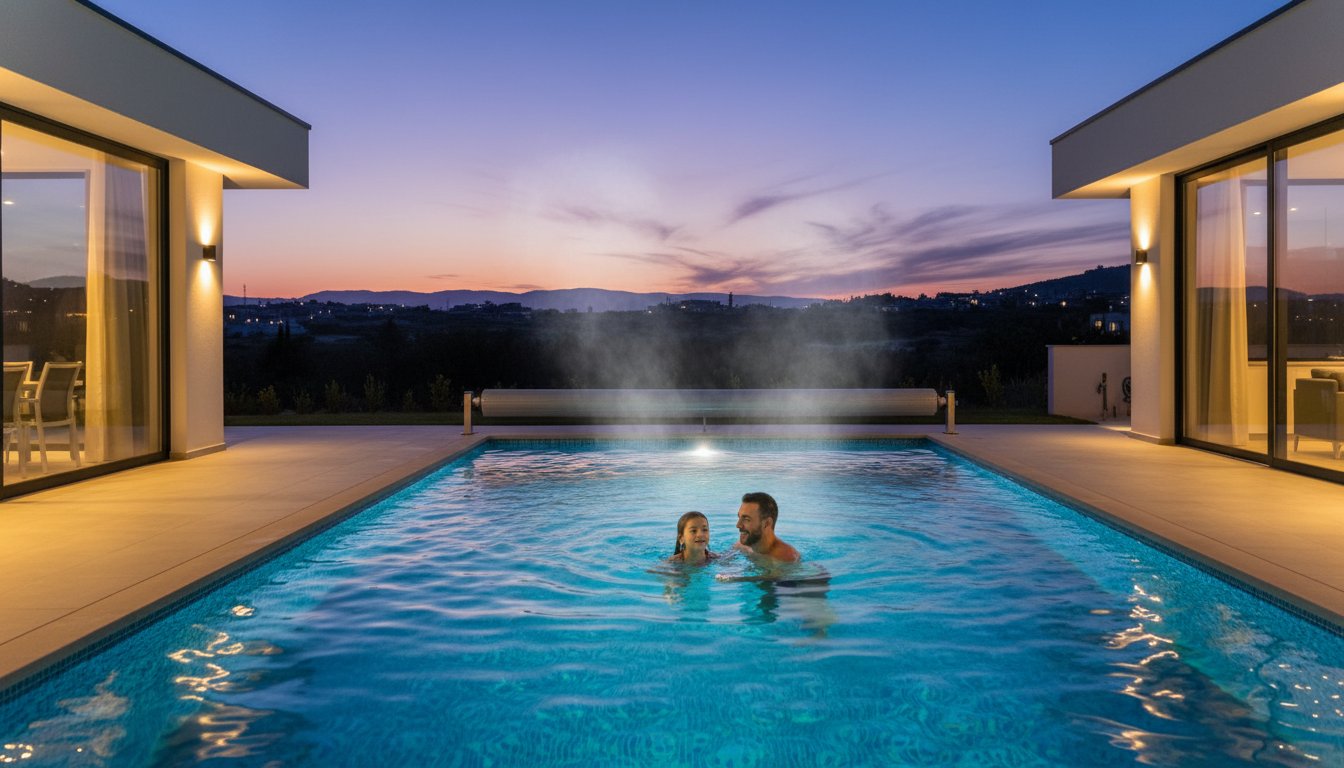
Heating your pool without a retention strategy is like trying to fill a bucket that has a hole in the bottom; you’re essentially paying to heat the Mediterranean night sky rather than your water. Many Paphos homeowners want to enjoy their investment well into the winter, yet they often hesitate because of electricity rates that now sit at €0.30 per kWh. You shouldn’t have to choose between a warm swim and a manageable utility bill.
This guide provides the professional blueprint you need to extend swimming season cyprus for up to 10 months of the year. We’ll show you how a “retention-first” approach, powered by high-efficiency heat pump installation and advanced safety covers, creates a stable environment for your family. You’ll learn the technical strategies for maintaining a warm, inviting temperature while staying fully compliant with the Swimming Pools Law of 2025. We’ll also explain how integrating these systems can turn a seasonal luxury into a year-round asset with predictable, transparent running costs.
Key Takeaways
- Learn why Cyprus air temperatures are a deceptive metric for swim comfort and why 25°C is the critical threshold for a truly usable pool.
- Understand how air-to-water heat pumps achieve high efficiency by converting minimal electricity into maximum thermal energy for your water.
- Discover how professional heat retention strategies, such as safety covers, are the essential foundation needed to successfully extend swimming season cyprus.
- Explore the specific chemical adjustments required to keep a heated pool safe and algae-free as water temperatures rise.
- Follow a professional two-step implementation plan, starting with a thermal audit to ensure your heating system is perfectly sized for your property.
The Reality of the Cyprus Swimming Season: Understanding the ‘Shoulder Months’
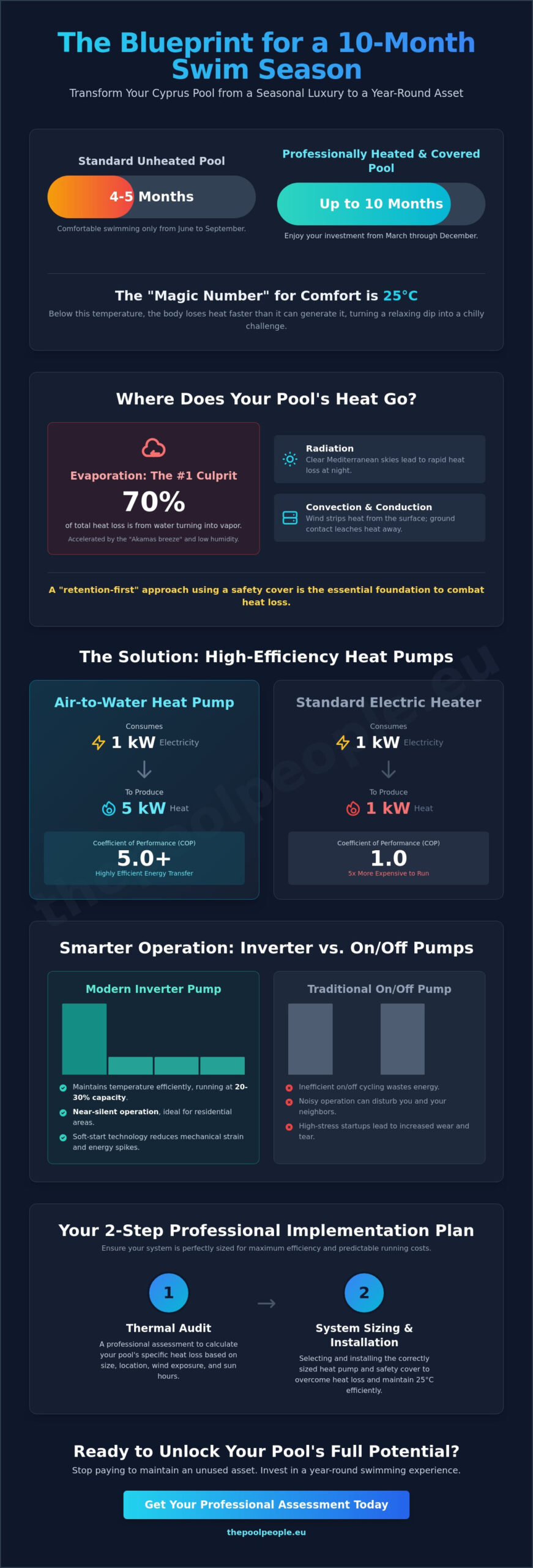
While many residents believe the Climate of Cyprus provides year-round swimming, the reality for an unheated pool is quite different. The natural season for comfortable swimming usually lasts only four to five months, typically from June to September. During the “shoulder months” of March to May and October to November, the air might feel warm enough for a sunbathe, but the water temperature tells a different story. Most swimmers find 25°C to be the “magic number” for comfort. Below this threshold, the body loses heat faster than it can generate it, turning a relaxing dip into a bracing endurance test. Understanding these cycles is the first step if you want to extend swimming season cyprus for your home.
Cyprus Climate Factors: Sun vs. Wind
In coastal areas like Paphos, the sun provides significant solar gain during the day. However, the clear Mediterranean skies lead to rapid night-time cooling. This thermal loss is accelerated by the “Akamas breeze,” a consistent wind that strips heat directly from the water’s surface through forced convection. In elevated areas like Peyia, lower humidity levels further increase evaporation rates. Because evaporation accounts for roughly 70% of a pool’s total heat loss, an uncovered and unheated pool in these conditions will struggle to stay above 20°C during the shoulder periods. To effectively extend swimming season cyprus, property owners must account for these environmental variables rather than relying on solar energy alone.
The Cost of an Idle Investment
An unusable pool is a stagnant asset. Even when the water is too cold for a swim, you’re still facing the ongoing costs of pool chemicals and professional cleaning to prevent algae growth. Maintaining a “dead” pool for six months of the year offers no return on your maintenance spend. There is also a missed financial opportunity for property owners. Data shows that villas in Coral Bay and the Sea Caves with professional heating systems see up to a 40% increase in rental occupancy during these cooler months. These properties can command nightly rates up to 30% higher than their unheated counterparts. Beyond the financial yield, the psychological benefit of a “blue view” that you can actually use provides a lifestyle value that justifies the investment in modern heating technology.
Pool Heat Pumps: The Most Efficient Solution for the Mediterranean
Air-source heat pumps operate on a principle of energy transfer rather than energy creation. Unlike gas heaters that rely on combustion or electric resistance heaters that use high-wattage elements, a heat pump extracts thermal energy from the ambient air and moves it into your pool water. In a climate like ours, where daytime temperatures remain relatively high even in November, this process is remarkably effective. According to the U.S. Department of Energy guide to heat pump pool heaters, these systems are the most cost-effective way to maintain water temperature in regions where the air stays above 10°C. Since Paphos rarely dips below this threshold during the day, a heat pump is the definitive choice to extend swimming season cyprus.
The efficiency of these units is defined by the Coefficient of Performance (COP). A high-performance heat pump can achieve a COP of 5.0 or higher, meaning it produces 5kW of heat for every 1kW of electricity consumed. With Cyprus electricity rates at approximately €0.30 per kWh as of May 2026, this efficiency is the difference between a usable luxury and an expensive burden. Electric resistance heaters have a COP of 1.0, making them five times more expensive to run. Correct sizing is also vital; an undersized unit will run continuously without ever reaching the 25°C threshold, leading to inflated energy bills and mechanical strain. A professional assessment ensures the unit is powerful enough to overcome the specific heat loss of your property.
Inverter Technology vs. On/Off Pumps
Traditional on/off pumps operate at full capacity until the water hits the target temperature, then shut down completely. This constant cycling is inefficient and creates significant noise. Modern Inverter pumps use variable-speed compressors that ramp down once your pool is warm. They maintain the temperature using minimal power, often running at just 20% to 30% of their maximum capacity. For residents in quiet areas like Peyia or Tala, the near-silent operation is a major benefit. Inverter systems also utilize soft-start technology, which prevents the sudden power surges that can stress your home’s electrical system.
Salt Water Compatibility and Hardware
The high salinity of the Mediterranean air and the popularity of salt-water chlorination systems in Cyprus require specialized hardware. Standard copper heat exchangers will corrode rapidly in these conditions. We exclusively recommend units with titanium heat exchangers, as they are immune to chemical corrosion and offer superior durability. Integrating your heater with other essential pool equipment in Paphos ensures that your entire filtration and heating circuit works in harmony. If you’re ready to upgrade, a professional pool heat pump installation can transform your swimming experience while keeping your monthly costs predictable and manageable.
The Secret to Efficiency: Heat Retention Strategies
While a high-efficiency heat pump provides the energy needed to warm your water, it’s only half of the equation. Without a robust retention strategy, you’re essentially attempting to heat the Mediterranean atmosphere. Evaporation is the primary “heat thief” in Paphos, accounting for up to 70% of a pool’s total thermal loss. When warm water meets the cooler night air, it transforms into vapor, carrying away the expensive energy your heat pump just worked to provide. Operating a heater without a cover is like running a central heating system in a villa with all the windows wide open; it’s an expensive and avoidable waste of resources.
To successfully extend swimming season cyprus, you must adopt a “Double-Up” strategy. This approach focuses on maximizing solar gain during the day and prioritizing insulation at night. During the clear Paphos afternoons, the sun provides significant natural energy. However, as soon as the sun sets, the thermal gradient between the water and the air widens. By trapping the heat with a physical barrier, you can maintain a consistent 25°C temperature with significantly less mechanical intervention. The energy-saving benefits of pool covers are well-documented, often reducing the required heating load by 50% to 70% depending on the material used.
Choosing the Right Pool Cover
The choice of material should reflect your specific property goals. GeoBubble solar covers are engineered specifically for high-UV environments like Cyprus. They feature a unique bubble shape that resists chemical attack and expands the surface area for solar collection. For homeowners who prioritize retention during the cooler Paphos nights, heavy-duty thermal blankets provide a thicker insulation layer that acts as a shield against the wind. If you’re looking for a premium solution, automatic slatted covers offer the highest level of insulation and luxury aesthetics, often utilizing air-filled slats that float on the surface to create a formidable thermal barrier.
Manual vs. Automatic Rollers
The most effective cover is the one you actually use. We’ve found that manual covers often stay in the roller because they’re perceived as a chore to deploy. Automatic rollers remove this friction, allowing you to seal your pool with the touch of a button. Beyond efficiency, these systems play a critical role in safety. Reinforced safety pool covers can support the weight of a child or pet, providing essential peace of mind. As outlined in our guide to pool safety regulations in Cyprus, implementing these barriers is not just about heat; it’s about creating a secure environment that meets modern compliance standards for 2026.
Maintenance and Chemistry in a Heated Pool Environment
Warming the water changes the biological and chemical landscape of your pool. Heat acts as a powerful catalyst for chemical reactions. Chlorine is consumed significantly faster at 28°C than at 20°C because the higher temperature accelerates the oxidation process. Algae also thrives in warmth; a bloom that might take days to develop in a cold pool can appear almost overnight once you activate your heating system. To successfully extend swimming season cyprus, you must adjust your sanitization levels and filtration cycles accordingly. Your pump needs to run for longer periods to ensure the heater receives a consistent flow and that chemicals are distributed evenly to meet the increased demand.
Maintaining a balanced Langelier Saturation Index (LSI) becomes a technical priority when you introduce a heat pump. The LSI is a formula used to determine if your water is corrosive, balanced, or scale-forming. As water temperature rises, its ability to hold calcium in solution changes. If the water is not perfectly balanced, calcium will precipitate out and form a hard crust on the internal titanium elements of your heater. This buildup acts as an insulator, forcing the unit to consume more electricity to achieve the same results. Regular testing is the only way to ensure your equipment remains protected from this invisible efficiency killer.
Water Chemistry Adjustments
pH levels tend to drift upward more rapidly in heated, aerated water. When pH rises above 7.6, the killing power of your chlorine drops significantly, leaving the pool vulnerable to bacteria. You also need to manage your Cyanuric Acid levels with precision. While this stabilizer protects chlorine from the intense Cyprus sun, too much of it can lead to “chlorine lock.” We recommend consulting our Mastering Pool Water Chemistry guide to understand the specific targets required for a heated environment. These adjustments ensure that your water remains safe for guests while extending the life of your pool liner and equipment.
Preventing Biofilm and Scaling
Heated pools require a more proactive approach to phosphate management. Phosphates enter the water through dust, rain, and swimmers, serving as the primary food source for algae. In a warm environment, even low levels of phosphates can trigger a rapid biological event. Professional pool maintenance in Paphos during the shoulder months provides the technical oversight needed to catch these issues before they become visible. If you want to enjoy a stress-free swim year-round, our expert pool cleaning and maintenance services provide the reliability and safety you need to protect your investment.
Implementation: Planning Your 10-Month Swim Year
Transitioning from a seasonal pool to a year-round aquatic asset requires a methodical approach that prioritizes technical integration over quick fixes. To successfully extend swimming season cyprus, you shouldn’t just buy a heater; you need to engineer a system. We recommend a five-step implementation plan to ensure your investment delivers the comfort you expect without unforeseen operational costs.
- Step 1: Thermal Audit. Before selecting hardware, a professional audit of your site is essential. We analyze pool volume, local wind patterns in areas like Tala or Coral Bay, and your specific target temperature to determine the exact energy load required.
- Step 2: Precision Sizing. We install high-performance Inverter heat pumps with titanium internals. Sizing the unit correctly ensures it can maintain 25°C efficiently, even when the ambient air temperature drops during the Paphos winter nights.
- Step 3: Thermal Pairing. Every heating system must be paired with a high-grade thermal or solar cover. As established, this is your primary defense against the 70% heat loss caused by evaporation.
- Step 4: PV Synchronization. To offset the electricity rate of €0.30 per kWh, we synchronize your heating cycles with your domestic Photovoltaic (PV) system. This allows the heat pump to do its heavy lifting during peak solar production hours, effectively heating your pool for free.
- Step 5: Maintenance Calibration. You’ll need to adjust your service contract to account for the extended usage. Increased filtration and more frequent chemical monitoring are vital to keep the water safe and the equipment scale-free.
The ROI of Season Extension
The financial logic for extending your season is compelling. While an unheated pool remains a monthly expense in chemicals and basic care with zero utility, a heated pool becomes a high-yield asset. For villa owners, a professionally installed system typically pays for itself within three to four years. This is driven by a documented 40% increase in rental occupancy during the shoulder months and the ability to command nightly rates up to 30% higher. Beyond the numbers, the health and wellness benefits of consistent, low-impact exercise in a warm environment provide a lifestyle value that is difficult to quantify but easy to feel.
Professional Installation and Support
Attempting a DIY installation of high-voltage heating equipment often leads to voided manufacturer warranties and significant operational inefficiency. Our team takes an integrated approach, ensuring that your pool heat pump installation is perfectly calibrated with your existing filtration system and safety covers. We act as guardians of your investment, providing the technical expertise required to meet the standards of the Swimming Pools Law of 2025. If you’re ready to transform your property, contact us today for a bespoke heating survey in Paphos and take the first step toward a 10-month swim year.
Secure Your Year-Round Aquatic Lifestyle
Transforming your pool into a 10-month asset is a strategic investment in your home’s value and your family’s wellness. By combining high-efficiency Inverter technology with robust heat retention strategies, you can successfully overcome the cooling effects of the Paphos night air. Maintaining a precise chemical balance and protecting your hardware from scaling ensures that this comfort remains reliable for years to come. Our team of PHTA/NSPF Certified Technicians are specialists in Paphos climate engineering, providing the technical expertise required to extend swimming season cyprus effectively.
As authorized installers of high-efficiency titanium heat pumps, we design systems that are both environmentally responsible and financially predictable. We take the stress out of property maintenance so you can focus on the sensory rewards of a warm, crystal-clear pool. Book your professional pool heating consultation in Paphos today to begin your transition to a longer, more fulfilling swimming season. Your ideal water temperature is closer than you think.
Frequently Asked Questions
How much does it cost to heat a pool in Cyprus per month?
Monthly costs vary based on pool dimensions and weather conditions. With the May 2026 electricity rate at €0.30 per kWh, efficiency is paramount. A high-efficiency heat pump with a COP of 5.0 delivers five times the heat per kilowatt compared to standard electric heaters. Using a thermal cover is the most significant factor in keeping these monthly costs manageable; without one, your bills will rise substantially.
Can I use a pool heat pump in the middle of a Cyprus winter (January)?
Modern air-source heat pumps can operate in January, though their efficiency is highest when ambient temperatures are above 10°C. While you can reach a swimmable 25°C in mid-winter, the unit will work harder and run longer. Most Paphos homeowners find that focusing on a 10-month season from March to December provides the best balance of comfort and reasonable running costs.
Do I really need a cover if I have a powerful heat pump?
A cover is absolutely necessary to prevent the 70% of heat loss caused by evaporation. Even the most powerful heat pump cannot overcome the cooling effect of a windy Paphos night on an open water surface. Using a cover is the single most effective way to extend swimming season cyprus because it traps the energy you’ve already paid for, acting like a thermal lid for your pool.
Is a salt water pool compatible with a pool heater?
Salt water pools are fully compatible with heating systems as long as the unit features a titanium heat exchanger. Titanium is immune to the corrosive effects of salt and high chlorine levels, which would quickly destroy standard copper components. Since many Paphos properties use salt chlorination, we exclusively recommend hardware designed to withstand these specific chemical and Mediterranean atmospheric conditions.
How long does it take for a heat pump to warm a pool in Paphos?
It usually takes between 24 and 48 hours to raise the water temperature to a comfortable 25°C for the first time. The exact duration depends on the pool’s volume and the starting ambient temperature of the water. Once this target is achieved, an Inverter heat pump only needs to run for a few hours each day to replace the minor heat lost overnight.
Will heating my pool cause more algae to grow?
Heating your pool can lead to faster algae growth because bacteria and organic matter thrive in warmer environments. You’ll notice that chlorine consumption increases as the water temperature rises. To keep the water safe, it’s vital to adjust your filtration cycles and chemical testing frequency. Professional maintenance ensures your water chemistry stays balanced even when the heater is running at full capacity.
What is the best temperature for a swimming pool in Cyprus?
Most residential swimmers find that 26°C to 28°C is the ideal temperature for relaxation and exercise. While the Swimming Pools Law of 2025 mandates a minimum of 25°C for indoor heated facilities, this same threshold is a great baseline for outdoor pools. It’s warm enough to be inviting during a cool March morning without causing excessive evaporation or high energy consumption.
Can I power my pool heater with solar panels (Photovoltaics)?
You can certainly power your pool heater using a domestic photovoltaic (PV) system to significantly reduce operational expenses. By scheduling your heat pump to run during peak solar production hours, you can offset the current electricity rate of €0.30 per kWh. This integration is one of the most effective ways to extend swimming season cyprus while maintaining a sustainable and carbon-neutral home environment.



Leave A Comment