
A pool pump is not simply a piece of equipment that moves water. It is the component that carries sanitiser through the system, delivers water to the filter and helps prevent the conditions in which cloudy water, algae and waterborne contamination can develop. When comparing variable speed versus single speed pumps, the right choice is therefore about more than electricity consumption. It must support clean, healthy and safe water every day the pool is in use.
For pool owners and property managers in Cyprus, that decision matters particularly during the long hot season. High bather loads, warm water and airborne dust place greater pressure on circulation and treatment. A pump that is correctly selected, programmed and maintained can reduce operating costs without compromising hygiene. A pump chosen only on its purchase price can do the opposite.
How the two pump types work
A single speed pump has one fixed motor speed. When it is switched on, it runs at full speed and delivers its designed flow rate until the timer turns it off. This is a straightforward arrangement and has been common in domestic pools for many years.
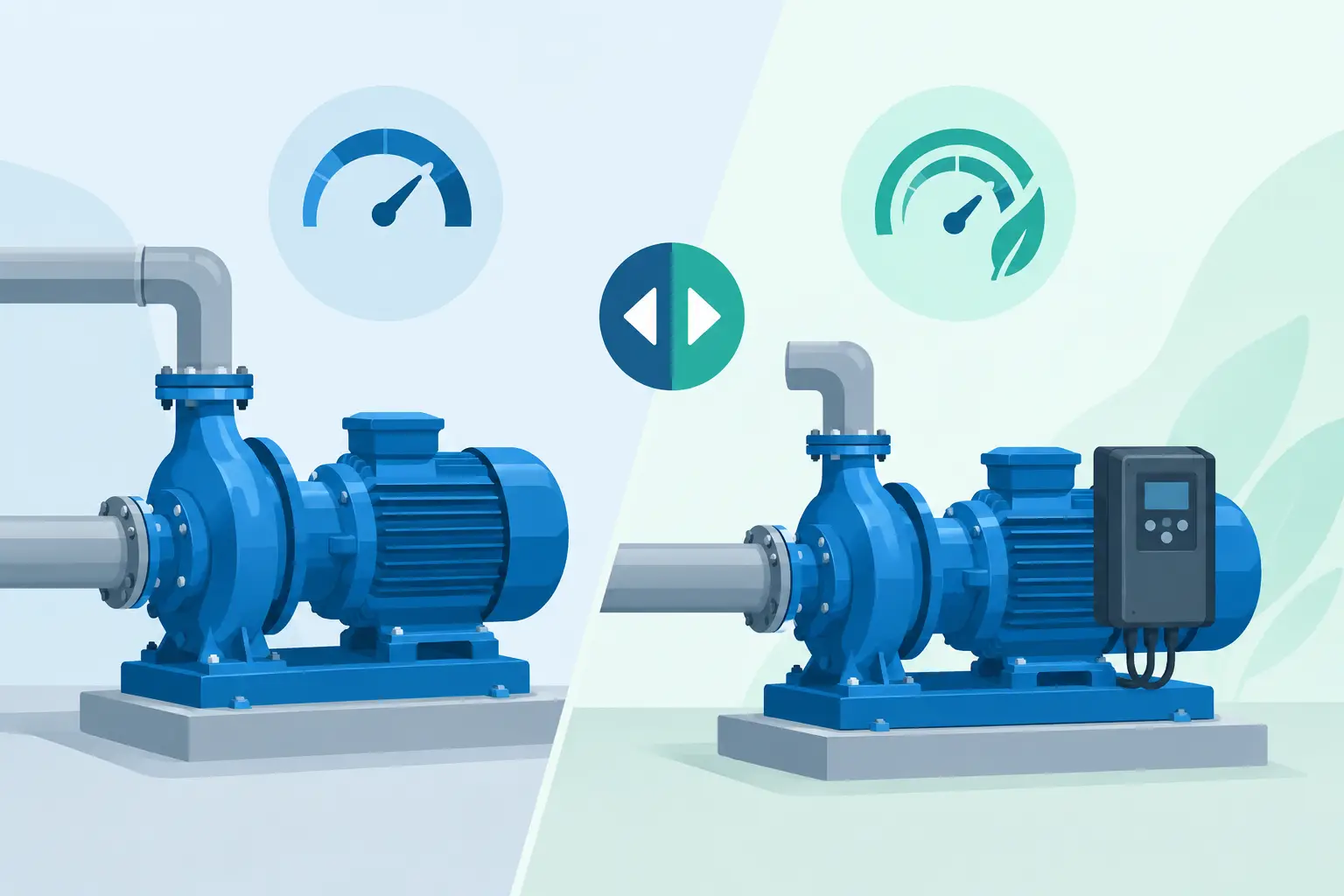
A variable speed pump uses an electronically controlled motor that can operate at different speeds. Rather than running flat out for a short period, it can usually circulate water more slowly for longer, then increase speed when a higher flow is genuinely required. Higher speeds may be used for vacuuming, operating a water feature, backwashing where applicable, or providing sufficient flow for certain heaters and treatment equipment.
The distinction sounds simple, but the hydraulic implications are significant. Pool systems do not require maximum flow at every hour of the day. Routine filtration frequently benefits from a lower, steadier rate of circulation, provided the system still achieves the required turnover and supports all installed equipment correctly.
Variable speed versus single speed pumps: the real differences
Energy use and running costs
The strongest argument for a variable speed pump is normally energy consumption. Pump power does not fall in a straight line as speed is reduced. A modest reduction in motor speed can produce a much larger reduction in power demand. That is why a variable speed model running for longer at a lower setting can use substantially less electricity than a single speed pump operating at full output for fewer hours.
Actual savings depend on the pool volume, pipework, filter condition, chosen programme, electricity tariff and the pump being replaced. It would be misleading to promise one fixed percentage for every property. However, for pools that circulate for many hours a day, especially communal or frequently occupied holiday-rental pools, the reduction can be meaningful over a full season.
A single speed pump may still be reasonable where operating hours are limited, the equipment room is simple and the existing pump is near the end of its life but budget is tightly controlled. The lower purchase price is genuine. The question is whether that initial saving outweighs higher electrical consumption over the pump’s service life.
Filtration and water quality
Fast circulation is not automatically better filtration. Water passing too quickly through a filter can reduce the opportunity for fine particles to be captured, depending on the filter type and its condition. A lower flow rate can improve filtration performance while keeping water moving continuously through the treatment system.
That does not mean the pump can be turned down without calculation. Every pool needs enough circulation to distribute disinfectant, prevent stagnant areas and meet its intended turnover period. Communal facilities and commercial installations may have defined operational requirements under their management arrangements and applicable European standards, including EN 15288 principles. A qualified operator should assess the pool volume, bather load, filter capacity, pipe diameter, treatment system and operating schedule before setting pump speeds.
Neither pump type is a substitute for correct water testing and chemical control. If free disinfectant, pH, alkalinity or stabiliser are out of range, changing the circulation programme alone will not make the pool hygienic. Likewise, a blocked filter, air leak or failing multiport valve can undermine the performance of even the best variable speed pump.
Noise and guest comfort
Single speed pumps can be noticeably loud because they operate at full motor speed whenever they are on. This can be a nuisance beside a terrace, near bedrooms or within a shared development where plant-room noise affects several residents.
At their normal low filtration setting, variable speed pumps are generally much quieter. That is useful for villa owners who want to run circulation during the evening, and for property managers seeking reliable daytime filtration without creating unnecessary disturbance. Noise reduction is a practical benefit, not just a luxury, particularly where equipment is close to occupied areas.
Equipment compatibility
A variable speed pump needs to work with the entire circulation system. Salt-water chlorinators, heaters, heat pumps, automatic dosing equipment and water features may each need a minimum flow rate. If the pump is programmed below that threshold, a heater may show a flow fault or a chlorinator may stop producing effectively.
The solution is usually programming, not abandoning the technology. A well-configured pump can run a low-speed filtration period, increase to a suitable speed while heating or chlorinating, and use a temporary high-speed setting for manual cleaning. The installation must be assessed as a system rather than as a pump replacement in isolation.
When a single speed pump may still suit a pool
Single speed pumps are not automatically wrong, and replacing a functioning pump purely because it is not variable speed is not always the best use of a maintenance budget. A smaller private pool with uncomplicated pipework, short daily operating periods and no demand for quiet running may be adequately served by a correctly sized single speed unit.
There are also cases where an existing pump appears inefficient because of another fault. A dirty filter, restricted suction line, undersized pipework or leaking valve can create poor circulation and high strain on the motor. Installing a new pump without diagnosing those issues may leave the owner with the same underlying problem.
The key word is correctly sized. An oversized single speed pump can force excessive flow through the filter, increase noise and consume more power than necessary. A pump should be selected for the required duty, not simply because its horsepower figure looks impressive.
When variable speed is the stronger long-term choice
Variable speed technology is especially valuable for pools with extended daily circulation, high electricity use, nearby living areas or changing operational demands. It is often a strong fit for larger villas, holiday rentals, communal pools and properties with heating or salt-water treatment.
In the Paphos region, summer water temperatures can remain high for long periods. This increases the need for dependable circulation and consistent disinfection, rather than switching equipment off to save money. A variable speed pump gives operators more control: it can maintain long, quiet, energy-conscious filtration periods while still delivering higher flow when treatment equipment requires it.
For communal pools, programmability also helps create a more disciplined operating routine. Plant equipment can be set around occupancy patterns, cleaning work and treatment requirements, while the responsible manager retains a clear record of how the system is intended to run. That supports the broader duty to maintain safe bathing water, not merely water that looks clear.
Do not choose on horsepower alone
Pump labels can be misleading when viewed without hydraulic information. Two pumps with similar horsepower may deliver very different flow rates once pipe length, bends, valves, elevation changes and filter resistance are taken into account. The relevant question is how much water the pump can move against the resistance of that specific system.
Before replacement, a competent engineer should check the pool volume and required turnover, existing pipework, filter size, pressure readings, electrical supply and any attached heater, chlorinator or dosing equipment. They should also inspect the pump basket, seals and unions for signs of restriction or leakage. This assessment avoids the common mistake of fitting a larger pump to compensate for a problem elsewhere in the system.
Installation quality matters as much as model choice. Correct electrical protection, secure plumbing connections, appropriate programming and a handover that explains normal settings are essential. The Pool People can assess existing circulation systems and recommend a pump arrangement that protects water quality as well as running costs.
A practical operating approach
A variable speed pump should not be set once and forgotten. Seasonal water temperature, pool use, filter condition and treatment equipment all affect the appropriate programme. During intense summer use, longer circulation and higher treatment demand may be necessary. In quieter, cooler periods, the programme can often be adjusted while maintaining adequate turnover.
Owners should also avoid judging performance only by whether the water appears blue. Early warning signs such as reduced return flow, repeated heater flow errors, rising filter pressure, unusual pump noise, cloudy patches or inconsistent chemical readings deserve attention before they become a green-water call-out or equipment failure.
The better pump is the one that delivers the required circulation reliably, supports effective treatment and can be operated responsibly for the pool’s actual conditions. For many Cyprus properties, variable speed technology makes that easier and less expensive over time. But the best result comes from proper sizing, professional installation and an operating programme built around healthy water rather than the lowest possible runtime.



Leave A Comment