
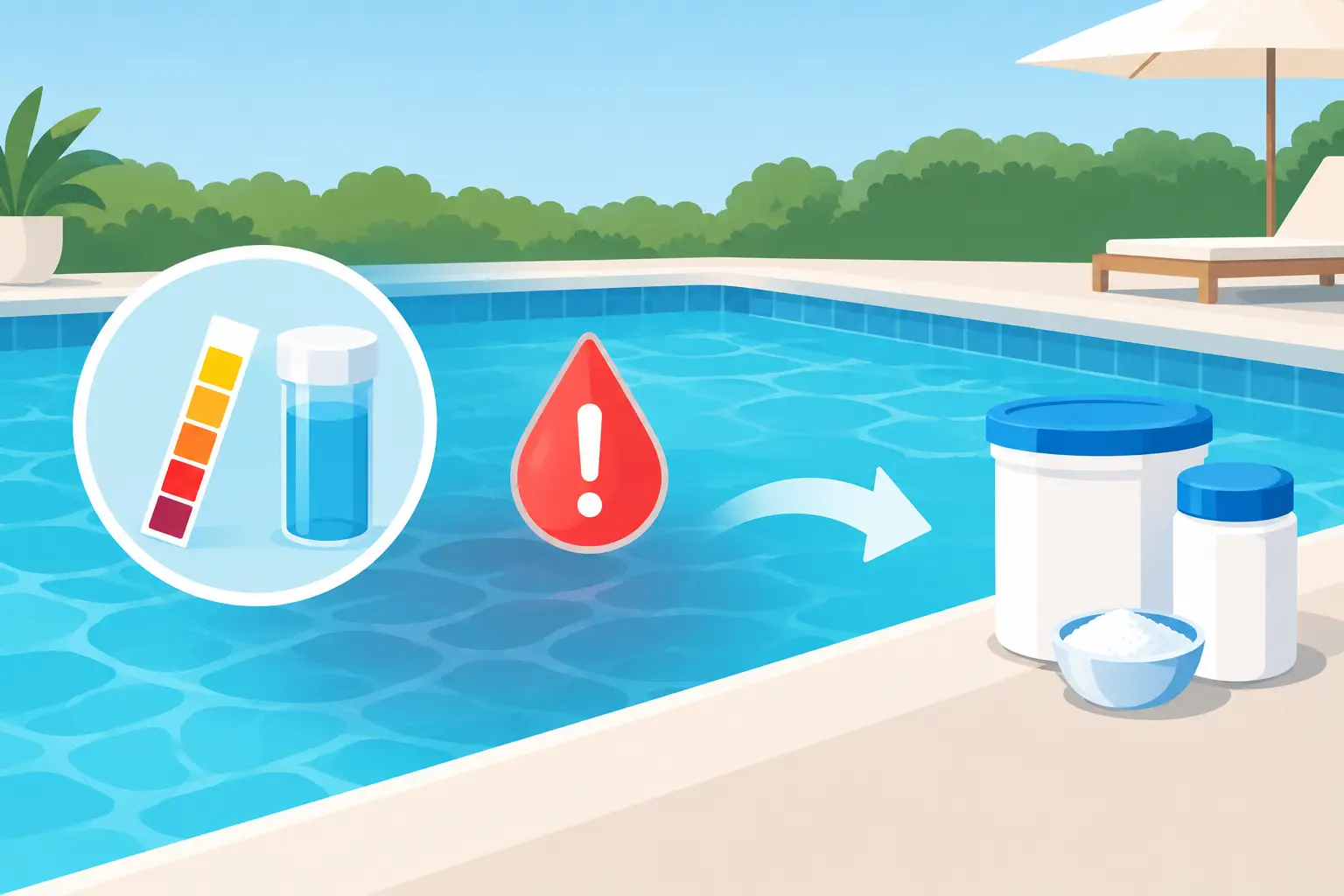
A sharp chlorine smell, stinging eyes and roughened metal fittings are often blamed on chlorine alone. Sometimes the underlying cause is acidity. So, is low pool pH dangerous? Yes – particularly when it is left uncorrected. Water that is too acidic can irritate swimmers, corrode pool equipment and make a manageable water-balance issue much more expensive.
For a private villa pool, the problem may begin with uncomfortable swimming and damage to a heater or pump. In a communal or holiday-rental pool, it also becomes an operational responsibility. Water should be clean, healthy and safe every day it is available to residents or guests, not merely look clear at the next cleaning visit.
Is low pool pH dangerous for swimmers?
Pool pH measures how acidic or alkaline the water is. The scale runs from 0 to 14, with 7 being neutral. Most swimming pools should normally be maintained at roughly pH 7.2 to 7.6. This range supports bather comfort, effective disinfection and stable pool surfaces and equipment.
When pH drops below this range, pool water becomes increasingly acidic. A mildly low reading may not cause an immediate emergency, but it should not be ignored. At lower levels, swimmers can experience red or irritated eyes, dry or itchy skin, and discomfort in the nose or throat. These effects can be more noticeable for children, frequent swimmers and people with sensitive skin.
Acidic water can also affect the protective natural oils on skin and hair. That does not mean every case of irritation is caused by pH – chloramine build-up, excessive disinfectant, poor filtration and contaminants brought in by bathers can produce similar symptoms. Testing is therefore essential. Guesswork based on smell, water clarity or how the water feels is not a safe substitute for a proper reading.
A very low pH can make chlorine more aggressive and harder to manage. This may increase discomfort and accelerate chemical consumption. It does not mean a pool is automatically well sanitised. Safe water depends on the whole balance: disinfectant level, pH, total alkalinity, filtration, circulation, stabiliser where used, and regular removal of contamination.
The less visible risk: corrosion and failures
The greatest cost of low pool pH is often not visible in the water. Acidic water attacks materials over time. Metal ladders, light fittings, handrails, heat exchangers, pump components, valves and fasteners can corrode. It may also damage grout, tile finishes, cement-based surfaces and the protective coatings intended to keep equipment in service.
In pools with a liner, persistently poor balance can contribute to premature ageing and deterioration. In plaster or rendered pools, acidic water may etch the surface, leaving it rougher and more vulnerable to staining. Once a surface becomes rough, it can retain dirt and encourage algae to gain a foothold. A simple chemical imbalance can then develop into a refurbishment issue.
Heaters deserve particular attention. Their internal heat exchangers operate under demanding conditions, especially in Cyprus where pools are heavily used through long, hot seasons. Poorly balanced water can shorten their working life significantly. The same is true of salt-water chlorination systems: a salt pool still needs active testing and balancing. Salt is not a maintenance-free alternative to water management.
How low is too low?
A result just below 7.2 calls for prompt correction and follow-up testing, particularly where the pool is busy or fitted with sensitive equipment. Readings below 7.0 are sufficiently acidic to warrant taking the issue seriously, and the lower the reading, the more cautious the response should be.
If pH is markedly low, swimmers are reporting irritation, or metalwork and equipment show signs of corrosion, stop treating the situation as a minor cosmetic problem. Restrict use until the water has been tested, corrected, circulated and retested. For communal pools and holiday accommodation, this is the responsible approach to protecting users and maintaining a reliable facility.
The exact response depends on the pool volume, surface type, sanitising method, total alkalinity and the result of a complete water test. Adding a large dose of chemical without these details can swing the pH too far in the opposite direction. High pH creates its own problems, including scale formation, cloudy water and reduced chlorine efficiency.
Why pool pH falls
Low pH has a cause. Correcting only the reading without identifying that cause may lead to a repeating cycle of chemical additions and unstable water.
Rainwater can lower pH, particularly after a heavy storm. In the Paphos region, dust and debris washed into the pool after dry weather can add a further water-quality burden. High bather use, organic contamination, acidic treatment products and some chlorine products can all influence pH. Carbon dioxide loss and gain also affect water balance, especially where water features, spas or vigorous circulation are involved.
Total alkalinity is commonly part of the story. Alkalinity acts as a buffer that helps prevent rapid pH movement. If it is too low, pH may fall or rise unpredictably even when daily test results initially seem acceptable. Conversely, trying to raise pH repeatedly without checking alkalinity can make the chemistry harder to control.
A dosing fault, incorrectly set controller or unsuitable chemical programme may also be responsible. This is why commercial and communal pools need recorded testing, calibrated equipment and a clear response procedure rather than informal adjustments.
What to do when your pool pH is low
First, test the water with a reliable kit or photometer. Check pH alongside free chlorine or the relevant sanitiser level, total alkalinity and other parameters appropriate to your pool. Take the sample away from return inlets and avoid testing immediately after adding chemicals.
If the reading confirms low pH, use a purpose-made pH increaser in the dose recommended for your pool volume and test result. Sodium carbonate is commonly used to raise pH; other products may be selected where alkalinity also needs adjustment. Never assume that more product will correct the issue faster. Overdosing produces another imbalance and may cloud the water or create scale.
Add chemicals carefully according to the product instructions, with the circulation system running. Do not mix chemicals together, pre-mix products unless their instructions explicitly require it, or add one product directly on top of another. Store all pool chemicals dry, secure and away from incompatible products.
Allow the water to circulate, then retest before permitting normal use. The time required depends on pool size, pump performance and the correction made. If pH continues to drop, do not keep adding chemicals indefinitely. Investigate the alkalinity, treatment equipment and possible contamination source.
When professional testing is the safer choice
A single low result in an otherwise stable private pool can often be corrected with careful testing. Recurrent low pH, however, calls for a more thorough inspection. This is especially true if you notice corrosion, repeated eye complaints, erratic chlorine readings, cloudy water, a failing heater or unexplained chemical demand.
For flat complexes, rental properties, spas and commercial facilities, water management must stand up to consistent use and documented operating standards. EN 15288-1 and EN 15288-2 place strong emphasis on safe design and operation, while trained pool operators assess the full system rather than responding to one test figure in isolation.
The Pool People can assess water balance, circulation, filtration and dosing performance together, helping property owners prevent avoidable equipment damage as well as protect swimmers. That matters most before the busiest part of the season, when a small chemistry fault can quickly affect every user of the pool.
Low pH is rarely a problem to panic about, but it is never a reading to dismiss. Test early, correct it carefully and treat recurring acidity as a signal that the pool needs closer professional attention.

Leave A Comment