
Imagine waking up on a blistering July morning in Paphos to find your pool water level has dropped six inches overnight, leaving your liner wrinkled and your water bill skyrocketing. You aren’t alone in this frustration. Many homeowners face the sudden stress of a failing seal just as the Mediterranean heat peaks. A leaking pool is more than a cosmetic issue; it’s a direct threat to your property’s structural integrity and can lead to fines of up to €2,000 under the July 10, 2025, pool regulations if stagnant water accumulates.
We understand that your pool is the heart of your home, and seeing it in disrepair is unsettling. This guide provides the authoritative clarity you need to master vinyl pool liner repair in Paphos, ensuring your investment remains protected. You’ll discover how to diagnose leaks accurately, understand when a $300 professional repair is the right move, and learn why proper water chemistry is your best defense against the 2026 summer sun. As the professionals in the industry, we’ll walk you through the technical steps to restore your pool’s crystal clear beauty, giving you the peace of mind that your repairs are built to last.
Key Takeaways
- Understand how the intense Paphos UV radiation and hard water minerals accelerate liner brittleness and scaling.
- Learn why electronic leak detection is the most effective, non-invasive method for locating hidden tears in your pool’s surface.
- Discover the specific surface preparation secrets that ensure a vinyl pool liner repair paphos homeowners can rely on for years.
- Apply the “7-Year Rule” and the “Snap Test” to accurately determine if your liner is eligible for a professional repair or requires replacement.
- Identify the “Goldilocks” water level and chemical balance needed to prevent liner shrinkage and maximize the lifespan of your pool.
Identifying Vinyl Liner Damage in the Paphos Climate
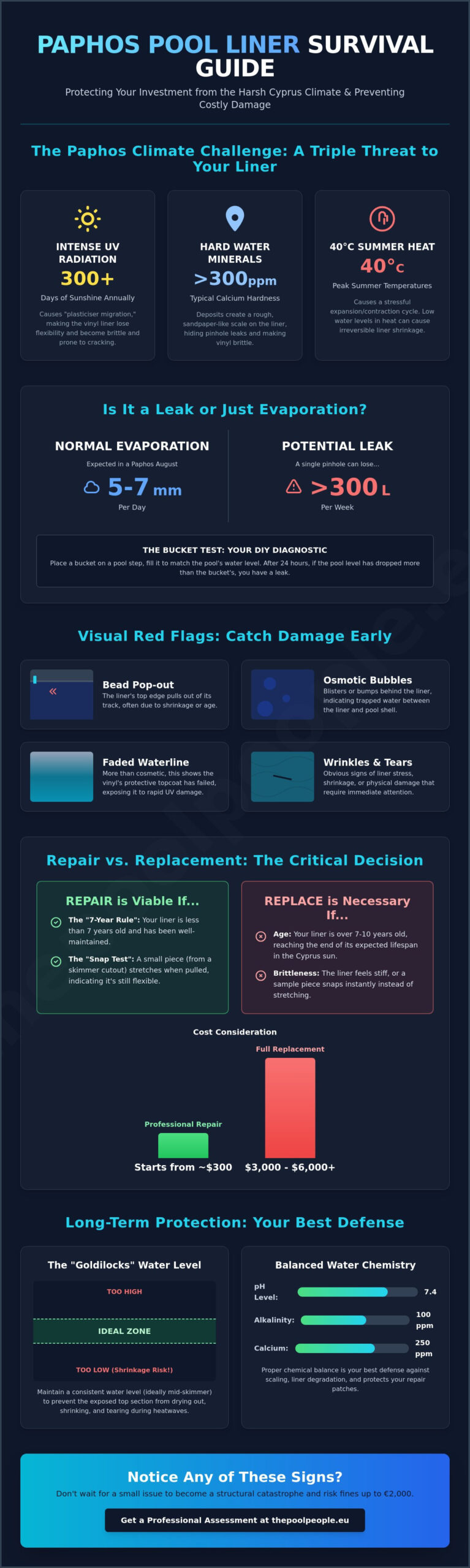
Paphos homeowners enjoy a climate that is paradise for swimmers but a laboratory for material degradation. The intense UV radiation in Cyprus, which often provides over 300 days of sunshine annually, is the primary driver of plasticiser migration. This technical process involves the chemical agents that keep vinyl flexible leaching out of the material. As these agents vanish, the liner loses its elasticity and becomes prone to cracking. This is why vinyl-lined pools in the Mediterranean require specialized care compared to those in cooler climates. Identifying these signs early is the first step in a successful vinyl pool liner repair paphos residents can trust to save their pool season.
Hard water presents another local challenge. Cyprus tap water is notoriously rich in minerals, often showing calcium hardness levels well above 300ppm. These minerals deposit on the liner surface, creating a rough, sandpaper-like texture known as scaling. This scale makes the vinyl brittle and hides small pinhole leaks from the naked eye. Distinguishing between a leak and natural evaporation is your first step toward a solution. In a typical Paphos August, you can expect to lose 5mm to 7mm of water daily to the sun. If your levels drop significantly faster, it’s time to investigate for a genuine liner leak.
The Impact of 40°C Summers on Vinyl Elasticity
When temperatures soar toward 40°C, the physical properties of your pool liner change. Heat causes the vinyl to expand significantly. When the sun sets and the water cools, the material contracts. This constant cycling creates immense stress, particularly at the waterline where the liner is exposed to both air and treated water. If you allow the water level to drop too low during a heatwave, the exposed vinyl can dry out and shrink. Once a liner shrinks, it’s nearly impossible to stretch it back into place without causing a catastrophic tear. Maintaining a consistent water level is a simple but vital part of avoiding an early vinyl pool liner repair paphos project.
Visual Red Flags: Wrinkles, Bubbles, and Beads
Identifying damage early can save you thousands in structural repairs. Look for these specific indicators of distress during your weekly maintenance routine:
- Bead Pop-out: This occurs when the liner’s top edge pulls out of the track, usually due to material shrinkage or improper installation.
- Osmotic Bubbles: These appear as small bumps or blisters behind the liner, indicating that water is trapped between the vinyl and the pool shell.
- The Ink Test: If you see a visible tear near a step or corner, use a syringe to squirt a small amount of dark food coloring near it. If the ink is sucked into the hole, you’ve confirmed a leak.
A faded waterline is more than an aesthetic annoyance; it’s a sign that the vinyl’s protective topcoat has failed. Once the pattern has bleached away, the underlying material is vulnerable to rapid UV degradation and structural failure. Catching these red flags early ensures your pool remains a source of joy rather than a source of stress.
Professional Leak Detection: How to Locate Liner Tears
Locating a breach in a vinyl liner is often described as finding a needle in a haystack, but for The Professionals, it’s a matter of systematic engineering. Finding the leak represents 90% of the repair challenge. A single pinhole can result in the loss of over 300 liters of water per week, silently damaging the ground beneath your pool shell and risking structural shifts. Professional expert pool leak detection in Paphos moves beyond guesswork, utilizing specialized equipment to identify the exact coordinates of a tear before any physical intervention begins.
The Step-by-Step Diagnostic Process
Our diagnostic journey begins with the bucket test. By placing a water-filled container on the pool step and comparing the internal and external levels over a 24-hour period, we can definitively quantify water loss versus natural evaporation. Once a leak is confirmed, we move to a perimeter inspection. We meticulously examine the “bead” lock, where the liner connects to the pool wall, as this is a frequent site for stress fractures. For hidden floor leaks, we deploy underwater microphones and sonar technology. These sensitive tools detect the distinct frequency of water being forced through a hole. Finally, we use dye-injection tests around skimmers, lights, and returns to confirm the precise point of exit with visual certainty.
Advanced Tools for Paphos Pools
In the local climate, traditional “drain and inspect” methods are dangerous. Draining a pool in the Paphos heat can cause the vinyl to shrink permanently within hours, making a simple vinyl pool liner repair paphos job impossible. Instead, we use ultrasonic sensors that scan the liner while the pool remains full. This non-invasive approach protects the structural integrity of the liner while identifying issues behind the material. We also pressure test the entire pipework system to rule out mechanical leaks in the filtration lines. This thoroughness ensures that we aren’t just patching a symptom, but solving the root cause. Maintaining proper water chemistry is also vital, as it prevents the liner from becoming so brittle that detection tools cause further damage. For total peace of mind, you can always consult with our team for a professional diagnostic assessment to safeguard your property from hidden water damage.
The Anatomy of a Professional Vinyl Liner Repair
A professional vinyl pool liner repair paphos project is a precision task that demands a deep understanding of material science. The secret to a bond that lasts through a decade of Paphos summers lies in meticulous surface preparation. We don’t just apply a patch; we chemically fuse new material to the old. This involves removing the calcium scale and microscopic biofilms that thrive in the Cyprus heat. By following established professional vinyl liner repair techniques, we create a surface where adhesives can achieve 100% contact. This level of detail is what separates a temporary fix from a permanent solution that offers true peace of mind.
In our climate, the chemistry of the adhesive is critical. Standard glues often soften or lose their grip when pool water temperatures exceed 30°C in July. We use industrial-grade, heat-resistant vinyl adhesives specifically formulated for high-UV environments. These compounds maintain their structural integrity even under the intense pressure of several thousand liters of water. For high-stress areas like corners or steps, we utilize reinforcement techniques that distribute the tension across a larger surface area, preventing the tear from migrating further. This methodical approach is why we’re known as The Professionals in the local industry.
The Underwater Patching Technique
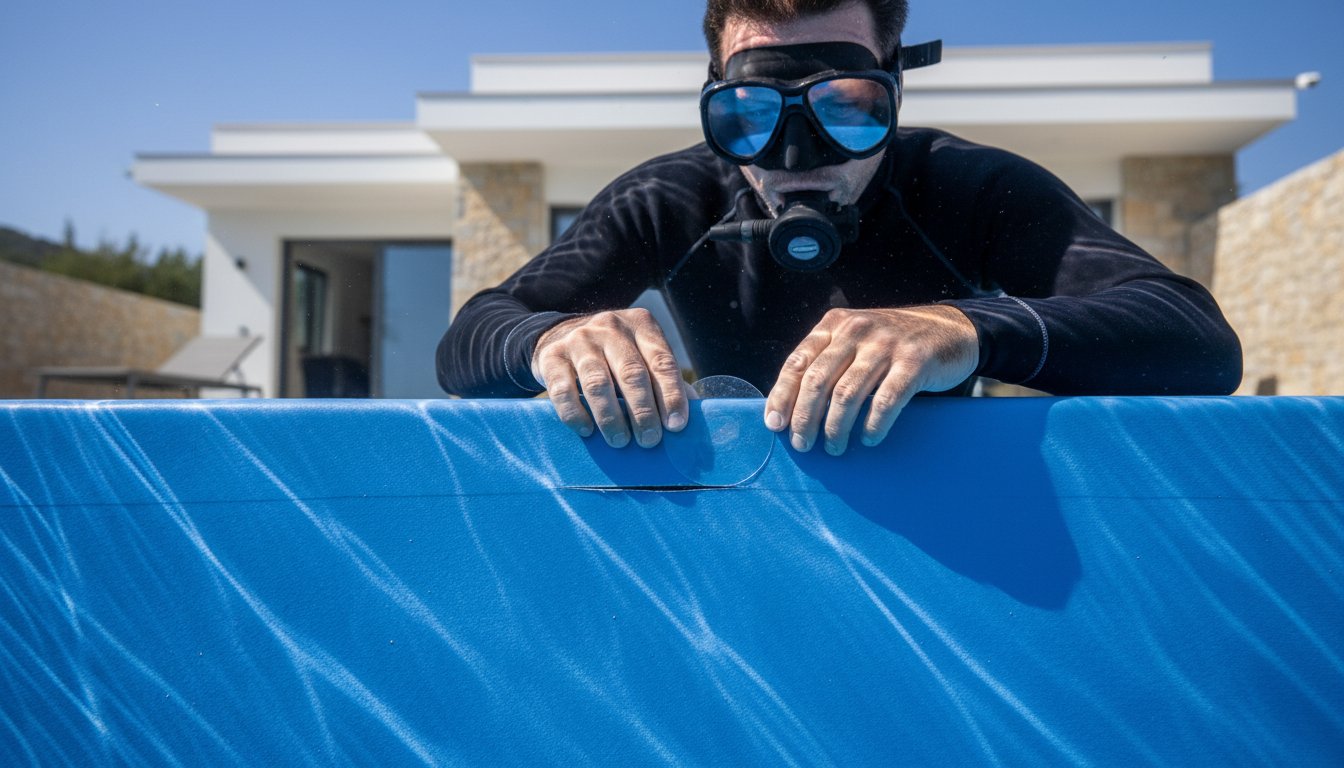
Most repairs in Paphos occur underwater to avoid the risk of liner shrinkage. The process begins by selecting a replacement vinyl gauge that matches your existing liner’s thickness, typically 0.75mm for high-quality in-ground pools. We cut the patch into a circular or oval shape to eliminate corners, which are prone to “edge lift” over time. For larger structural tears, we employ a “double-patch” method. This involves applying a smaller patch directly over the tear, followed by a second, larger patch that overlaps the first by at least 5cm in every direction. This redundant seal ensures that even if the first layer faces stress, the secondary bond maintains the pool’s integrity.
Heat Welding and Chemical Bonding
When damage occurs above the waterline, we often utilize dry repair methods such as heat-gun welding. This technique uses controlled thermal energy to melt the patch and the original liner together, creating a seamless, monolithic bond. It’s vital to ensure chemical compatibility; older liners that have lost their plasticisers react differently to heat than newer materials. Once the bond is set, we recommend a 24-hour curing period before resuming heavy pool use. After the repair, we re-balance the water chemistry to ensure the new adhesive isn’t compromised by aggressive pH levels, keeping your pool inviting and safe for the entire family.
Repair vs. Replacement: When is Your Liner Beyond Saving?
Deciding between a quick fix and a total overhaul is the most critical choice a pool owner makes. While a vinyl pool liner repair paphos service can resolve isolated issues, it can’t reverse the clock on a material that has reached the end of its chemical life. We often see owners attempt to patch liners that are fundamentally structurally unsound, which only delays the inevitable and risks property damage. As The Professionals, we believe in providing the technical clarity you need to make an informed investment in your home’s future.
In the Paphos climate, the standard 12-year lifespan seen in cooler regions rarely applies. We follow the “7-Year Rule” for Mediterranean pools. After seven summers of intense UV exposure, the plasticisers that provide flexibility have often migrated out of the vinyl. You can verify this yourself using the “Snap Test.” Find a small section of the liner near the bead or a corner above the waterline and try to fold it. If the material bends, it’s still a candidate for repair. If it snaps or cracks like a dry cracker, the vinyl is too brittle to hold a chemical bond or a heat weld.
Decision Framework: Repair or Replace?
The math often dictates the best path forward. A professional repair typically costs around $300, which is an excellent value for a liner in its first five years of life. However, if you are facing multiple leaks, you must compare this against the cost of pool liner replacement in Paphos, which generally ranges from $1,245 to $3,875 depending on pool size. When repair costs approach 25% of the replacement value, a new installation is the wiser choice. Beyond the finances, consider the aesthetic impact. A liner with five or six visible patches significantly lowers the “wow factor” and property value of a holiday rental. A new liner comes with a fresh warranty, providing a level of peace of mind that a patch simply cannot match.
Signs Replacement is Mandatory
There are three non-negotiable signs that your liner is beyond a simple vinyl pool liner repair paphos project. First is “chalking,” where the vinyl surface degrades into a white, powdery residue. This means the protective topcoat is gone, leaving the material vulnerable to immediate failure. Second is widespread pattern loss combined with a stiff, “cardboard-like” texture. Finally, if the liner is popping out of its track in several different areas, it has likely shrunk beyond its physical limits. Attempting to stretch or patch a shrunken liner often leads to massive, unrepairable tears. To ensure you’re making the right call for your pool’s longevity, contact us for a professional liner integrity audit before the summer heat intensifies.
Long-Term Protection for Your Repaired Liner in Cyprus
After completing a vinyl pool liner repair paphos homeowners must shift their focus toward preservation. The Mediterranean sun is relentless, and your maintenance routine is the only thing standing between a lasting fix and a recurring headache. Maintaining the “Goldilocks” water level is your first line of defense. If the water level drops too low, the exposed vinyl dries out and shrinks; if it’s too high, it can overflow behind the liner bead. Keep your water level exactly halfway up the skimmer opening to ensure the vinyl remains hydrated and properly positioned against the pool shell.
Your pool water chemistry plays a silent but decisive role in the lifespan of your repair. Aggressive water with low pH or improper calcium levels will eventually erode the vinyl’s protective topcoat, leading to premature brittleness. We recommend using UV-stabilized chemicals that act like a sunscreen for your pool. This protective layer reduces the rate of plasticiser migration, keeping the material supple despite the 40°C heat. Consistent chemical management is the difference between a liner that lasts five years and one that lasts fifteen.
Investing in professional pool maintenance in Paphos is the most reliable way to prevent future leaks. While basic services in the region might seem attractive, comprehensive management from a certified provider, starting at €160 per month in 2026, ensures that chemical balances are managed through precise LSI analysis. This methodical approach extends the life of your vinyl pool liner repair paphos project by protecting the integrity of the bond from chemical degradation.
Summer Maintenance Strategy
During the peak of summer, pool covers are essential for water conservation, but they can trap excessive heat if left on for extended periods. This heat can soften the vinyl and compromise the adhesives used in your repair. Limit cover use to the hottest hours and perform weekly inspections for bead slippage. Gently cleaning the waterline with a soft brush removes the body oils and mineral scales that cause chemical etching, keeping your pool inviting and pristine for your family.
Why Hire “The Professionals”?
We pride ourselves on being the definitive experts and educators in the Cypriot pool industry. Our team consists of PHTA-certified technicians who understand the specific engineering requirements of Mediterranean pools. We employ a strict “no-drain” policy for most repairs, as draining a pool in the Paphos heat can lead to catastrophic liner shrinkage and shell damage. This commitment to safety and technical excellence provides you with the peace of mind that your home investment is in the best hands. Ready to secure your pool’s future? Contact The Pool People for a liner assessment today.
Secure Your Pool’s Future Before the Summer Peak
Maintaining a vinyl liner in the Paphos heat requires more than just a quick patch; it demands a technical understanding of how Cyprus UV radiation and mineral-heavy water interact with your pool’s surface. By identifying red flags like waterline fading early and applying the “7-Year Rule” to assess brittleness, you can save your pool shell from significant structural damage. We’ve been specialists in Paphos climate-specific pool engineering since 2005, and our PHTA/NSPF Certified Pool Operators use advanced non-invasive leak detection technology to find hidden tears without draining your water.
Choosing a professional vinyl pool liner repair paphos service ensures that every bond is chemically fused to withstand 40°C temperatures, providing you with the ultimate peace of mind. Don’t wait for a minor leak to become an expensive emergency that ruins your summer plans or property value. Taking proactive steps now protects your investment and ensures your water remains inviting for the entire season.
Book Your Professional Leak Detection and Repair Assessment Today
Your crystal clear, stress-free swimming season is just one expert consultation away. We look forward to being your trusted partner in pool excellence.
Frequently Asked Questions
Can a pool liner be repaired underwater?
Yes, vinyl pool liners are specifically designed to be repaired while submerged using specialized waterproof adhesives. This method is the preferred approach for vinyl pool liner repair paphos projects because it prevents the liner from shrinking or drying out in the intense Cyprus sun. Our technicians use industrial patches that bond instantly under water pressure, ensuring a secure seal without the need to drain and waste thousands of liters of water.
How much does it cost to repair a vinyl pool liner in Paphos?
A professional repair typically costs approximately $300 USD according to current global industry standards. This is significantly more affordable than a full liner replacement, which can range from $1,245 to $3,875 depending on the pool’s dimensions and type. Investing in a professional fix ensures the work meets international safety standards and provides the long term reliability required to survive the Mediterranean summer heatwaves.
How long does a vinyl liner patch last in the Cyprus heat?
A professionally applied patch can last between 3 to 5 years if you maintain consistent and proper water chemistry. The extreme Paphos heat can degrade lower quality DIY adhesives within a single season. By using industrial grade bonding agents and UV stabilized vinyl, we ensure the repair remains flexible and secure, giving you the peace of mind that your pool is protected against the elements.
Will a patch on my pool liner be visible?
Most patches are slightly visible upon close inspection, but we minimize the aesthetic impact by using clear vinyl or color matched material. Repairs located on the pool floor are often difficult to spot once the water is crystal clear and reflecting the sky. For waterline repairs, we focus on precision cutting and edge sealing to ensure the patch blends as seamlessly as possible with the existing liner pattern.
Is it worth repairing a 10-year-old pool liner?
Repairing a liner older than 10 years is generally not recommended in the Cyprus climate. Due to the 7-Year Rule, the vinyl has likely lost its essential plasticisers, making it too brittle to hold a new chemical bond. If the material fails the Snap Test by cracking when folded, a full replacement is the only way to guarantee the safety and structural integrity of your swimming pool.
What happens if I don’t fix a small leak in my pool liner?
Ignoring a small leak can lead to catastrophic structural failure and soil erosion beneath your property. Constant water seepage washes away the supporting ground, which may cause the pool shell to crack or shift. Additionally, the new July 10, 2025, regulations impose fines up to €2,000 for pool violations, including allowing stagnant water to accumulate from unresolved leaks that create mosquito breeding grounds.
Can I use a DIY pool liner repair kit?
DIY kits are suitable for minor, temporary fixes above the waterline, but they often fail for underwater or high stress repairs. Professional vinyl pool liner repair paphos services use specialized tools and heat resistant adhesives that standard consumer kits lack. Incorrect application often leads to edge lift, where the patch peels away and allows water to continue damaging the substrate, eventually requiring a more expensive intervention.
How do I know if my pool is leaking or just evaporating?
The most accurate way to distinguish between a leak and evaporation is the bucket test. Place a bucket on a pool step and fill it so the water levels inside and outside the bucket match perfectly. After 24 hours, if the pool level has dropped more than the bucket level, you have a confirmed leak. Keep in mind that Paphos pools typically lose 5mm to 7mm of water daily to evaporation during August.


Leave A Comment