
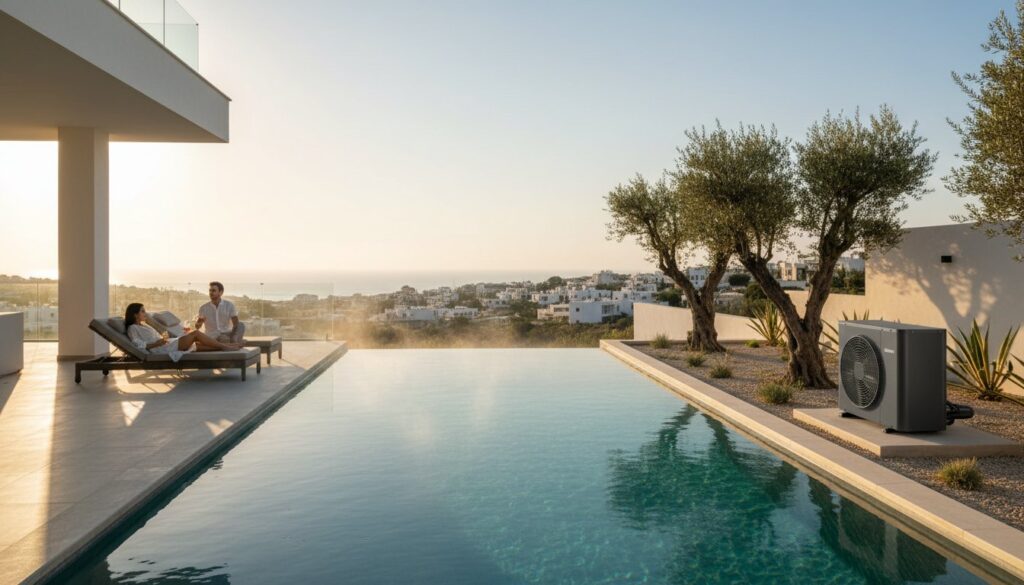
A successful pool heat pump installation in Paphos is a precise engineering project, not a simple plumbing task. While many property owners view heating as a luxury, villas in areas like Coral Bay and the Sea Caves with professional systems see up to a 40% increase in rental occupancy during the shoulder months. You likely want to enjoy your investment in March and November without the stress of skyrocketing energy bills or equipment failure caused by corrosive salt air.
This 2026 guide masters the technical requirements for a pool heat pump installation paphos homeowners can trust for long-term reliability. We’ll show you how to achieve a high COP for lower running costs while ensuring your system complies with the 2025 Swimming Pool Law and mandatory EAC electrical safety regulations. You’ll learn the specific steps to protect your equipment for a 10+ year lifespan, turning your pool into a year-round asset that adds 15% to your property’s resale appeal. We cover everything from RCD protection requirements to strategic placement for maximum airflow efficiency, ensuring your home remains a safe and comfortable environment.
Key Takeaways
- Learn why modern air-source heat pumps have become the standard for year-round swimming in Cyprus, outperforming solar thermal alternatives in reliability and efficiency.
- Discover the engineering details of a professional pool heat pump installation paphos residents need, including bypass valve setups and precise flow rate calibrations.
- Master the placement logic required for the coastal climate, ensuring your unit has the necessary 3m front discharge and 30cm rear clearance to maintain peak performance.
- Understand critical electrical requirements, such as mandatory RCD protection and phase assessments, to ensure your installation meets the strict 2025 Swimming Pool Law.
- See how certified engineering and proper documentation protect your manufacturer warranty and secure your long-term investment against the corrosive Paphos environment.
The Essentials of Pool Heat Pump Installation in Paphos
A high-quality swimming pool is a significant investment in your lifestyle and property value. In the Paphos region, the desire for year-round swimming often meets the reality of cooler winter temperatures and high energy costs. This is where a professional pool heat pump installation paphos homeowners can rely on becomes essential. Unlike traditional heaters, modern air-source heat pumps function as the primary efficiency leader in the Cyprus market because they don’t generate heat from electricity alone; instead, they move it from the surrounding air into your water.
To understand the technical advantage, we must look at how heat pumps work through the lens of the Coefficient of Performance (COP). A COP of 6.0 means that for every 1kW of electricity consumed, the unit produces 6kW of heat. In the humid, salt-rich air of Paphos, achieving these numbers requires more than just connecting pipes. It involves a calibrated engineering approach that considers local wind exposure and humidity levels to ensure the equipment operates at its peak efficiency rather than struggling against the elements. This level of precision is what separates a professional installation from a general plumbing job.
Why Air-Source Technology Wins in Cyprus
By 2026, inverter technology has revolutionized how we heat water in the Mediterranean. While solar thermal panels were once popular, they often fail when you need them most: during the shorter, cloudier days of January and February. Inverter heat pumps solve this by modulating their output based on the ambient temperature. This technology is particularly effective in coastal Paphos compared to the cooler Troodos mountains, as the higher coastal air temperature provides a richer source of energy for the evaporator coils. For maximum reliability, these units should be integrated with other essential pool equipment in Paphos, such as variable speed pumps, to maintain the precise flow rates required for optimal heat transfer.
The “Swim Season” ROI
The financial logic behind a pool heat pump installation paphos project is compelling. For property owners in Peyia and Coral Bay, a heated pool isn’t just a comfort; it’s a commercial necessity to maintain 2026 booking rates. Holiday villas with reliable heating can command nightly rates up to 30% higher during the winter months, effectively extending the profitable season from March through to late November. This shift transforms a property from a seasonal rental into a year-round income generator. When you factor in the increased occupancy and higher rental yields, a professionally installed high-efficiency system typically pays for itself within three to four years of operation.
Step-by-Step: The Professional Installation Process
Every successful pool heat pump installation paphos project begins long before the unit arrives on site. A professional engineering audit serves as the first critical milestone. During this phase, we evaluate the existing hydraulic infrastructure, specifically checking if current pipe diameters and flow rates can handle the heat pump’s requirements without causing excessive back-pressure. If the filtration pump is underpowered, the heat pump won’t receive enough water to trigger the internal flow switch, leading to frequent errors and inefficient heating cycles. We ensure the system is balanced to handle the specific volume of your pool, whether it’s a compact plunge pool or a large communal facility.
Electrical safety is where many amateur attempts fail. By 2026, modern high-capacity inverter units require dedicated hardwiring directly to the distribution board. Standard 13-amp plugs are insufficient and dangerous for these sustained loads. A professional installer ensures the circuit uses the correct cable gauge to prevent voltage drops and installs a dedicated 30mA RCD as required by Cyprus law. For a deeper look at the technical planning required for these systems, the U.S. Department of Energy provides detailed resources on Sizing and Placement for the Paphos Coastal Climate that align with our rigorous engineering standards.
The Bypass Valve Configuration
A three-valve bypass system is the heart of a professional setup. This configuration allows you to isolate the unit for winterizing or maintenance without shutting down the entire filtration circuit. More importantly, it lets us divert a specific percentage of water through the heat exchanger. If the flow is too fast, the water doesn’t have time to absorb heat; if it’s too slow, the unit might overheat. Improperly balanced pressure is a common cause of stress on pipe joints, which often leads to the need for pool leak detection in Paphos later on. Setting this correctly from day one protects your plumbing’s integrity.
Commissioning and Calibration
The final phase is commissioning. We don’t just flip a switch and leave. Our team performs a rigorous pressure test to ensure all new joints are watertight. We then calibrate the controller, setting initial temperature parameters tailored for the Paphos winter. This includes testing the auto-defrost cycle, which is vital in our humid coastal environment where evaporator coils can frost over even in 10°C weather. We provide every homeowner with an “Optimal Operation” checklist to ensure they get the best performance from their new system. If you want to ensure your equipment is handled by experts, our team offers specialized pool heat pump installation services to get your season started right.
Sizing and Placement for the Paphos Coastal Climate
Sizing a heat pump in Paphos requires more than a simple volume calculation. While many installers only look at the cubic meters of water, a professional engineering approach accounts for local wind exposure and humidity levels. In coastal areas like Coral Bay, the ambient humidity actually assists heat transfer, but the accompanying wind-chill can drastically increase thermal loss. We calculate BTU requirements by analyzing your pool’s surface area and its exposure to the elements. When planning a pool heat pump installation paphos project, placement is as critical as the hardware itself. To function correctly, the unit needs a specific airflow envelope. This includes maintaining at least 30cm of rear clearance for air intake and a 3m unobstructed space in front for cold air discharge. Without this “breathing room,” the unit will recirculate its own cold exhaust, plummeting its efficiency.
Managing the condensate is another often overlooked factor in Paphos gardens. During a typical winter night, a high-efficiency heat pump can pull several liters of water from the air. We design drainage solutions that prevent this water from pooling around the unit’s base or damaging nearby landscaping. For communal complexes or properties with close neighbors, noise mitigation is also a priority. Modern inverter units are significantly quieter than older models, but strategic placement and the use of vibration-dampening pads ensure your swim season doesn’t disturb the peace. All our placement strategies must adhere to strict Electrical Requirements and EAC Compliance to ensure long-term safety and operational stability.
Combatting Salt Air Corrosion in Peyia
Coastal properties in Peyia and the Sea Caves face a constant battle with salt air. Standard evaporator coils can fail within a few seasons if they aren’t protected. We specify units featuring Blue Fin or Gold Fin anti-corrosive coatings, which provide a hydrophilic layer that sheds water and resists salt-induced oxidation. For the external fixings and housing, we insist on 316-grade stainless steel to prevent the unsightly and damaging rust common in Mediterranean climates. Positioning the unit away from direct sea spray and behind a windbreak can extend the equipment’s life by an estimated five years.
Wind-Chill and Evaporation Factors
Thermal loss is the primary enemy of efficiency. The “Peyia Breeze” can strip heat from the pool surface faster than a heater can replace it if the system isn’t sized correctly. This is why we view heating as part of a holistic system, integrated with consistent pool maintenance in Paphos and the use of thermal covers. An undersized pump might seem cheaper initially, but it often costs 40% more in electricity as it runs constantly without ever reaching the target temperature. This level of environmental planning ensures that your pool heat pump installation paphos remains a high-performing asset for years.
Electrical Requirements and EAC Compliance in Cyprus
The electrical infrastructure of your home is often the most overlooked factor in a pool heat pump installation paphos project. In Cyprus, many residential properties operate on a single-phase 30-amp or 40-amp supply from the Electricity Authority of Cyprus (EAC). While a modern 12kW inverter heat pump might only draw about 2.5kW of electricity during steady operation, the cumulative load of household air conditioning, ovens, and pool equipment can quickly exceed your meter’s capacity. We conduct a thorough load analysis to ensure your home’s supply can handle the new equipment without tripping the main EAC breaker during peak usage times.
Safety is our primary directive. A dedicated 30mA Residual Current Device (RCD) is a non-negotiable requirement under BS 7671 and the 2025 Swimming Pool Law. Given that an estimated 60 to 70% of older homes in Cyprus still use outdated or inadequate electrical protection, we prioritize the installation of modern safety switches. We also specify units with soft-start technology. This feature prevents the massive “startup surge” common in older on/off heaters, protecting your home’s sensitive electronics and reducing the overall strain on the local grid.
Dedicated Circuitry and Safety
Reliable performance depends on professional cable gauging. For long runs from the main distribution board to the pool pump room, we use heavy-duty cabling to prevent voltage drops that can cause the heat pump to underperform or shut down. Every installation includes an IP-rated isolator switch mounted within sight of the unit, providing a safe and immediate point of disconnection for maintenance. These steps ensure your system is in full compliance with the latest pool safety regulations in Cyprus, providing psychological comfort that your investment is both legal and secure.
Managing Peak Load in 2026
Running a pool heater efficiently in 2026 requires a strategic approach to energy consumption. With electricity rates at approximately €0.30 per kWh, we program your system’s timers to avoid the most expensive peak periods. If your property has a domestic photovoltaic (PV) system, we can calibrate the heat pump to run during peak solar production hours, effectively heating your pool for free. This methodical integration maximizes your return on investment while keeping your monthly bills manageable. To ensure your system is engineered for this level of efficiency, you can schedule a professional pool heat pump installation with our certified technical team today.
Why Professional Installation Protects Your Investment
Selecting the right hardware is only half the battle for a long-lasting system. A high-efficiency pool heat pump installation paphos homeowners invest in requires a formal technical audit to ensure the manufacturer’s warranty remains valid. Most leading brands explicitly state in their terms that coverage is only provided if the unit is commissioned by a certified professional. Without a validated installation receipt from a registered engineering team, you risk losing protection on expensive components like the compressor or the titanium heat exchanger. Professional engineering ensures the system is optimized for the local environment, preventing the premature wear that often plagues DIY setups.
Long-term maintenance is where the value of expertise becomes truly visible. In the Paphos region, high calcium carbonate levels in the water can lead to rapid scale build-up inside the heat exchanger. This thin layer of mineral deposits acts as an insulator, forcing the unit to work harder and reducing its efficiency. Our team doesn’t just connect the hardware; we calibrate your water treatment routine to protect the internal surfaces of the pump. This proactive approach ensures your equipment lasts the intended 10 to 15 years rather than failing early due to preventable calcification.
The PHTA/CPO Difference
Our technical standards are rooted in the highest levels of international accreditation. The depth of CPO training in Cyprus allows our technicians to understand the complex relationship between water balance and mechanical longevity. While titanium exchangers are highly resistant to corrosion, improper pH or chlorine levels can still lead to scale accumulation that compromises heat transfer. A certified technician identifies these subtle chemical imbalances during the pool heat pump installation paphos process, spotting potential failure points before they manifest as costly repairs. We treat your pool as a complete hydraulic circuit where every chemical and mechanical component must work in harmony.
Secure Your Year-Round Swim
The final handover is a crucial part of our professional service. We take the time to teach you how to monitor your system’s performance, specifically how to read the Coefficient of Performance (COP) data on your controller. Understanding these metrics helps you identify when the system is running at peak efficiency and when it might need a routine health check. Our localized Paphos support team remains available for annual inspections, ensuring that your evaporator coils stay clean and your refrigerant levels are optimal for the winter months. To guarantee your home enjoys the comfort and security of a world-class system, book your professional site survey with The Pool People. We provide the engineering precision needed to transform your pool into a reliable, year-round asset for your family or rental guests.
Secure Your Year-Round Swimming Investment
Turning your pool into a 365-day asset requires more than just high-end hardware; it demands a rigorous engineering approach tailored to the Cyprus climate. By prioritizing precise hydraulic sizing, EAC-compliant electrical safety, and specialized salt-air protection, you ensure your equipment operates at peak efficiency for over a decade. A professional pool heat pump installation paphos homeowners can trust eliminates the guesswork of high energy bills and the risk of premature corrosion in coastal areas like Peyia and the Sea Caves.
With over 20 years of Paphos engineering experience, our team of certified PHTA/NSPF CPO Instructors specializes in salt-air resistant equipment designed for Mediterranean conditions. We don’t just install heaters; we provide the technical security and psychological comfort that your property investment is fully protected. You can Request an Expert Site Survey for Your Paphos Pool Installation today to begin your journey toward a perfectly heated pool. We look forward to helping you master your swim season with effortless reliability and professional excellence.
Frequently Asked Questions
How much does it cost to install a pool heat pump in Paphos?
Installation costs vary based on your property’s existing electrical infrastructure and the distance between the pool pump room and the main distribution board. A professional assessment is required to determine the specific labor and material requirements for your site. Factors such as the need for upgraded cabling or new RCD protection will influence the final project scope.
Can I install a pool heat pump myself to save money?
No, we don’t recommend a DIY approach for a pool heat pump installation paphos project due to the complex electrical and hydraulic requirements involved. Professional installation ensures compliance with the 2025 Swimming Pool Law and Electricity Authority of Cyprus (EAC) regulations. Attempting this yourself can void your manufacturer’s warranty and pose significant safety risks to your home.
Will a pool heat pump work during a Paphos winter?
Yes, modern inverter heat pumps are designed to operate effectively in temperatures as low as -7°C, making them perfectly suited for the Paphos winter. While efficiency is highest during the warmer shoulder months, these units will maintain your desired temperature even in January. The humid coastal air provides ample energy for the system’s heat exchange process.
How loud is a pool heat pump during operation?
Modern inverter units are exceptionally quiet, typically operating at sound levels between 40 and 50 decibels at a distance of one meter. This is comparable to the hum of a household refrigerator. During steady-state operation, the fan speeds modulate downward, making the unit almost whisper-quiet and ensuring it doesn’t disturb the tranquility of your garden.
Does my Paphos pool need a new electrical board for a heater?
Many older properties in Paphos require an electrical sub-board or dedicated circuit to safely handle the load of a new heater. We check your main EAC meter capacity and the current distribution board to ensure they meet the 30mA RCD protection standards. If your current board is full or outdated, we’ll install a dedicated IP-rated enclosure to ensure full regulatory compliance.
What is the best location to install the pump in my garden?
The ideal location is a well-ventilated outdoor space that allows for a 3m front discharge clearance and 30cm of rear intake space. Placing the unit too close to walls or inside enclosed sheds will cause cold-air recirculation, which drastically reduces heating efficiency. It’s also important to position the unit on a level, stable base to minimize vibration.
How long does the installation process typically take?
A standard pool heat pump installation paphos homeowners request typically takes between four to six hours to complete. This timeframe includes the physical mounting of the unit, plumbing integration with a three-valve bypass, and the mandatory electrical hardwiring. Once finished, we perform a full commissioning sequence to verify the system is operating at its peak efficiency.
Do I need a pool cover if I have a heat pump installed?
While not strictly mandatory, using a thermal pool cover is highly recommended to reduce your heating costs by up to 50%. Heat pumps work by adding energy to the water, but a cover is what prevents that energy from escaping through evaporation. Without a cover, your unit will run much longer to maintain the same temperature, leading to higher electricity consumption.