
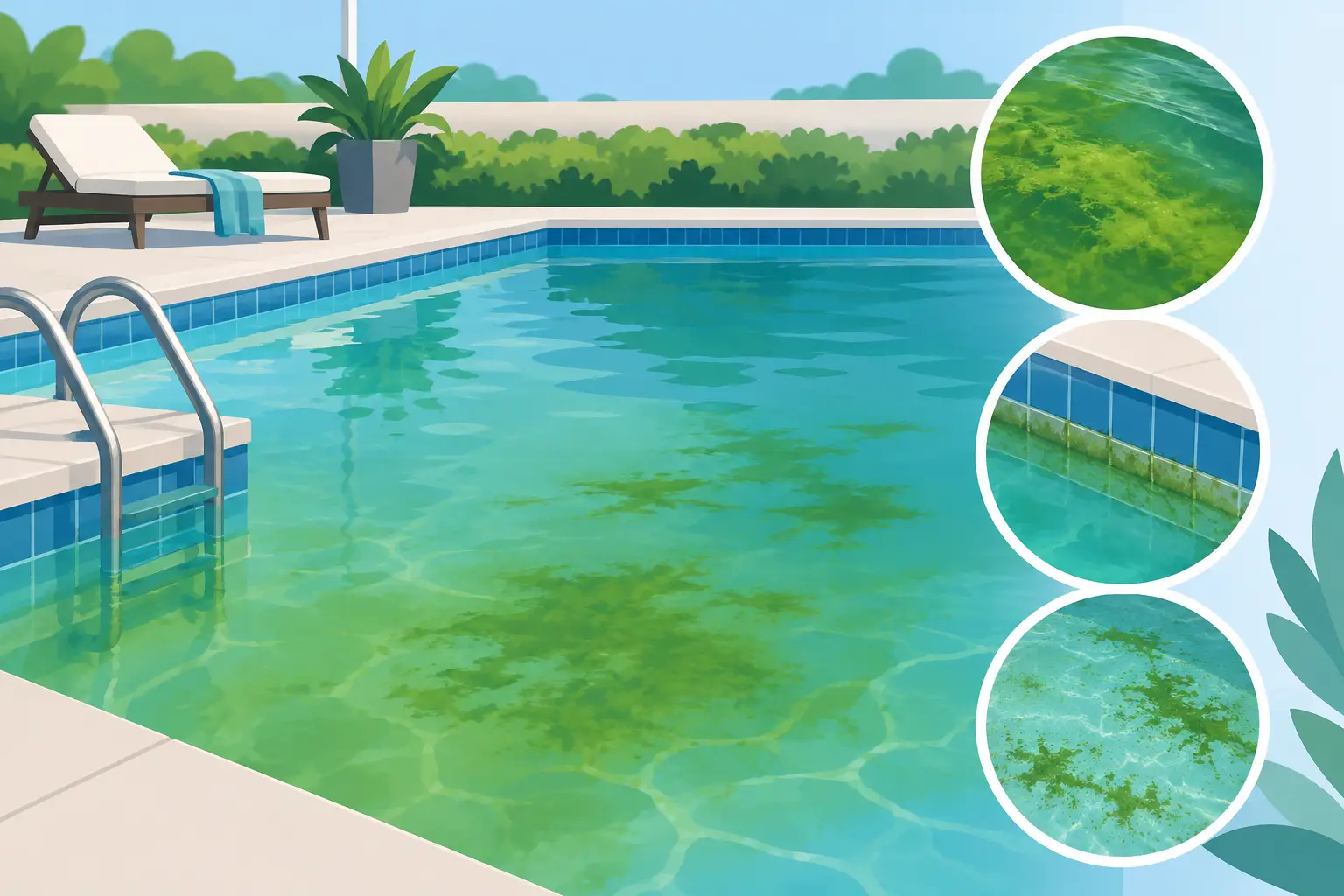
A pool can look only slightly dull in the morning and become visibly green by the afternoon in a Cyprus heatwave. That is why the top signs of pool algae should never be treated as a cosmetic issue. Algae indicates that water treatment, circulation or filtration is no longer controlling organic growth effectively – and the conditions that allow it to establish can also compromise water hygiene and place extra strain on equipment.
For villa owners, holiday-rental operators and communal-pool managers, early action is usually faster, safer and less costly than waiting for a full algae bloom. The aim is not simply to restore clear water, but to identify why sanitiser protection failed and correct the cause.
The top signs of pool algae
1. Green, yellow or black discolouration
Green water is the sign most people recognise, but algae does not always begin with a dramatic colour change. A pale green cast, particularly in the shallow end or around steps, may be the first indication. It can be mistaken for reflection from surrounding trees, tiles or landscaping, so check the water under direct light and look closely at corners.
Yellow or mustard-coloured growth may collect on shaded walls, beneath ladders and in areas with weaker circulation. Black algae is less common but more persistent. It often appears as dark, firmly attached spots on plaster, grout or rough surfaces. These organisms can establish roots within porous finishes, so brushing alone may not remove them.
Do not assume that a clear-looking pool is algae-free. Early growth can cling to surfaces before it becomes visible throughout the water.
2. Slippery walls, steps or floor surfaces
A properly maintained pool surface should feel clean and stable underfoot. If the walls, steps, handrails or floor feel slimy, algae or biofilm may be developing, even where the water remains relatively clear.
This matters for more than appearance. Slippery surfaces create a direct injury risk, especially in communal pools and holiday properties where users may not know the layout. Biofilm can also shield microorganisms from normal disinfectant levels, making chemical treatment less effective unless surfaces are thoroughly brushed and the water balance is corrected.
Pay particular attention to dead spots: behind steps, around fittings, beneath skimmer openings and along the waterline. These areas may receive less circulation and can become early indicators of a wider problem.
3. Cloudy water that does not improve with normal filtration
Cloudiness has several possible causes, including fine debris, poor filtration, scale, high bather load or incorrect water balance. However, when cloudiness develops alongside a green tint, surface deposits or rapid chlorine loss, algae is a likely contributor.
Algae cells are small enough to remain suspended in the water, scattering light and reducing clarity. A filter cannot reliably solve this on its own, particularly if the system is undersized, dirty, running for too few hours or bypassing water through a damaged valve or worn media.
In Cyprus, summer temperatures and heavy pool use can make the situation progress quickly. Running a pump for a short daily period may appear economical, but inadequate circulation can lead to repeated chemical demand, emergency treatment and unnecessary wear on equipment. The right run time depends on pool volume, pump output, filter condition, water temperature and use levels.
4. Chlorine disappears unusually quickly
If you add sanitiser and the test result falls rapidly, something in the pool is consuming it. Algae, bacteria, sunscreen residues, leaves, dust and other organic contaminants all create chlorine demand. This is why repeatedly adding tablets without testing the water rarely fixes a green pool.
Free chlorine should be measured alongside pH and, where relevant, stabiliser levels. A pH that is too high can significantly reduce the effectiveness of chlorine, even when a test shows a measurable reading. Conversely, excessively high stabiliser can make chlorine less responsive, meaning the pool may retain a chlorine reading but still lack effective sanitation.
Salt-water pools are not exempt. A salt chlorinator produces chlorine, but it still relies on correct water chemistry, sufficient output, clean cell plates and adequate circulation. When algae appears, the system needs diagnosis rather than assumption.
5. Visible patches that return after brushing
Brushing is an essential part of algae treatment because it disrupts the protective layer on surface growth and exposes it to sanitiser. But if green, yellow or dark patches return within a day or two, there is an unresolved issue.
The most common causes are insufficient disinfectant concentration, poor circulation, a blocked or ineffective filter, or algae embedded in a porous surface. Repeated growth in one location can also point to a hydraulic problem, such as a return inlet aimed incorrectly or poor flow through a particular section of the pool.
A quick visual clean may make the pool look better for a short period, but recurring patches should be investigated. Persistent algae is a warning that the treatment process has not reached every surface and every litre of water.
6. A musty smell or strong ‘chlorine’ odour
Clean pool water should not have an overpowering chemical smell. The familiar sharp odour many people call ‘too much chlorine’ is often associated with chloramines, which form when chlorine reacts with contaminants. It can indicate that the water needs proper oxidation and rebalancing, not simply more fragrance or more tablets.
Algae itself can contribute to an earthy or musty odour, particularly when organic material has accumulated in the skimmer, filter or pool circulation system. Odour alone does not confirm algae, but it should prompt immediate testing and inspection when combined with dull water or surface growth.
For spas and hot tubs, act even sooner. Their higher temperatures, lower water volume and concentrated bather load mean that poor water quality can deteriorate rapidly.
Why algae develops so quickly in Cyprus pools
Algae needs light, warmth, nutrients and an opportunity to avoid effective sanitiser. Cyprus regularly provides the first two. Windblown dust, leaves, pollen, sunscreen and high holiday occupancy can provide the nutrients, while irregular testing, low circulation or neglected filtration creates the opportunity.
Storms can be especially disruptive. Rainwater can dilute chemical levels, introduce debris and alter pH, while dust events add a significant organic load. A pool that was balanced before a storm may need retesting and corrective treatment afterwards.
Communal and rental pools require particular discipline because their bather load can change without warning. More swimmers means more contaminants and a greater demand on sanitiser and filtration. Water quality checks should be based on actual conditions and use, not just a fixed weekly routine.
What to do when you spot algae
Stop treating the problem as a visibility issue. Test the water before adding products, including free chlorine, pH, total alkalinity and stabiliser where applicable. Inspect the pump basket, skimmer baskets, filter pressure and return flow. If the pump is not moving water properly, chemicals cannot protect the whole pool.
Brush all affected surfaces thoroughly, including corners, steps and the waterline, then remove debris from the pool. The appropriate sanitising treatment depends on the test results, the type and extent of algae, the pool surface and the products already in the water. Over-correcting without measurements can create a second problem, such as damaged finishes, unbalanced pH or excessive stabiliser.
Keep the circulation system running for the necessary treatment period and clean or backwash the filter only as appropriate for its type and condition. A filter loaded with dead algae may need repeated attention before water clarity returns. Vacuuming settled material to waste, where the system allows it, can prevent it from being returned to the pool.
Do not allow bathers back into water that is cloudy, visibly contaminated or chemically unbalanced. Clear water is not the only standard, but it is a basic operational requirement. For commercial and shared facilities, this is part of the operator’s responsibility to maintain hygienic conditions consistent with the principles of EN 15288.
When professional assessment is the sensible choice
Professional help is advisable when algae returns after treatment, water remains cloudy despite correct chemical adjustment, equipment performance is inconsistent, or black algae has appeared on a porous surface. These cases may require more than routine dosing. A trained operator can assess circulation, filtration, chemical demand, pump performance, chlorinator output and the condition of the pool finish as one connected system.
The Pool People supports owners and property managers across the Paphos region with water-quality management, fault finding and planned maintenance designed to prevent these failures rather than repeatedly react to them. For shared and hospitality pools, documented checks and accountable maintenance also protect the people responsible for the site.
The most useful habit is simple: investigate the first dull patch or slippery step while it is still small. Early testing and decisive maintenance protect swimmers, preserve equipment and keep a pool ready to use when it should be.

Leave A Comment