
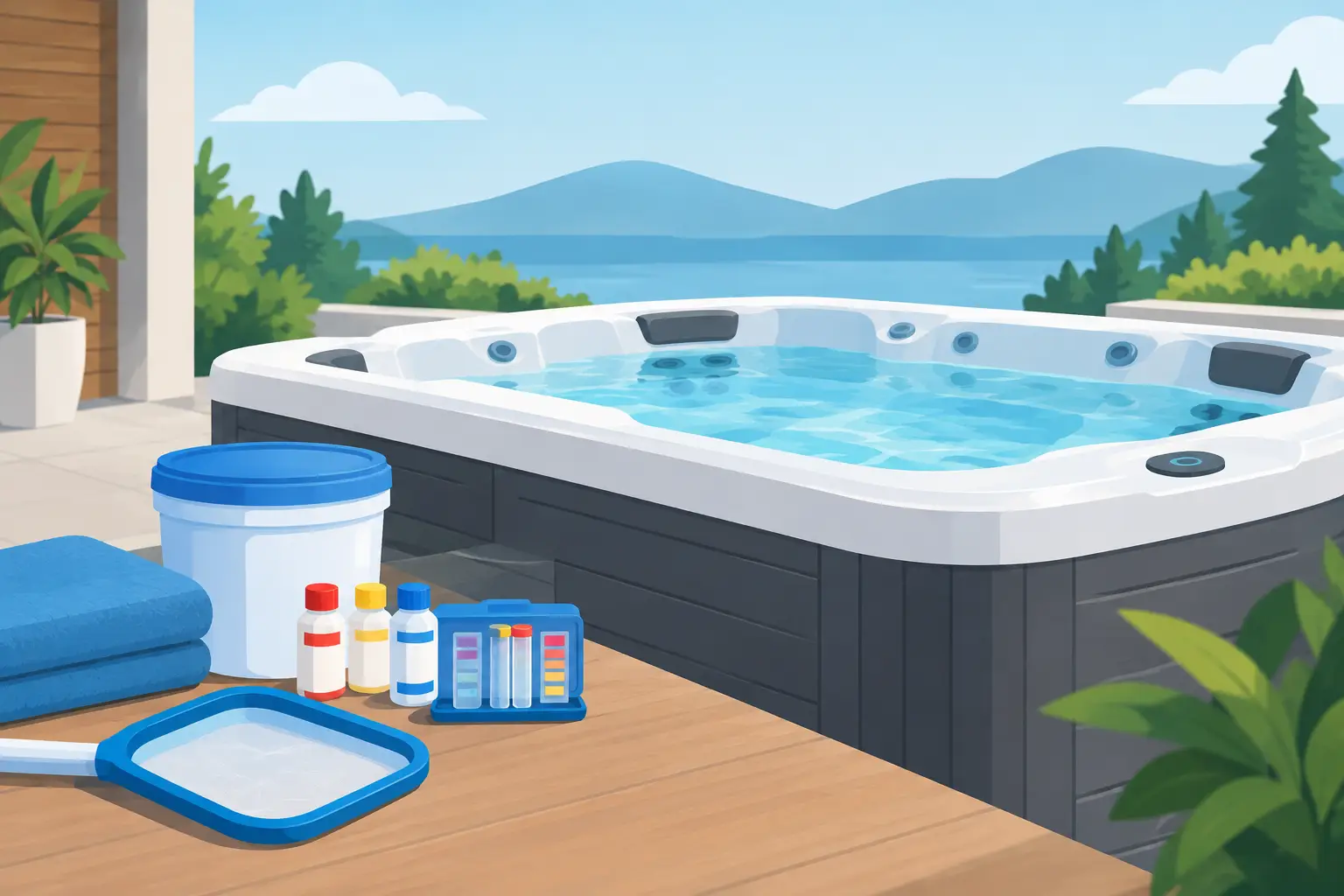
A hot tub can look perfectly clear and still be unsuitable for use. Its warm water, small volume and frequent bather load allow contamination to build quickly, particularly in Cyprus during heavy summer use. The real question is not simply how to maintain hot tub water so it looks inviting, but how to keep it clean, healthy and safe for every person who uses it.
How to maintain a hot tub: start with water balance
Hot-tub maintenance begins with routine testing, not with adding chemicals by eye. Test the water at least two or three times each week for a private spa, and before use when it has been standing for several days. Holiday-rental and communal facilities need more frequent checks, especially during changeovers and periods of high occupancy.
Check sanitiser, pH and total alkalinity together. These readings affect one another. If alkalinity is unstable, pH will tend to move up and down; if pH is too high, sanitiser becomes less effective and scale can form on heaters and pipework. If it is too low, water may become corrosive to equipment and uncomfortable for bathers.
Follow the manufacturer’s recommended range for your chosen sanitising system and test kit. Chlorine and bromine are both widely used in hot tubs, but they must be managed differently. Bromine generally remains effective at higher water temperatures, while chlorine can be suitable where water is tested and adjusted carefully. Whichever system you use, a measurable sanitiser residual must be present before anyone enters the water.
Do not rely on strips alone if results seem inconsistent or if the tub serves guests or residents. A quality photometric test or professional water analysis provides a more reliable picture, particularly where calcium hardness, stabiliser or dissolved solids may be affecting water quality.
Warm water needs active sanitation
A hot tub operates at a temperature where bacteria can multiply far more readily than in a swimming pool. Sweat, body oils, cosmetics, sun cream and organic matter are introduced every time someone uses it. These contaminants consume sanitiser and can create cloudy water, foam, unpleasant odours and hygiene risks.
Add sanitiser according to the product instructions and the volume of the spa. Never guess the dose, and never add more in the hope of solving a water problem faster. Excessive chemical levels can make the water unsuitable for bathing and may damage surfaces, seals or equipment.
Oxidising treatment, often called shocking, is usually needed weekly and after heavy use. It helps break down bather waste that ordinary sanitation has not fully dealt with. A busy holiday property may need this more often than a lightly used home spa. Keep circulation running during treatment, leave the tub unused until water tests confirm that it is safe, and allow good ventilation where the spa is indoors.
Never mix products together, even if they appear to perform a similar job. Add chemicals separately to the water with the pumps circulating, keep containers dry and clearly labelled, and store them away from heat, moisture and children. Chemical handling is a safety task, not a cosmetic one.
Keep the filter and circulation system working
Clear water depends on filtration as much as chemical control. The filter removes suspended debris and gives sanitiser a better chance of working effectively. A dirty filter restricts flow, places strain on the pump and heater, and allows fine contamination to remain in circulation.
Rinse cartridge filters weekly during regular use. Remove them for a proper clean at intervals recommended by the manufacturer, using an appropriate filter-cleaning product rather than household detergents. Detergent residues are a common cause of persistent foam. Filters also have a working life: if a cartridge remains discoloured, misshapen or difficult to clean, replacement is usually more economical than forcing an exhausted filter to continue.
Watch the circulation itself. Weak jet performance, unusual pump noise, air locks, error codes or a heater that repeatedly trips out should not be ignored. These signs can point to a blocked filter, failing pump, inadequate water level, electrical issue or developing heater fault. Continuing to run a spa with poor flow can turn a small repair into a more costly equipment failure.
Clean the shell, waterline and fittings
Weekly cleaning stops oils and biofilm from becoming established around the waterline, headrests and fittings. Use a spa-safe surface cleaner and a soft cloth. Abrasive products can damage the acrylic finish, while ordinary household cleaners may leave residues that interfere with water chemistry.
Pay attention to the waterline. A greasy ring is evidence that the water is carrying bather waste and cosmetic residue. Removing it helps, but it should also prompt a check of sanitiser levels, filter condition and recent bather load.
If the water becomes cloudy, foamy or develops a strong chemical smell, do not mask the symptom with fragrance products. A strong smell often indicates chloramines or other combined contaminants rather than a clean, well-sanitised spa. Test the water, clean the filter, review circulation and apply the appropriate corrective treatment before allowing further use.
Drain, flush and refill at the right time
Even well-managed water does not last indefinitely. Dissolved solids accumulate from chemicals, body products and the source water itself. As levels rise, balancing the water becomes harder and the spa may feel dull or become prone to foam and scale.
Many private hot tubs require draining and refilling roughly every three to four months, but this depends on water volume, bather numbers and how consistently the chemistry has been managed. A heavily used rental spa may need changing much sooner. If the water repeatedly resists correction, has persistent foam or remains cloudy after proper treatment, a drain and refill may be the sensible answer.
Before refilling, clean the shell and consider a pipework flush designed for spa systems. Internal plumbing can harbour biofilm, which is not always visible in the water. Drain the old water safely, rinse thoroughly, refill to the correct level, restore circulation and then balance the fresh water before use.
Adjust your routine for Cyprus conditions
Paphos-region properties face maintenance pressures that are easy to underestimate. High ambient temperatures increase evaporation and can accelerate chemical loss. Dust, pollen and occasional storm debris place extra demand on filtration, while frequent holiday occupancy means a spa may receive a week’s worth of domestic use in a single afternoon.
Check water level regularly, particularly in hot weather. Low water can allow air into the circulation system and may prevent the heater from operating correctly. After a dust event or unusually busy weekend, inspect the filter and test the water rather than waiting for the next planned maintenance day.
For landlords and communal-property managers, record keeping is also valuable. A simple log of test results, treatments, filter cleaning, drain dates and equipment observations creates accountability and helps identify recurring issues. It supports the disciplined approach expected of facilities managed in line with recognised operational standards, including the principles behind EN 15288-1 and EN 15288-2.
Know when professional attention is needed
Some problems need more than another dose of chemical. Repeated loss of sanitiser, unexplained cloudy water, persistent leaks, heater faults, electrical trips, damaged pipework or recurring error messages should be assessed by a trained spa technician. These faults can affect both hygiene and safe operation.
The Pool People can provide planned spa maintenance and technical fault finding for property owners and managers who need dependable water quality, not guesswork between guest stays. A professional visit is particularly worthwhile where a spa has been unused for some time, is part of a shared facility or has a history of water-balance problems.
A well-maintained hot tub should never demand constant crisis management. Regular testing, clean filtration and timely intervention turn it into what it should be: a comfortable place to relax without compromising the health of the people using it.




Leave A Comment