
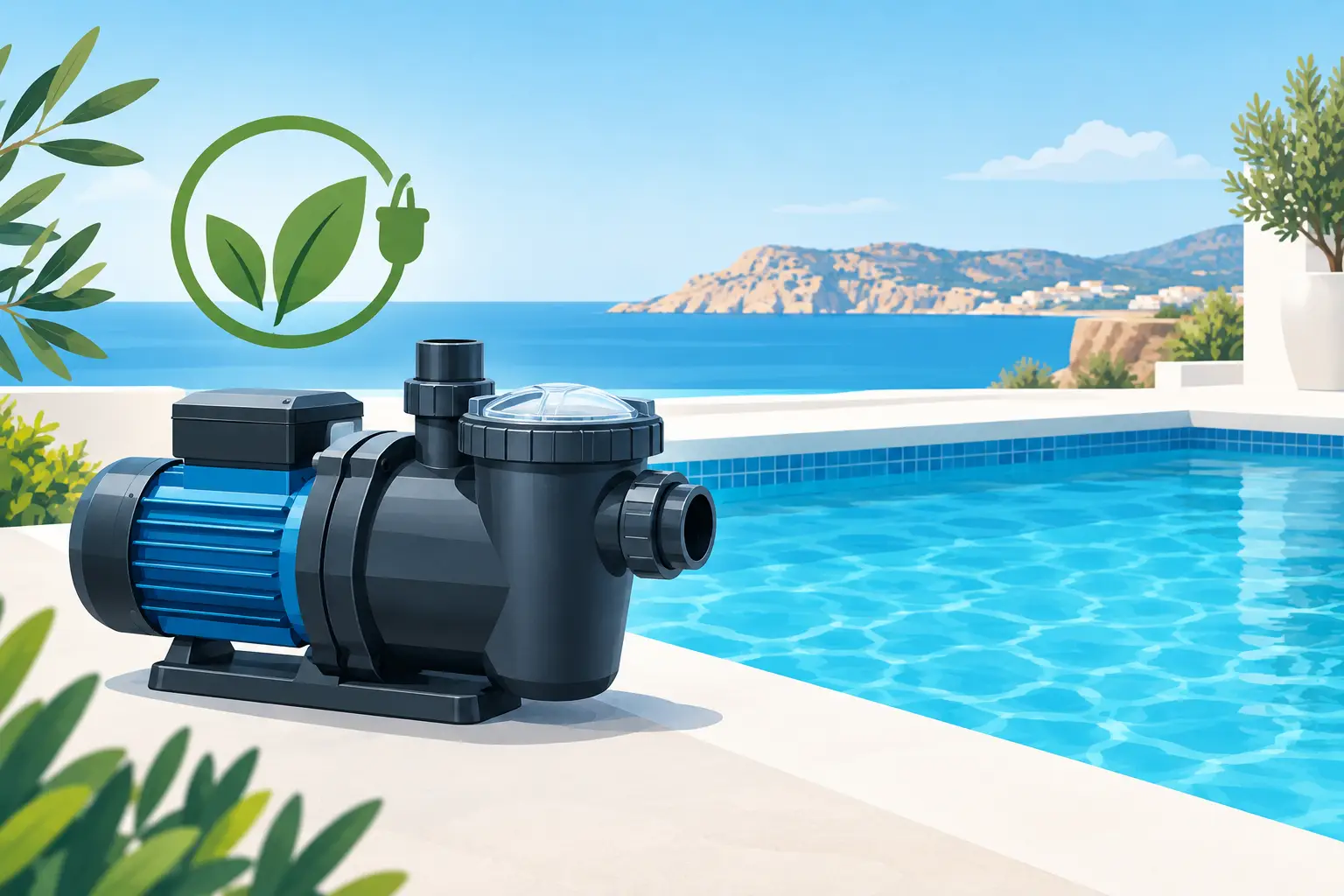
A pool pump that runs flat out through a Paphos summer can become one of the largest electrical loads on a property. Yet reducing pump energy use must never mean compromising circulation, filtration or hygienic water conditions. Energy efficient pool pumps are designed to give owners more control over running costs while maintaining the flow needed to keep water clean, healthy and safe.
For villa owners, holiday-rental operators and communal-pool committees, the right pump can make a meaningful difference to annual operating costs. The wrong selection or poor installation, however, can create weak circulation, recurring algae, cloudy water and avoidable strain on filters, heaters and sanitising equipment. Efficiency starts with a properly engineered system, not simply a new motor.
Why Pool Pumps Use So Much Electricity
The pump is the working heart of the circulation system. It draws water from the pool, pushes it through the filter and returns treated water through the inlets. This process distributes sanitiser, removes suspended debris and helps prevent stagnant areas where algae and bacteria can gain a foothold.
Traditional single-speed pumps operate at one fixed, high speed whenever they are switched on. Even when a pool needs only gentle circulation to maintain water quality, the motor consumes power at its maximum setting. In Cyprus, where long hot periods, high bather loads and warm water all increase treatment demand, those hours quickly add up.
The answer is not simply to run the pump for fewer hours. Insufficient turnover can leave contamination in the water, reduce the effectiveness of chemical treatment and allow fine debris to remain in suspension. For shared pools, this is a particular operational concern. Water quality management is a health responsibility, and any changes to circulation should be assessed alongside bather load, pool volume, filtration condition and the treatment method in use.
How Energy Efficient Pool Pumps Work
Most energy efficient pool pumps use variable-speed technology. Rather than operating at a single setting, they allow the speed to be adjusted for the task required. A lower speed is often suitable for routine filtration, while higher speeds can be used for vacuuming, backwashing, operating water features or supporting equipment that requires greater flow.
This matters because a relatively small reduction in motor speed can produce a substantial reduction in electricity consumption. The pump runs longer at a gentler rate, moving water through the filter more efficiently and often more quietly than a single-speed unit. Longer, slower filtration can also improve the capture of fine particles, provided the filtration system is correctly sized and maintained.
A variable-speed pump does not make every pool automatically efficient. If the filter is undersized, pipework is restrictive, valves are wrongly set or the pump is oversized for the pool, the system will still waste energy. Equally, a pump selected only on purchase price may lack the controls, build quality or support needed for intensive seasonal use.
Flow rate matters more than horsepower alone
Pump choices are often discussed in horsepower, but this can be misleading. What matters is whether the pump can achieve the required flow rate against the resistance created by the filter, pipework, heating equipment, chlorinator and fittings. This is known as the system’s total dynamic head.
An oversized pump can force water through the filter too quickly, reduce filtration performance and increase electrical consumption. An undersized pump may struggle to circulate water adequately, especially where there are long pipe runs, elevated equipment rooms or additional features. A proper assessment considers the whole circulation system rather than replacing one pump with the nearest apparent equivalent.
Choosing the Right Pump for Your Pool
Before selecting a new pump, establish what the pool needs to achieve during its normal operating day. Pool volume is only one part of the calculation. A shaded private pool used by two people has very different demands from a sun-exposed communal pool serving residents and guests throughout the summer.
For residential pools, a programmable variable-speed pump is often the strongest option where the existing hydraulic system is in good order. It can be set to maintain lower-speed circulation for much of the day, with scheduled higher-speed periods for cleaning or equipment operation. The quieter operation is also valuable where plant rooms sit close to bedrooms, terraces or neighbouring properties.
For communal and commercial installations, pump selection should be based on a fuller operational review. Peak bather loading, disinfectant system requirements, filter performance, water heating, pipework condition and the need for documented maintenance all influence the correct specification. European standards such as EN15288-1 and EN15288-2 place proper emphasis on safe operation and management. Energy savings should support those obligations, never work against them.
Check compatibility before installation
Variable-speed pumps must work correctly with the equipment already installed. A salt-water chlorinator, for example, may require a minimum flow to operate safely and accurately. Heating systems, automatic dosing equipment and certain cleaners may also have minimum or preferred flow requirements.
The installation should therefore include adjustment of flow settings, confirmation that air is not entering the suction line, inspection of valves and unions, and testing of the equipment at each programmed speed. A pump that appears to be running quietly is not necessarily delivering sufficient circulation. Pressure readings, return flow, water clarity and chemical performance all need to be considered.
Sensible Running Schedules in Cyprus
There is no universal number of hours that suits every pool. The correct schedule depends on water temperature, pool volume, usage, filter type, weather and treatment equipment. During intense heat, water temperature rises and sanitiser is consumed more quickly. Heavy use by holiday guests adds sweat, sunscreen and organic material that must be filtered and treated promptly.
A sensible programme may use a low speed for routine daytime filtration, then introduce a higher-speed period when equipment requires it. Some pools benefit from running during daylight hours when solar heating and water activity are highest; others may be programmed around property electricity tariffs and guest routines. The goal is reliable water turnover and treatment, not a timer setting chosen by habit.
After dust storms, high winds or periods of heavy rain, the schedule may need temporary adjustment. Fine dust can block skimmer baskets and load the filter rapidly. Rain can dilute chemicals and introduce contaminants. In these conditions, additional circulation, testing and filter attention are often more appropriate than assuming an energy-saving setting can remain unchanged.
Maintenance Protects Efficiency
Even the best pump cannot compensate for neglected maintenance. A blocked skimmer basket, dirty pump basket or heavily contaminated filter makes the motor work harder to move water. Air leaks on the suction side can reduce flow, cause noisy operation and contribute to pump damage. Small faults become expensive when they are left through a full season.
Regular servicing should include checking the pump lid and seal, inspecting unions and valves for leaks, cleaning baskets, monitoring filter pressure and verifying that the programmed speeds still match the pool’s condition. Water chemistry also matters. Poor balance can damage equipment internally, shorten component life and undermine the reliable operation owners expect from an efficiency upgrade.
For managed complexes, recording these checks provides useful accountability. It helps identify a gradual loss of flow before residents see cloudy water or experience equipment failure. It also gives property managers a clear basis for decisions on repairs, refurbishment and running costs.
When Replacing the Pump Is Not the First Fix
A high electricity bill does not always mean the pump itself is at fault. A dirty filter, damaged impeller, restrictive pipework, failing capacitor or a timer that runs the system unnecessarily can all increase consumption. In some cases, correcting a hydraulic issue or updating controls delivers immediate improvement without replacing the entire unit.
That said, an older single-speed pump approaching the end of its service life is rarely the best place to economise. Repeated repairs, noise, unreliable priming and excessive energy use can cost more over time than a correctly specified replacement. The decision should be based on the condition of the motor, expected duty cycle, electricity use and compatibility with the wider system.
The Pool People assess pumps as part of the complete circulation and water-treatment installation, not as an isolated appliance. That approach is particularly valuable where a pool has persistent clarity problems, an ageing filter system or additional equipment added over several years.
A well-chosen pump should be almost unnoticed: water remains clear, treatment performs consistently and the plant room runs without unnecessary noise or wasted power. If your pool is working harder than it should, a professional circulation assessment can turn that hidden running cost into a safer, more dependable daily operation.



Leave A Comment