
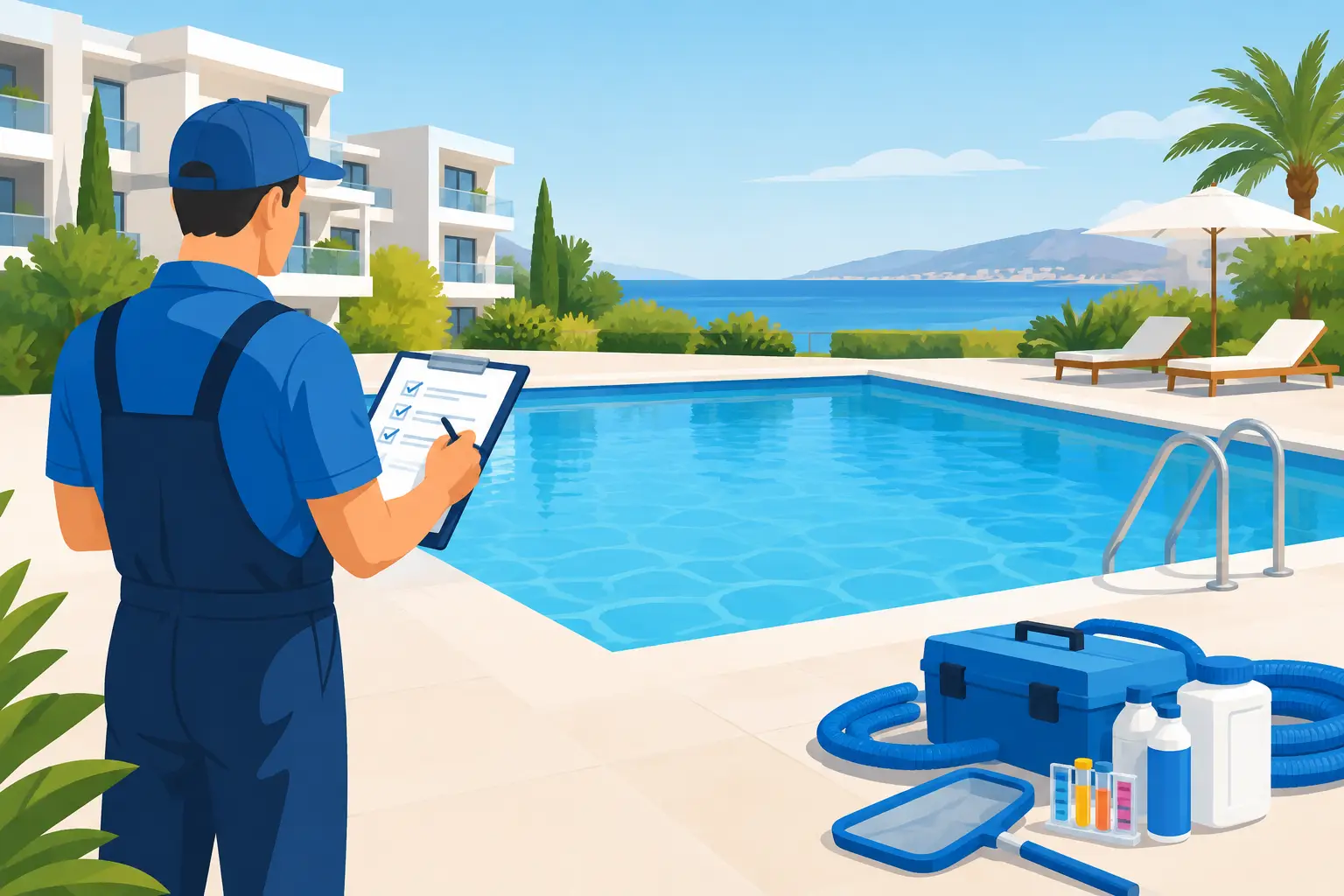
A communal pool can look clear and still be unsuitable for use. In a shared residential or holiday setting, one missed chemical check, blocked skimmer or failing circulation pump affects every resident and guest. This communal pool maintenance checklist is designed for committees, landlords and property managers who need a reliable operating routine, not simply a cleaner-looking pool.
In Cyprus, sustained heat, fine dust, heavy bather loads and sudden rain can change water conditions quickly. The practical aim is always the same: clean, healthy and safe water, supported by plant equipment that is inspected before a small fault becomes an expensive shutdown.
What a communal pool maintenance checklist must control
A proper checklist covers more than vacuuming the floor and adding chlorine. It must bring together water treatment, circulation, physical cleanliness, equipment condition, records and user safety. These elements work as one system. If circulation is poor, chemicals cannot distribute correctly; if filtration is neglected, clear water may deteriorate rapidly after heavy use.
Communal facilities also carry a higher duty of care than a private pool. The operator should have clear procedures, trained responsibility and records showing what was tested, adjusted and repaired. This reflects the operational approach set out in EN 15288-1 and EN 15288-2, which address pool safety requirements and management.
The exact routine depends on pool volume, bather load, treatment method, operating hours and whether there is a spa attached. A busy holiday complex in August needs closer attention than a lightly used development in winter. However, reducing checks because water looks acceptable is not a safe operating decision.
Daily communal pool maintenance checks
Daily checks should take place before the pool opens, with further water tests during periods of heavy use. Test results should be recorded with the time, the person carrying out the test and any corrective action. A reading without a response plan is not enough.
At minimum, inspect and test the following:
- Free disinfectant level and pH, adjusted to the treatment system and manufacturer guidance.
- Water clarity, colour and smell. Cloudiness, visible debris, algae and an unusually strong chemical smell all require investigation.
- Skimmer baskets, pump basket and pool surface, removing leaves, insects, sunscreen residue and other debris.
- Pump operation, filter pressure, return flow and any unusual vibration, heat or noise in the plant room.
- Pool floor, steps, grilles, drains, handrails, depth markings and surrounding surfaces for damage, sharp edges, loose fittings or slip hazards.
- Chemical storage for leaks, correct labelling, ventilation and secure separation of incompatible products.
Disinfectant and pH readings are especially important. A low disinfectant residual increases the risk of waterborne illness, while an excessively high dose can cause discomfort and damage equipment. pH controls how effectively the disinfectant works and influences scaling, corrosion and bather comfort. Do not treat chemical dosing as guesswork or rely only on test strips where a properly maintained photometer is appropriate.
The visual inspection matters just as much. A clear pool may have inadequate disinfectant, and a strong ‘chlorine’ smell does not prove that the pool is clean. It can indicate combined chlorines formed when disinfectant reacts with contamination. The cause needs to be addressed through testing, circulation and corrective treatment rather than masked with fragrance or more superficial cleaning.
Weekly cleaning and plant-room routine
Weekly work protects the pool shell and filtration system from the gradual build-up that daily checks cannot fully prevent. Brush walls, steps, waterline tiles and difficult corners, then vacuum the floor thoroughly. Pay attention to areas with low circulation, where algae and fine sediment commonly collect first.
Clean skimmer baskets and inspect the pump basket before restricted flow places unnecessary strain on the pump. Check the filter pressure against the normal clean operating pressure. A rising pressure usually indicates that the filter needs cleaning or backwashing, but the right response depends on the filter type. Over-backwashing can waste water and reduce filtration efficiency, while waiting too long can impair flow and water quality.
Review total alkalinity, calcium hardness and stabiliser levels where relevant to the treatment method. These are not always daily adjustments, but they determine whether water stays balanced over time. In Cyprus, evaporation and regular topping-up can concentrate minerals, increasing the risk of scale on tiles, heaters, salt cells and pipework.
The plant room should remain clean, dry and accessible. Check pipe unions, valves, dosing lines and injection points for seepage or crystallised chemical residue. Inspect electrical equipment visually without interfering with live components. Any damaged cable, tripping breaker, water ingress or unreliable light should be referred to a qualified pool engineer or electrician promptly.
Monthly inspections and documented maintenance
A monthly inspection should look beyond the current water test results. Review the logbook for recurring issues: repeated pH drift, increasing chemical use, regular loss of water, pressure changes or complaints about cloudy water. Patterns often reveal a developing equipment problem before it becomes obvious.
Check the condition of the pool finish, grouting, expansion joints, grilles and fittings. A small split in a liner, loose tile or failing seal can lead to water loss and damage behind the pool structure. Inspect circulation fittings and drain covers for secure fixing and sound condition. These are working components, not cosmetic details.
For pools using automatic dosing, compare controller readings with independent manual tests and calibrate probes in line with the manufacturer’s schedule. Automation is valuable, but it does not remove the need for competent oversight. A faulty probe can dose incorrectly for hours before anyone notices.
Review chemical stock and expiry dates, keeping enough product for normal operation without storing excessive quantities. Staff or contractors should understand safe handling, dilution procedures, spill response and which chemicals must never be mixed. Good housekeeping in the chemical area is part of hygiene control.
Seasonal checks for Cyprus complexes
The first sustained hot weather changes the maintenance burden. As water temperature rises, disinfectant demand rises too, and algae can establish rapidly when circulation or treatment slips. Before peak season, service pumps, inspect filter media or cartridges, confirm dosing equipment is functioning accurately and check that timers match the intended operating hours.
During the busiest weeks, increase testing frequency according to bather load and water temperature. A pool used by dozens of guests each day cannot be managed on the same schedule as a quiet residential pool. If water quality cannot be restored quickly, restrict use until it is safe. Keeping the pool open with poor clarity or unsatisfactory readings is not a reasonable commercial compromise.
After dust storms or heavy rain, remove debris promptly and retest the water. Rain can dilute treatment chemicals, introduce contaminants and alter pH, while dust adds fine particles that challenge filtration. The pool may need extended circulation, cleaning and corrective dosing before normal use resumes.
Winter is the right time to inspect equipment condition, address leaks, repair finishes and plan energy-saving upgrades such as variable-speed pumps or efficient heating controls. Deferred maintenance rarely becomes cheaper once the next summer workload begins.
When a routine visit is not enough
Some faults demand more than standard servicing. Persistent cloudy water despite correct chemical readings may point to poor filtration, undersized equipment, damaged filter media or circulation dead spots. Repeated water loss can indicate a leak in the shell, pipework or plant equipment. A salt-water chlorinator that is not producing adequately may have a scaled cell, a flow issue or an electrical fault.
This is where a maintenance provider needs engineering capability as well as cleaning experience. The Pool People applies trained operator practice and practical fault-finding to communal systems across the Paphos region, helping management committees make decisions based on evidence rather than repeated short-term fixes.
A documented checklist gives property managers control without pretending that every problem has a simple answer. Assign responsibility, keep accurate records and act early when readings or equipment behaviour changes. Residents and guests may only notice the water, but safe pool operation depends on everything happening behind it.


Leave A Comment