
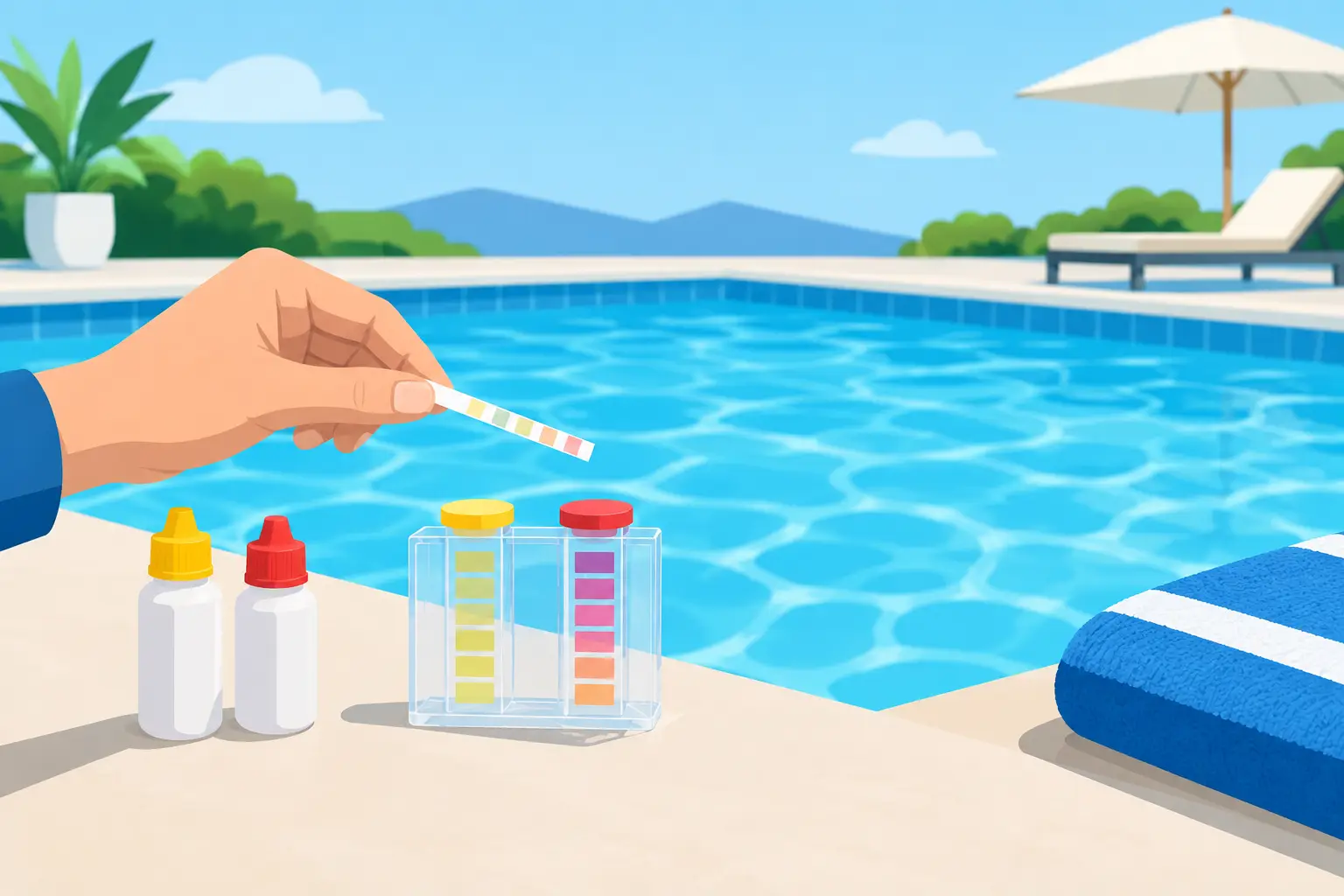
A pool can look bright and inviting while its water chemistry is moving in the wrong direction. In Cyprus, strong sun, high water temperatures, dust and frequent bather use can change the balance quickly. If you are asking how often to test pool water, the practical answer is: more often than most owners expect, particularly from late spring through early autumn.
Testing is not simply about preventing green water. It is how you confirm that disinfectant is present, that pH is not irritating swimmers or damaging equipment, and that your filtration system is supporting clean, healthy and safe water. For holiday rentals, communal pools and commercial facilities, regular records also demonstrate responsible operation.
How Often Should You Test Pool Water in Cyprus?
For a typical private pool in regular use, test free chlorine and pH at least two to three times each week. During very hot weather, after a busy weekend, or when the pool is used daily, testing these two readings every day is the safer standard.
A pool at a villa that is empty for much of the week may appear to need less attention. However, heat and sunlight do not take a break between guests. Chlorine is consumed by UV exposure and organic contamination, while evaporation concentrates dissolved minerals. Test before guest arrival, during the stay where practical, and immediately after any report of cloudy water, skin irritation or a strong chemical smell.
Communal, hospitality and heavily used pools need a more disciplined programme. Disinfectant and pH should normally be checked at least daily, with checks increased according to bather load, operating hours and risk assessment. The relevant standard of care is not a once-weekly cleaning visit; it is maintaining safe water throughout the period people can use the pool. European operational principles under EN 15288 place the emphasis firmly on hygiene, monitoring and documented control.
Spa pools and hot tubs require still closer attention. Their smaller water volume, warmer temperature and concentrated bather load mean water chemistry can change within hours. Check disinfectant and pH before use each day, and again after periods of heavy use.
The Readings That Need Different Testing Intervals
Not every parameter needs testing with the same frequency. Free chlorine and pH are the day-to-day priorities because they directly affect disinfection performance and swimmer comfort. A suitable pool test kit or photometer should be used correctly, with the sample taken away from return inlets and not immediately after chemicals have been added.
Check total alkalinity weekly in most private pools. Alkalinity acts as a buffer for pH, so a pool with low alkalinity can show frustrating pH swings despite repeated adjustment. High alkalinity can make pH difficult to reduce and may contribute to scaling, especially where evaporation is high.
Cyanuric acid, often called stabiliser, should be checked monthly during the main season and whenever water treatment becomes difficult to manage. It protects chlorine from sunlight, but too much can reduce chlorine’s effective sanitising action. This is a common issue in pools that receive frequent additions of stabilised chlorine products without enough dilution through backwashing, splash-out and fresh water replacement.
Calcium hardness is best checked monthly or at least every few months, depending on the water source and pool finish. Cyprus water conditions can vary, but hard water and high evaporation make scale a real concern. Scale can restrict pipework, reduce heater efficiency, mark tiles and shorten the working life of salt cells and other equipment.
Salt levels in a salt-water pool should be checked monthly and whenever the chlorinator indicates a fault or reduced output. Do not assume that a salt system manages everything on its own. It generates chlorine, but it still depends on correct pH, adequate circulation, clean cells and a sensible inspection routine.
Test More Often After Heat, Rain and Heavy Use
A fixed timetable is useful, but pool water does not respond to a calendar. Certain events should trigger an extra test.
High temperatures accelerate chlorine demand and encourage algae growth. In a Paphos summer, a pool can lose effective disinfectant quickly, particularly if the pump run time is too short or swimmers have been using sunscreen and body oils. Test daily through heatwaves and make sure circulation is sufficient for the pool volume and equipment arrangement.
Rain can dilute chemistry, introduce dust and debris, and alter pH. Even a short storm may leave fine particles that cloud the water or add organic material for chlorine to deal with. Test after significant rainfall, empty skimmer baskets, inspect the filter pressure and remove debris before it can break down in the water.
Heavy bathing creates a sudden increase in sweat, cosmetics, sun cream and microorganisms. A busy family gathering, a changeover at a holiday rental or an afternoon of children playing in the pool justifies a test that evening and again before the next use. If free chlorine has fallen, correct it promptly according to the product instructions and allow the water to circulate fully before swimmers return.
Why Clear Water Is Not Proof of Safe Water
Clear water is desirable, but it is not a water-quality test. Some microbiological risks and chemical imbalances have no visible warning. Equally, the familiar “chlorine smell” is not evidence that there is plenty of chlorine available. It can indicate chloramines, formed when chlorine reacts with bather waste and loses disinfecting effectiveness.
A balanced pH helps chlorine work as intended and reduces eye and skin discomfort. If pH is too high, chlorine becomes less effective and scale formation is more likely. If it is too low, water may become corrosive to metal components, grout, seals and equipment. Repeatedly adding chemicals without measuring first can create a larger problem than the one you are trying to solve.
This is why trained operators work from results, not appearances. A proper reading, recorded over time, reveals patterns such as a chlorinator underperforming in hot weather, a filter that needs attention or a recurring pH drift caused by the source water.
Keep a Simple Water-Test Record
For a private pool, record the date, free chlorine, pH and any chemical adjustment. Add notes for unusual events, such as a party, a storm, a pump fault or a period when the water looked dull. This takes only a few minutes and makes recurring faults far easier to identify.
For managed facilities, records should be more formal. They support accountable pool operation, help demonstrate that checks have been carried out, and give maintenance engineers useful evidence when diagnosing a problem. A reading that has slowly deteriorated over several days requires a different response from a sudden drop after heavy use.
When Testing Means You Need Professional Help
Arrange a professional inspection if readings will not stabilise, chlorine disappears unusually fast, algae returns after treatment, or the water remains cloudy despite correct chemical adjustment and filtration. These symptoms can point to problems beyond routine chemistry, including poor circulation, an undersized or blocked filter, a failing pump, a worn multiport valve, an exhausted salt cell or incorrect equipment programming.
Do not try to correct persistent water problems by adding larger and larger quantities of chemicals. That can damage surfaces and equipment, increase operating costs and leave the underlying fault unresolved. For communal pools, spas and holiday properties, it can also expose owners and managers to an avoidable hygiene risk.
The Pool People applies trained operational knowledge alongside engineering checks, helping property owners identify whether the issue is chemical, mechanical or both. That distinction matters because a well-balanced test result cannot compensate for water that is not circulating and filtering properly.
A regular test routine protects more than the appearance of your pool. It protects the people using it, the equipment working behind the scenes and the value of your property. Make testing part of the operating routine, respond early to changing readings, and ask for qualified support before a small imbalance becomes a costly closure or repair.




Leave A Comment