
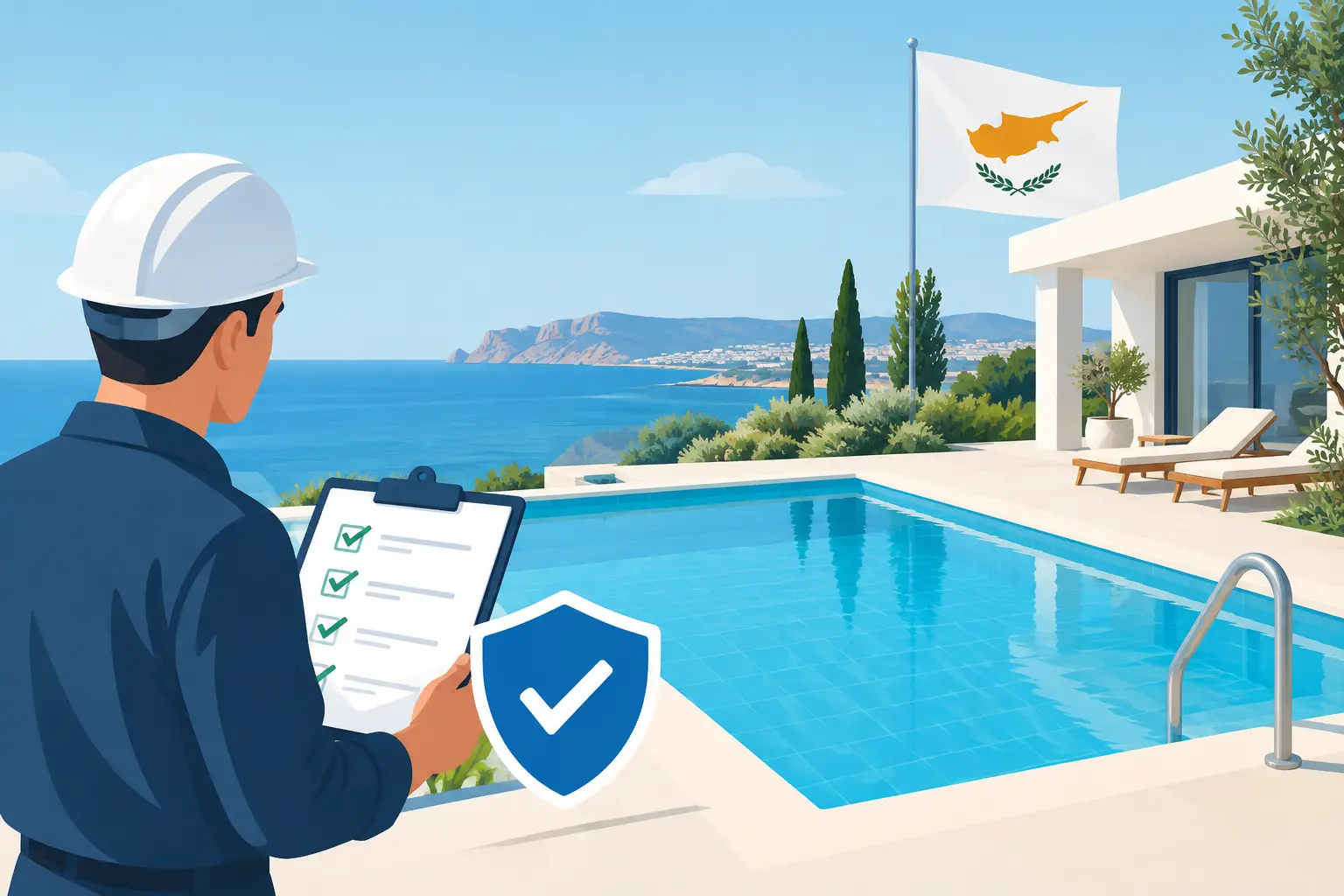
A pool can look clear and still be unsafe. That is why EN 15288 pool compliance is not a matter of adding chlorine, skimming leaves and assuming the job is done. For communal pools, hotels, holiday rentals and facilities used by multiple people, safe operation depends on documented controls, competent decisions and a system that continues to work under pressure.
In Cyprus, pressure is built into the season. High temperatures accelerate chemical demand, heavy bather loads introduce contamination quickly, and sudden dust or rain can change water conditions in hours. Owners and managers need a standard that treats hygiene, equipment and user safety as connected responsibilities rather than separate maintenance tasks.
What EN 15288 means in practice
EN 15288 is the European standard for swimming pool safety. It is split into two parts: EN 15288-1 addresses safety requirements for design, while EN 15288-2 addresses safety requirements for operation.
For an existing pool, Part 2 is usually the day-to-day concern. It asks a simple but demanding question: can the operator demonstrate that the pool is being run safely? That includes water quality, circulation and treatment performance, supervision arrangements, emergency readiness, maintenance, records and clear responsibilities.
The standard is particularly relevant to pools open to the public or shared by residents, guests and members. A private domestic pool may not be subject to the same operational expectations as a hotel or communal facility, but the principles remain valuable. Water does not distinguish between a family pool and a holiday-rental pool when hygiene controls fail.
EN 15288 is not a substitute for local legal duties, insurance requirements or manufacturer instructions. Compliance must be considered alongside the rules that apply to the particular property and how it is used. A small villa pool, for example, needs proportionate controls. A busy block of flats needs more formal oversight, because the number of users, the absence of a single responsible owner on site and the consequences of an incident are all greater.
EN 15288 pool compliance starts with responsibility
The most common failure in shared facilities is not a single faulty pump or one poor test result. It is uncertainty over who is responsible. A committee assumes the management company is dealing with it, the management company assumes the maintenance contractor has authority to make every decision, and nobody checks whether remedial work has actually been completed.
A compliant operating approach identifies a named person or organisation responsible for the pool. It also defines what the maintenance provider is contracted to do, who can approve repairs, who closes the pool if water quality is unsatisfactory, and how residents or guests report faults. These arrangements need to be written down and understood before the busy season begins.
For property managers, this is not unnecessary administration. Clear responsibility prevents delays when circulation stops, disinfectant dosing fails or a contaminated pool must be taken out of use. It also protects the committee or owner by showing that decisions were made through a managed process rather than informal messages and assumptions.
Risk assessment must reflect the real pool
A risk assessment should be specific to the installation and its users. Copying a generic form is not enough. Consider the pool depth profile, entry and exit points, plant-room access, lighting, electrical equipment, chemical storage, slip risks, visibility, likely user groups and whether the facility includes a spa or hot tub.
Usage changes the assessment. A villa occupied occasionally by one family has a different risk profile from a holiday property with frequent guest changeovers. A communal pool used by children, older residents and visitors needs practical controls that account for varied levels of confidence and supervision.
Review the assessment after an incident, equipment alteration, refurbishment, change in use or recurring water-quality problem. In Paphos, a long hot season can expose weaknesses that were not obvious during quieter months. Repeated algae growth, high chlorine demand or cloudy water should be treated as signals to investigate the cause, not merely as reasons to add more chemicals.
Water quality is a public-health control
Clear water is an appearance standard. Safe water is a treatment and monitoring standard.
Disinfection, pH balance, circulation, filtration and cleaning all need to work together. If pH is outside its intended range, disinfectant may not perform as expected. If flow is poor, treated water may not reach all parts of the pool effectively. If filters are neglected, contamination is allowed to build up even where test readings initially appear acceptable.
Routine testing must be carried out at a frequency suited to the pool’s use and treatment system. Results should be recorded, reviewed and acted upon. The record matters because it shows trends: rising chemical demand, repeated pH drift, unusual stabiliser levels or a pattern of poor readings after heavy use. These are maintenance clues as well as hygiene information.
A professional operator does not simply record a number and walk away. If a result is outside the required operating range, the response should be proportionate and documented. That may mean adjusting treatment, retesting after circulation, checking dosing equipment, investigating bather load or temporarily restricting use until the water is safe.
Spas need tighter control
Spas and hot tubs require particular attention. Their warm water, smaller volume and concentrated bather load create conditions in which water quality can deteriorate rapidly. Aeration, body oils and high temperatures all affect disinfectant demand.
For landlords and hospitality operators, treating a spa as a miniature swimming pool is a costly mistake. It needs an appropriate testing routine, planned cleaning, filter care and a clear process for responding to unsatisfactory readings. Guest expectations may be high, but the correct response to unsafe water is never to keep the facility open for appearances.
Plant rooms and equipment are part of compliance
A safe pool cannot be maintained from the poolside alone. The plant room is where water treatment becomes real: pumps move water, filters remove debris, dosing systems control treatment and electrical components support the whole installation.
The area should be orderly, accessible to authorised people and maintained so that leaks, corrosion, damaged pipework or unusual noises can be identified early. Chemicals require controlled storage and handling arrangements. Mixing incompatible products, using unlabelled containers or allowing moisture into storage areas creates avoidable risk.
Preventive maintenance is especially valuable in Cyprus. Heat can place extra strain on pumps and electrical components, while seasonal demand can reveal undersized or poorly maintained equipment. A failing pump does not only create an inconvenience. It can reduce circulation, weaken treatment and quickly turn a hygiene problem into a closure.
Planned inspection should cover more than visible equipment. Filter condition, pressure trends, backwashing performance, dosing calibration, circulation times, drains, lights and electrical safety all deserve attention. When a component is repeatedly repaired, replacement may be the more responsible decision. The cheapest immediate repair is not always the lowest-cost option over a full season.
Records turn good intentions into accountable operation
EN 15288-2 places weight on operational documentation because memory is unreliable, particularly where several people share responsibility. Records create continuity when staff change, committee members rotate or a problem needs to be investigated weeks later.
A useful pool file normally includes the risk assessment, operating procedures, emergency arrangements, maintenance schedule, water-test records, service reports, chemical information, equipment manuals and details of repairs or corrective actions. The purpose is not to create paperwork for its own sake. It is to make safe operation repeatable.
Emergency arrangements should be practical rather than decorative. The responsible people need to know how to respond to contamination, equipment failure, electrical concerns, injury, chemical incidents and water-quality loss. Contact details, isolation procedures and escalation routes should be current and available where they are needed.
For a communal development, regular review is essential. A monthly report that says only “pool serviced” gives little assurance. A meaningful report identifies readings, work completed, faults found, recommendations and any action still awaiting approval. That allows managers to make informed decisions before minor defects become expensive failures.
When professional support is the sensible option
Private owners can carry out simple daily observations, such as checking clarity, water level and obvious debris. But shared and commercial pools demand a higher level of control. The risk is not only poor presentation. It is illness, injury, avoidable closures, damaged equipment and a loss of confidence among residents or guests.
Qualified pool operators bring a structured approach to testing, treatment, plant performance and records. They can also distinguish between a one-off weather-related issue and a recurring fault in circulation, filtration or dosing. The Pool People applies EN 15288 principles alongside trained operational and engineering support, helping property owners address the cause rather than repeatedly treating the symptom.
The most useful question for any owner or manager is not, “Does the pool look clean today?” Ask whether the facility could demonstrate safe control on its busiest, hottest and most demanding day. Building the answer into routine operation is how a pool remains clean, healthy and safe for everyone who uses it.

Leave A Comment