
Last July, a villa owner in Tala watched their water level drop by 5cm in just six days, fearing a €2,500 structural repair bill. Finding your pool losing water Paphos can be deeply unsettling, especially when faced with rising utility costs and the threat of foundation damage. You’re right to be concerned. In the peak of a Cyprus summer, water loss is a reality every owner faces, but knowing whether you’re losing 6mm or 20mm per day is vital for your peace of mind.
As the leading experts in the Cypriot industry, we believe in empowering owners with technical clarity rather than guesswork. This guide will teach you exactly how to distinguish between the natural effects of the 35°C heat and genuine mechanical failures using professional diagnostic standards. We’ll walk you through a simple DIY bucket test and identify the specific red flags that require an intervention from our SPATA-certified technicians to protect your home’s long-term value.
Key Takeaways
- Understand how the intense Paphos heat and wind affect evaporation rates to distinguish between normal environmental water loss and a technical pool leak.
- Master the 24-hour DIY bucket test to establish a precise baseline and confirm the severity of your water loss before calling the professionals.
- Use the methodical “Pump Test” to pinpoint whether a pool losing water Paphos residents encounter is caused by a structural failure or a plumbing issue.
- Discover how Cyprus-specific environmental factors, such as seismic ground movement and high UV exposure, contribute to premature liner wear and structural leaks.
- Learn when to transition to advanced ultrasonic leak detection and why hiring CPO-certified technicians is essential for your peace of mind and long-term investment protection.
Understanding Water Loss in the Paphos Climate
Owning a pool in the Paphos District is a lifestyle choice that brings immense joy, yet it requires a professional eye to maintain excellence. You’ll likely notice your pool losing water Paphos heat is relentless, and evaporation is a daily reality. Distinguishing between this natural process and a genuine technical leak is vital for any homeowner who values their property’s longevity. At The Pool People, we believe that understanding your pool’s behavior is the first step toward total peace of mind.
Evaporation vs. Leaks: The Mediterranean Factor
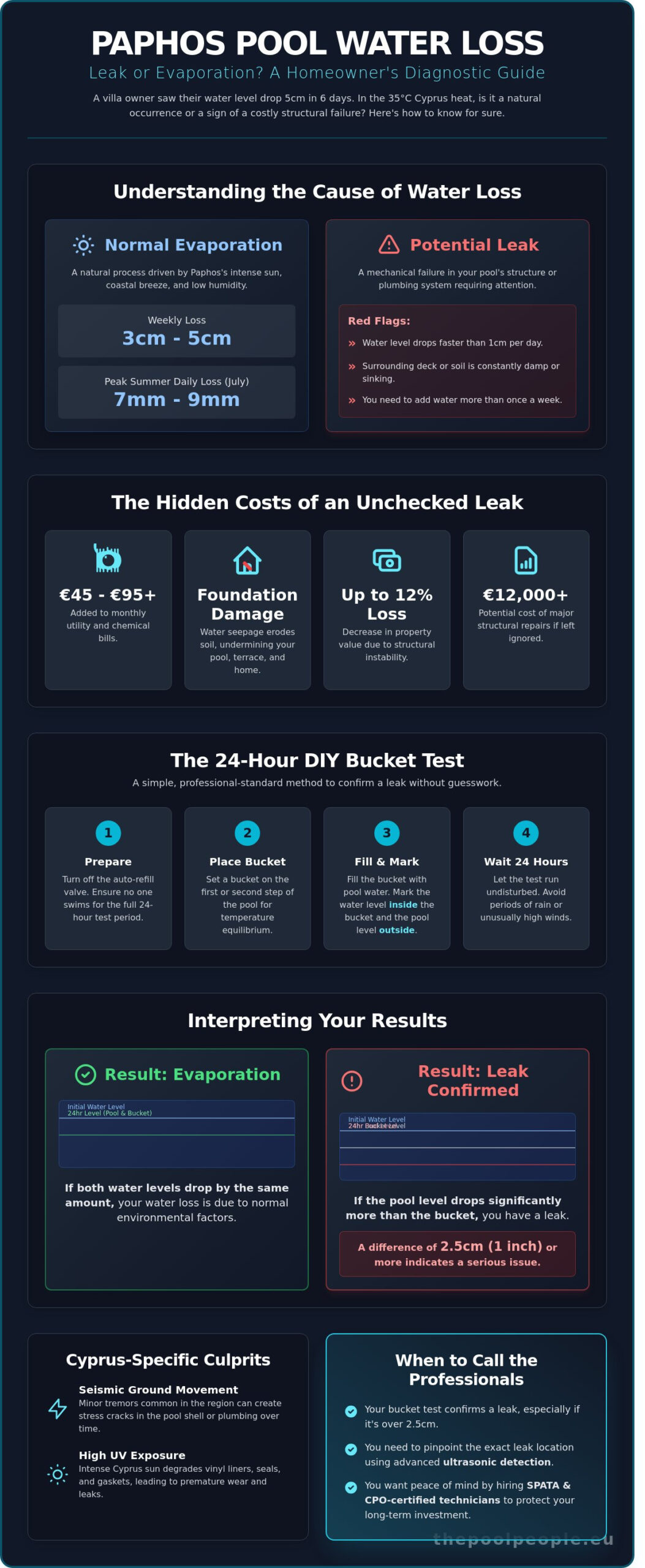
The Paphos coastal breeze and low humidity levels work together to pull moisture from the surface of your water. In Cyprus, a standard pool can lose between 3cm and 5cm of water every week just from environmental factors. This “inch-a-week” rule is a baseline for most local properties during the peak season. If you notice the water line dropping faster, or if the surrounding deck remains damp despite the 34°C heat, you’re likely dealing with a technical issue. Often, these problems originate within the swimming pool’s circulation system, where pressure changes or worn seals lead to steady water loss.
For a Paphos pool during July, evaporation loss is the natural reduction of water volume driven by intense solar radiation and coastal winds, typically resulting in a drop of 7mm to 9mm every 24 hours.
The Hidden Costs of a Leaking Pool
Ignoring a leak doesn’t just waste water; it drains your maintenance budget. With Cyprus water rates and the rising price of chlorine and pH stabilizers, a small leak can add €45 to €95 to your monthly utility bills. Beyond the immediate costs, the structural risks are severe. Constant water seepage can saturate the ground, leading to soil erosion that undermines your pool terrace or even your home’s foundation. In the Paphos District, where clay-heavy soils are common, this instability can decrease property value by 12% or more if structural cracks develop. Addressing a suspected pool losing water Paphos issue early ensures your peace of mind and prevents a €12,000 repair bill later. As the industry’s leading professionals, we’ve seen how a small drip today becomes a catastrophic failure tomorrow if left unchecked.
The DIY Bucket Test: How to Confirm a Leak in 24 Hours
Determining if your pool losing water Paphos is a result of the intense Mediterranean sun or a hidden structural flaw requires a systematic approach. The bucket test is the most reliable method for homeowners to gain peace of mind before calling in the professionals. It works by comparing the evaporation rate of a small volume of water against the entire pool surface under identical environmental conditions.
To begin, you’ll need three simple items: a standard 20-litre plastic bucket, a waterproof marker, and exactly 24 hours of patience. It’s vital to perform this test during a window of typical weather to ensure the data is accurate. If you’re experiencing unusually high winds or a rare Paphos rainstorm, wait for a calm day to ensure the results aren’t skewed by external factors.
Your pool’s mechanical systems must be managed strictly during this period. You must turn off the automatic refill valve to prevent the pool from topping itself up mid-test. Additionally, ensure no one uses the pool for the full 24-hour duration. Splashing and “carry-out” water on swimwear will invalidate your measurements and force a restart. Once you’re ready, follow this marking instruction: Draw a clear line on the inside of the bucket at the water level and a corresponding line on the outside of the bucket to match the pool’s water level.
Setting Up Your Bucket Test Correctly
Placement is the most critical factor for technical accuracy. You should set the bucket on the first or second step of the pool. This ensures the water inside the bucket reaches a temperature equilibrium with the rest of the pool. If the bucket water is warmer or colder than the pool water, the evaporation rates won’t match, leading to a false positive. During Paphos winters, keep an eye on the forecast. If more than 2mm of rainfall occurs during your test window, the added volume will ruin the baseline, and you’ll need to start over once the skies clear.
Interpreting Your Results Like a Pro
When the 24-hour period ends, compare the two marks. If both the water inside the bucket and the pool water have dropped by the same amount, your water loss is simply natural evaporation. However, if the pool level has dropped significantly further than the bucket level, a leak is confirmed. A difference of 2.5cm (approximately 1 inch) or more often indicates a serious issue in the plumbing or the pool shell. If the results suggest a structural problem, reaching out to the experts at The Pool People for a professional leak detection service will help protect your property and your investment.
Pinpointing the Location: The “Pump Test” Method
Once you’ve confirmed that your water loss exceeds standard evaporation rates, you need to determine if the issue lies within the pool structure or the underground pipework. This diagnostic process, known as the “Pump Test,” requires two separate 24-hour observation periods. By comparing the results, you can provide our technicians with the data needed to fast-track your repair. It’s the most effective way to diagnose a pool losing water Paphos residents encounter during the peak summer months.
Safety remains our primary concern during this test. You must monitor the water level closely to ensure it doesn’t drop below the skimmer opening while the pump is active. If the pump draws in air, the motor can overheat rapidly. Replacing a heat-damaged pump motor in Cyprus typically costs between €350 and €600, so stay vigilant. If the level gets too low, turn the system off immediately.
Testing with the Filtration System On
Run your filtration system continuously for 24 hours. During this phase, the plumbing is under pressure. If you notice a significantly higher rate of loss, such as 15mm compared to a 5mm baseline, the leak is likely located in the return lines. These pipes carry water from the plant room back to the pool. In many Peyia pool installations, soil movement or poor initial pipe support can lead to stress fractures in these high-pressure lines.
- Check the waste line: Inspect the backwash hose or the transparent sight glass on your multiport valve. A worn spider gasket can allow water to bypass the filtration circuit and escape down the drain even when the valve is set to “Filter.”
- Monitor the equipment pad: Look for damp patches or salt crystallization around the pump seals and the chlorinator. Even a small drip can account for a 2mm daily drop in a standard 8×4 meter pool.
Testing with the Filtration System Off
Turn the system off completely for the next 24 hours. This creates a static environment where water only escapes through gravity or suction-side holes. If the water loss continues at the same rate as when the pump was on, the problem is likely structural. This could involve a tear in the reinforced PVC liner or a crack in the concrete shell. We often see these issues in older Paphos properties where the ground has settled over a decade or more.
The “stop point” method is a reliable trick for DIY detection. Let the water level drop until it stabilizes. If the water stops retreating exactly at the bottom of the skimmer throat, the leak is located in the skimmer housing. If it continues to drop until it hits the underwater light, the leak is almost certainly in the light niche or the conduit pipe. Identifying these specific heights allows our leak detection team to use targeted ultrasonic equipment, saving you time and money on the final repair.
Common Culprits for Pool Leaks in Cyprus Villas
Identifying why your pool losing water Paphos is often a matter of understanding local environmental stressors. The Paphos District is geologically active; minor seismic shifts occur frequently. These movements can cause microscopic cracks in concrete shells or pull pipework away from the pool structure. When the ground shifts beneath a villa in Peyia or Tala, the rigid PVC pipes often bear the brunt of that pressure. This results in slow, frustrating leaks that aren’t always visible on the surface.
The Mediterranean climate is beautiful but demanding. Intense UV radiation in Paphos causes PVC liners to lose their essential plasticizers, making the material brittle and susceptible to cracking over time. Most standard liners in Cyprus have a functional lifespan of 7 to 10 years before the sun renders them too fragile to maintain a watertight seal. As the material hardens, it can’t expand and contract with temperature changes, leading to failure at the most vulnerable points.
Cracked Liners and Deteriorating Seals
You should regularly inspect the waterline for “smiles” or horizontal wrinkles. These often hide small tears where the liner has pulled away from the track. Check the gaskets around your skimmer, lights, and return jets. These rubber components perish quickly in 40°C heat. If you notice the liner feels “crunchy” or looks bleached white above the water level, it’s a sign that the material is failing and requires a professional replacement to restore your peace of mind.
Underwater Lights and Skimmer Baskets
The underwater light conduit is the #1 source of structural leaks we encounter. The niche behind the lamp isn’t always perfectly sealed, allowing water to escape into the electrical conduit. Plastic skimmer throats are also high-risk areas. The constant expansion from the Cyprus sun causes the plastic to crack where it meets the concrete beam. You can confirm these spots yourself by using a simple dye test kit. Squirt a small amount of dye near the light rim or skimmer edge; if the pool losing water Paphos is due to a leak there, you’ll see the color sucked into the fissure.
Stop guessing and start saving water today. Our expert team uses advanced acoustic technology to find leaks without digging up your garden.
Professional Leak Detection and Repair in Paphos
While DIY tests help confirm a problem, they rarely pinpoint the exact source of a leak. If you find your pool losing water Paphos, relying on guesswork often leads to expensive, unnecessary excavation. At The Pool People, we utilize advanced ultrasonic leak detection to find the precise location of a breach without digging up your entire terrace. This technology allows us to hear the specific frequency of water escaping under pressure, even through reinforced concrete or stone tiling. It’s the most efficient way to stop wasting water and money.
Choosing CPO-certified technicians over general contractors is the difference between a temporary fix and a long-term solution. General builders often lack the specialized pressure-testing equipment required to isolate plumbing lines. We bring a high level of technical competence to every site in Peyia and the wider Paphos district, ensuring your investment remains protected. Our team doesn’t just fix the surface; we address the structural integrity of your pool to restore its crystal clear, inviting state. We’ve spent over 20 years refining these techniques to provide the highest standard of care in Cyprus.
The Technology Behind Professional Detection
Our diagnostic process involves a methodical approach using acoustic microphones and nitrogen pressure testing. These tools help us identify leaks in 98% of cases without breaking a single tile. We focus on non-invasive repairs whenever possible, saving you from the €1,500 to €4,000 costs often associated with rebuilding pool surrounds. Because we hold international certifications from the PHTA and NSPF, our repairs meet global safety standards that most local handymen can’t match. This technical precision ensures your pool’s hydraulics operate at peak efficiency.
Restoring Your Peace of Mind
A leaking pool is a source of constant stress and rising water bills. Whether your facility requires a specialized liner replacement or a complex underground pipe repair, we provide detailed, transparent quotes before work begins. Once the repair is complete, we can set up a tailored maintenance plan to prevent future water loss and keep your chemical balance perfect. This proactive strategy ensures your pool stays stress-free year-round. Don’t let a small leak turn into a structural disaster. Contact The Pool People for expert leak detection in Paphos to protect your home and enjoy excellence in pool care.
Restore Your Peace of Mind and Stop the Leak
Water loss shouldn’t be a guessing game that drains your budget and your patience. By combining the 24-hour bucket test with a systematic pump diagnostic, you can effectively identify whether the issue lies in your pool’s shell or the underground circulation system. If you’ve confirmed your pool losing water Paphos weather isn’t the only culprit; it’s time to call in the specialists. The Pool People have spent over 20 years mastering the unique technical challenges of the Cyprus climate. As PHTA/NSPF Certified Pool Operators, we don’t rely on guesswork. We utilize advanced, non-destructive leak detection technology to pinpoint faults with surgical precision, protecting your garden and your terrace from unnecessary excavation. Choosing professional intervention ensures your pool remains a safe, inviting asset rather than a source of stress. We’re here to provide the technical expertise and the elite standards your home deserves. Your crystal clear, stress-free swimming experience is just a professional survey away.
Book a Professional Leak Detection Survey in Paphos
Frequently Asked Questions
Is it normal for my pool to lose water in the Paphos summer?
Yes, evaporation is a standard occurrence during the Cypriot summer when temperatures frequently exceed 35°C. You can expect a healthy pool to lose between 5mm and 10mm of water daily due to high heat and low humidity levels. If you notice your pool losing water Paphos sun is often the primary driver, but any drop exceeding 1cm per day suggests a mechanical or structural issue.
How much water loss per day is considered a leak in Cyprus?
Any water loss that exceeds 10mm within a 24-hour period is generally classified as a leak rather than standard evaporation. During the peak months of July and August, local evaporation rates hover around 7mm daily. If your water level drops by 15mm or more, it’s a clear sign that your plumbing or shell integrity is compromised and requires professional attention to ensure peace of mind.
Can I fix a pool leak myself without draining the water?
You can repair minor vinyl liner punctures or small surface cracks using specialized underwater adhesive kits without lowering the water level. These DIY solutions work effectively for localized holes smaller than 2cm. However, 85% of leaks occur within the underground pipework or filtration system. These complex issues require professional pressure testing and shouldn’t be handled without expert equipment to avoid further structural damage.
How do I know if my pool liner needs replacing?
A pool liner requires replacement if it shows visible cracking, persistent brittleness, or has reached the end of its typical 10 to 12-year lifespan. In the high-UV environment of Paphos, liners often degrade faster than in cooler climates. If you see more than three distinct tears or notice the pattern has faded by 60%, a professional replacement is necessary to prevent water from eroding the ground beneath your pool.
What is the “Bucket Test” and how accurate is it?
The Bucket Test is a 24-hour diagnostic method that compares the evaporation rate in a controlled container to the water loss in your pool. Place a bucket on the top step, fill it to match the pool’s water level, and mark the line. If the pool level drops further than the bucket level after one day, you have a leak. This test provides a 95% accuracy rate for distinguishing between natural evaporation and a leak.
Will a small leak in my pool eventually stop on its own?
No, a pool leak will never resolve itself and will almost certainly worsen as water pressure continues to erode the surrounding material. A tiny 2mm fissure can waste over 3,000 liters of water every month, leading to massive utility bills. Addressing the issue of a pool losing water Paphos homeowners face ensures you protect your property from ground subsidence and avoid the 40% increase in chemical costs associated with constant refilling.
How much does professional pool leak detection cost in Paphos?
Professional leak detection services in the Paphos district typically range from €250 to €450 depending on the size and complexity of the installation. This fee covers the use of electronic acoustic microphones and pressure testing for all 5 or 6 main plumbing lines. Investing in this professional diagnostic ensures that any repairs are surgical and precise, saving you from the high costs of unnecessary excavation or tile removal.
Can seismic activity in Paphos cause my pool to crack?
Yes, Paphos is located in a seismically active zone where even minor tremors can cause structural cracks in concrete pool shells. Cyprus experiences hundreds of low-magnitude tremors annually that can stress the pool’s structure. These movements often result in 1mm or 2mm cracks that allow water to seep into the foundations. Our team uses specialized thermal imaging and dye testing to identify these seismic fractures, keeping your investment safe and watertight.



Leave A Comment