
If you think a quick dose of chlorine at midday will clear your cloudy water, you’re likely wasting money while the Mediterranean sun evaporates your efforts in minutes. It’s incredibly frustrating to watch your investment turn into a murky green soup despite your best efforts. We understand the stress of recurring algae blooms and the pressure to meet the strict standards of the Swimming Pools Law of 2025. This guide provides the definitive professional technique for how to shock a pool in cyprus, specifically adapted for our intense heat and local mineral hardness.
You’ll master the precision timing required to eliminate bacteria and restore that inviting, crystal clear glow. We’ll show you how to balance your water within the mandatory 7.2 to 8.0 pH range and explain the technical logic behind your official logbook entries. By following this repeatable routine, you’ll ensure your pool remains a safe, compliant sanctuary that offers true peace of mind for your family or residents. We’re moving beyond guesswork to provide a methodical approach that preserves your water quality and protects your long-term investment.
Key Takeaways
- Learn why timing your chemical treatment for the evening is essential to prevent the intense Cyprus sun from neutralizing your efforts before they work.
- Discover the precise 5-step process for how to shock a pool in cyprus to achieve breakpoint chlorination and permanently eliminate bacteria.
- Master the pre-shock protocol of balancing pH and Total Alkalinity to ensure your chemical investment isn’t wasted on ineffective water.
- Identify the professional-grade solutions for clearing post-treatment cloudiness and managing dead algae for an inviting, crystal clear finish.
- Understand how a proactive maintenance routine ensures compliance with the 2025 Swimming Pools Law while protecting your long-term investment.
Why Shocking Your Pool in Cyprus is Different
Maintaining a pool in the Paphos heat isn’t the same as managing one in Northern Europe. Many owners feel confused when their water stays cloudy despite adding regular tablets. To understand how to shock a pool in cyprus effectively, you first need to understand what shock chlorination is. It’s the process of adding a large dose of oxidizer, typically chlorine, to break down “combined chlorines” or chloramines. These are the spent chemical byproducts that cause that distinct “pool smell” and irritate your eyes. In our climate, these contaminants build up much faster than in cooler regions.
With over 300 days of sunshine annually, the environmental pressure on your water chemistry is relentless. High bather loads and wind-blown dust from the Akamas or the Troodos foothills introduce organic matter that consumes your sanitizer at an alarming rate. When your free chlorine levels fall behind this demand, bacteria and algae take hold. Shocking isn’t just a reactive fix for green water; it’s a professional necessity to reset your water’s health and ensure safety for every swimmer.
The Mediterranean Heat Factor
Temperature is the primary driver of chemical consumption in Cyprus. During July and August, pool water temperatures frequently exceed 28°C, creating a literal petri dish for pathogens. Algae spores germinate exponentially faster in warm water. Standard dosage rates found on chemical packaging often fail here because they don’t account for this accelerated biological activity. We often see pools that were clear in the morning turn hazy by sunset simply because the heat-driven demand outstripped the available chlorine. Professional management requires a higher baseline of oxidation to stay ahead of these blooms.
UV Degradation and Cyanuric Acid
The Cyprus sun is a powerful force that can destroy up to 90% of your pool’s chlorine in just two hours if the water is unprotected. This is where Cyanuric Acid (CYA), or stabilizer, becomes vital. It acts as a sunblock for your chlorine. However, there’s a dangerous trap known as “Chlorine Lock.” If your CYA levels climb too high, often caused by overusing stabilized “all-in-one” tablets, the stabilizer actually binds the chlorine so tightly that it can’t kill bacteria. You might have high chlorine readings on your test kit, yet your pool is turning green. Understanding this balance is the first step in learning how to shock a pool in cyprus without wasting expensive chemicals on water that’s chemically “locked.”
Pre-Shock Protocol: Balancing Water in Paphos
Before you add a single gram of granules, the water environment must be chemically receptive. Simply dumping chemicals into an unbalanced pool is a common mistake that leads to wasted money and lackluster results. When learning how to shock a pool in cyprus, you must first address the foundational chemistry. If your pH is sitting at 8.0, your shock treatment will be less than 20% effective. You’re effectively pouring 80% of your chemical budget down the drain because the chlorine cannot activate properly in an alkaline environment.
Total Alkalinity acts as the anchor for your pH. In Cyprus, the 2025 Swimming Pools Law mandates a total alkalinity between 80 and 120 mg/L. Without this buffer, adding acidic or basic chemicals will cause your pH to “bounce” wildly, making it impossible to maintain the stability required for a successful shock. Additionally, our local tap water is notoriously high in calcium hardness. If you don’t account for this, the sudden influx of high-strength chlorine can cause calcium to precipitate, leaving you with a cloudy pool that looks worse than when you started. A professional approach ensures these variables are controlled before the heavy lifting begins.
The Golden Rule of pH
For the most efficient superchlorination, we recommend lowering your pH to 7.2. While the legal range for Cyprus pools is 7.2 to 8.0, chlorine is far more aggressive at the lower end of this scale. As pH increases, the concentration of hypochlorous acid, the most active killing form of chlorine, decreases significantly. By targeting 7.2, you ensure the chlorine can penetrate and destroy pathogens instantly. If you find your chemistry is consistently difficult to manage, our team offers specialized pool cleaning and maintenance services to get your baseline back to professional standards.
Removing Organic Load
Your chemicals should fight microscopic bacteria, not large leaves or drowned insects. Before shocking, you must physically remove as much organic matter as possible. Skim the surface and vacuum the floor thoroughly. Brushing the walls is equally critical because algae often forms a protective biofilm or membrane that resists chemicals. Physical agitation breaks this barrier, exposing the algae to the coming treatment. Finally, check your filter pressure. A dirty filter reduces circulation, preventing the shock from reaching every corner of the pool. Ensure your system is running at peak efficiency before proceeding with the process of how to shock a pool in cyprus effectively.
The 5-Step Professional Shocking Process
Executing a shock treatment requires more than a simple guess at chemical volumes. To restore your water’s health, you must reach “Breakpoint Chlorination.” This technical threshold occurs when the concentration of free chlorine is ten times the amount of combined chlorine in your water. Reaching this point is the only way to fully oxidize organic contaminants and break the chemical bonds of chloramines. When mastering how to shock a pool in cyprus, your first decision is selecting the right product. Calcium Hypochlorite (granules) is a powerful oxidizer, but it adds calcium to our already hard local water. Sodium Hypochlorite (liquid chlorine) is a frequent professional choice in Paphos because it doesn’t increase calcium levels, though it’s bulky to handle and degrades quickly if stored in the heat.
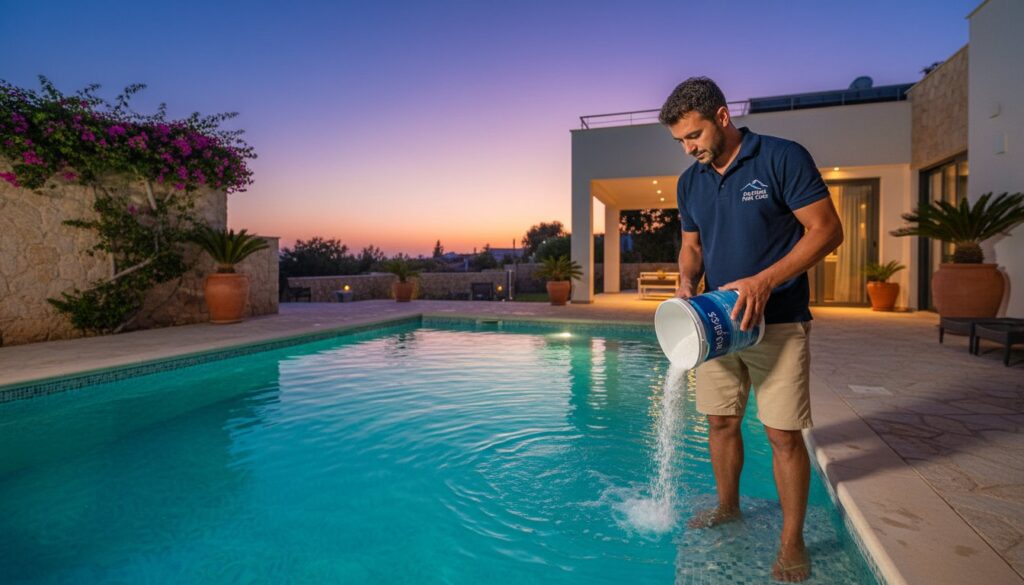
Timing is your most valuable asset. Never shock your pool during the day. The intense UV index in Cyprus will neutralize your chemicals before they have a chance to work. Always start the process at dusk. This allows the chlorine to work throughout the cooler night hours without interference from the sun. Once the chemicals are added, keep your pump running for a full 24 hours. Continuous circulation is essential to ensure the high-strength sanitizer reaches every square centimeter of the plumbing and the pool shell, leaving no pockets for bacteria to hide.
Step-by-Step Execution
Preparation ensures even distribution and protects your pool’s finish. If you’re using granules, dissolve them in a bucket of pool water first. Always add the chemical to the water, never the other way around, to prevent dangerous splashing or reactions. Walk the perimeter of the pool, pouring the solution slowly into the water. Avoid pouring directly into the skimmer, as the high concentration can damage your pump’s internal seals. During the first 12 hours, monitor your filter pressure closely. As the shock kills algae, the dead organic matter will quickly collect in your filter, necessitating a backwash to maintain proper flow and clarity.
Safety and Protection
Handling high-strength oxidizers in 35°C heat requires strict discipline. Wear chemical-resistant gloves and eye protection at all times. Chlorine gas is a significant risk in confined, hot spaces, so always handle chemicals in well-ventilated areas. Store your supplies in a cool, dry place away from direct sunlight. Never mix different types of chlorine, such as “shock” granules with regular stabilized tablets. Mixing these can cause a violent, explosive chemical reaction. Following these professional safety standards ensures you know how to shock a pool in cyprus effectively while keeping your property and family safe.
Common Post-Shock Challenges in Cyprus
You followed the professional steps, waited overnight, and yet the water still looks milky. Don’t panic. This is a frequent occurrence when learning how to shock a pool in cyprus. Usually, this cloudiness is simply the “ghosts” of dead algae suspended in the water. Because the shock was successful, the organic matter is now dead, but it’s often too fine for some filters to catch immediately. In other cases, the high chlorine levels may have caused a temporary calcium precipitation due to our hard local water. This is particularly common in Paphos where mineral content is high and pH can climb rapidly.
A unique challenge on our island is the arrival of “cal dust” or seasonal dust storms. These fine particles from North Africa can settle in your pool right after a treatment, providing a fresh organic load that consumes your new chlorine. If a dust storm hits during your shock process, you may need to increase your filtration time or even re-test your levels sooner than planned. This environmental factor is why many owners choose our professional pool cleaning and maintenance services to handle the complex aftermath of Cyprus weather events.
Clearing the Cloudiness
Restoring that inviting, crystal clear look often requires a little assistance. If you have a sand filter, it may struggle to catch the finest dead algae particles. Upgrading to glass media is a professional solution we often recommend; it filters down to a much smaller micron level than traditional sand. For heavy debris that won’t clear, you can use a flocculant to clump particles together so they sink to the floor. You then vacuum this sediment directly to “waste,” bypassing the filter entirely. For a deeper look at managing these variables, read our guide on Mastering Pool Water Chemistry in Paphos.
Post-Shock Testing
Safety is our absolute priority. You must wait for the Free Chlorine levels to drop below 5ppm before it’s safe for anyone to swim. High levels of chlorine can cause skin irritation and damage expensive swimwear. Once the levels have stabilized, re-test your pH and Total Alkalinity. The shocking process is chemically aggressive and often shifts your balance significantly. If you’re dealing with stubborn “Black Algae” blooms that appear as dark spots on the liner, you might need to repeat the superchlorination process or use a specialized algaecide. Consistency is the key to maintaining a healthy environment year-round.
Beyond the Shock: Long-Term Peace of Mind
While mastering how to shock a pool in cyprus is a vital skill for any owner, the ultimate goal is to move away from reactive crisis management. We advocate for a “Prevention vs. Cure” philosophy. Repeatedly hitting your water with high-strength chemicals is taxing on your pool liner, plumbing, and filtration system. Maintaining a consistent, professional baseline is far more cost-effective than frequent superchlorination. This steady approach doesn’t just save money on chemicals; it preserves the life of your investment and ensures the water is always ready for a swim.
At The Pool People, our focus is on providing total safety. With the Swimming Pools Law of 2025 now in full effect, pool owners and communal managers face stricter legal accountabilities. The deadline for existing communal pools to register and complete corrective works passed on January 25, 2026. This regulation emphasizes the need for certified expertise. Our team of PHTA/NSPF Certified Pool Operators understands the technical nuances of Mediterranean water chemistry, ensuring your facility remains compliant and your swimmers stay protected.
Professional Maintenance Contracts
For many residents, especially holiday home owners and communal complex managers, a professional maintenance contract is the most reliable path to excellence. Weekly visits from a certified technician ensure that pH, alkalinity, and sanitizer levels never drift into the danger zone. We provide methodical chemical balancing and proactive equipment health checks. This “set it and forget it” reliability is detailed extensively in The Ultimate Guide to Pool Maintenance in Paphos, which serves as a roadmap for long-term water quality.
When to Call the Professionals
There are times when even the most diligent DIY efforts fall short. If you’ve followed the steps for how to shock a pool in cyprus and the water remains green or stubbornly cloudy, it’s time for a professional intervention. Persistent issues often signal underlying problems like poor circulation, filter media exhaustion, or a complex chemical lock that requires advanced water analysis. We utilize precision testing equipment to diagnose the “why” behind the water failure. Whether it’s a failing pump or a need for a total water reset, our experts provide the technical depth needed to restore your pool to its crystal clear, inviting state without the stress of trial and error.
Securing Your Crystal Clear Sanctuary
Mastering the technical details of how to shock a pool in cyprus is the first step toward a safer, more inviting swimming environment. You’ve learned that success depends on precision timing, balancing pH to 7.2, and navigating the unique environmental pressures of the Mediterranean climate. By following these professional protocols, you ensure your pool remains compliant with the 2025 Swimming Pools Law while protecting your family’s health and your property’s value.
Maintaining this level of excellence requires consistent discipline and technical depth. With over 20 years of experience in Paphos, our team understands the specific challenges of local water chemistry and high UV exposure. As PHTA/NSPF Certified Operators, we’re specialists in Mediterranean water chemistry who prioritize your safety and peace of mind. We invite you to Request a Professional Pool Health Check from The Pool People to ensure your system is running at peak efficiency. Enjoy the confidence of knowing your pool is a healthy, beautiful retreat for everyone to enjoy.
Frequently Asked Questions
Is it safe to shock a pool during the day in Cyprus?
No, it’s not effective for your chemical budget or the water’s health. The high UV index in Cyprus degrades chlorine rapidly. Don’t waste your chemicals. Shocking during the day means the sun will consume the sanitizer before it can oxidize contaminants. Always wait for sunset to ensure the treatment works throughout the night. This timing allows the chemicals to focus on bacteria rather than fighting solar degradation.
How long after shocking a pool can I swim?
You must wait until the free chlorine level drops below 5 parts per million (ppm). This typically takes 12 to 24 hours depending on the dosage and your pool’s circulation. Testing the water is the only way to be certain it’s safe for swimmers to return. High chlorine levels can cause skin irritation or damage swimwear. Always prioritize safety before diving back in.
Can I shock my pool and add algaecide at the same time?
No, you shouldn’t add them at the same time. High chlorine levels from shocking can neutralize the active ingredients in many algaecides. It’s best to shock the pool first to kill the algae and then add algaecide once the chlorine level has returned to a normal range. This ensures both chemicals can perform their specific roles without interfering with each other.
What is the best type of pool shock for Cyprus water conditions?
Sodium Hypochlorite (liquid chlorine) is often the superior choice for the hard water found in Paphos. Unlike Calcium Hypochlorite granules, it doesn’t add extra calcium to your pool. This helps prevent scale buildup on your tiles and equipment while effectively managing how to shock a pool in cyprus. It’s a professional favorite for maintaining clarity without increasing mineral hardness or causing cloudy water.
Why does my pool stay green even after I shock it?
This usually happens because the pH was too high or you didn’t reach “Breakpoint Chlorination.” If your pH is above 7.8, the chlorine is significantly less effective. Alternatively, if you have high levels of Cyanuric Acid, your chlorine may be “locked” and unable to sanitize. Persistent green water often requires a professional diagnostic test to identify these underlying chemical imbalances and restore clarity.
How much chlorine shock do I need for a standard 10x5m pool?
A standard 10x5m pool holds approximately 75 cubic meters of water. To reach a shock level of 10 ppm, you typically need about 750 grams of 65% Calcium Hypochlorite or 6 liters of 12% liquid chlorine. Always calculate based on your specific combined chlorine readings for precision. Accurate measurements are vital for a safe swimming environment and prevent chemical waste.
Will shocking my pool damage the liner or tiles?
It can if the chemicals aren’t properly dissolved before addition. Concentrated granules sitting on a liner can cause bleaching, spotting, or brittleness over time. Always pre-dissolve granules in a bucket of water and pour the solution around the perimeter to protect your pool’s surfaces from chemical damage. This methodical approach preserves the life of your liner and keeps your tiles looking pristine.
Do I need to shock my pool if I have a salt water system?
Yes, salt water pools still require occasional shocking. While the salt cell produces chlorine, it may not generate enough to handle heavy bather loads or extreme Mediterranean heat. Periodic shocking helps break down combined chlorines and ensures your water remains inviting. It’s a necessary step in how to shock a pool in cyprus even when using advanced sanitization systems to maintain health standards.