
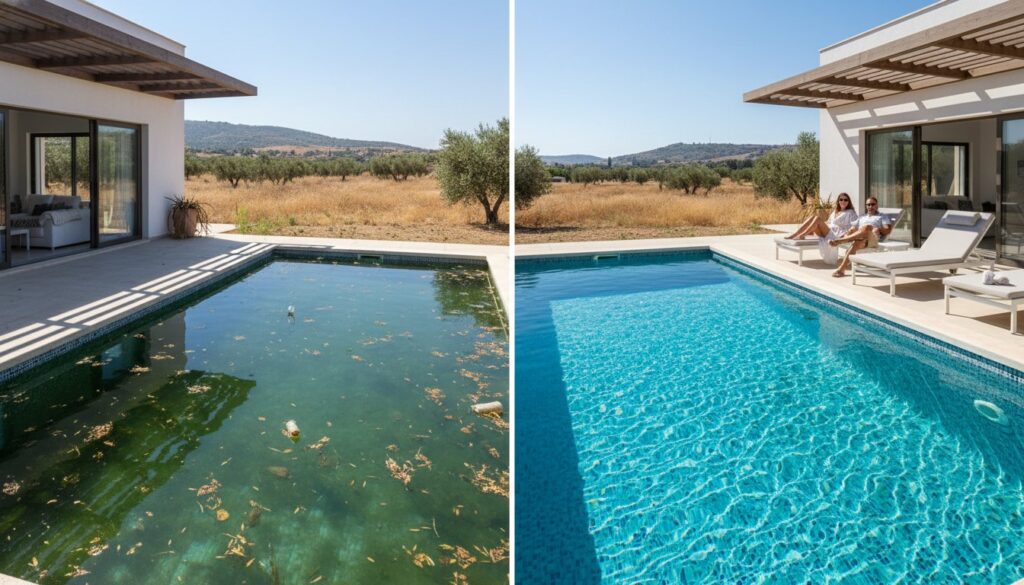
Did you know that the intense Paphos sun can destroy up to 90% of unstabilized chlorine in less than two hours? It is a startling reality that many homeowners face, especially when summer temperatures soar above 40°C and Saharan dust storms trigger massive phosphate spikes. You have likely experienced the frustration of pouring expensive chemicals into your water, only to be met with a stubborn green tint the following morning. It feels like a losing battle, but the truth is that effective algae control for pools paphos is a matter of engineering and technical precision rather than just luck.
We understand that you want more than just a clean pool; you want the peace of mind that comes with knowing your water is safe and inviting for your family. This 2026 guide shares the professional standards we use at The Pool People to eliminate algae and prevent its return. We will walk you through the logic of chemical balancing in a Mediterranean climate, the impact of high calcium hardness, and the specific steps required to keep your pool crystal clear year-round. By following this methodical approach, you can reduce your chemical consumption and enjoy the lifestyle excellence you deserve.
Key Takeaways
- Identify the specific environmental triggers in Cyprus that accelerate algae growth and learn how to counteract them effectively.
- Master the professional “Green to Clean” protocol to safely restore your pool’s aesthetic and hygiene standards after a bloom.
- Compare the long-term efficiency of automated salt water chlorination against standard retail chemicals for superior algae control for pools paphos.
- Implement a strategic maintenance and filtration schedule focused on technical precision to ensure your pool remains an asset rather than a chore.
- Understand the legal and safety benefits of partnering with PHTA-certified experts to maintain your private or communal swimming facility.
Understanding the Algae Challenge in the Paphos Climate
To effectively manage your water, you must first view pool algae as a living, breathing plant organism. It isn’t just a stain or a simple chemical imbalance; it is a biological entity that requires light, water, and nutrients to thrive. In the unique environment of Cyprus, we provide these elements in abundance. While a pool in Northern Europe might take weeks to turn green, the Paphos heat, often exceeding 35°C in the summer months, creates an incubator effect. High temperatures accelerate the metabolic rate of algae spores, allowing them to double in population every few hours. This rapid growth makes algae control for pools paphos a technical challenge that requires daily precision rather than occasional guesswork.
The Sahara Dust Connection
Many residents view the occasional “Calima” dust storms as a simple cleaning nuisance. However, these red clouds carry high concentrations of nitrates and phosphates, which are the primary food sources for algae. While your filter might catch the visible sand, microscopic spores and dissolved nutrients often pass straight through standard media. The microscopic particles within Sahara dust act as a direct delivery system for phosphates, providing the primary fuel source for rapid algae blooms. Physical filtration alone cannot stop these nutrients, which is why a pool can look perfectly clear one day and turn cloudy or green the next after a dust event.
UV Degradation and Chlorine Lock
The intense Cyprus sun presents a secondary hurdle for every pool owner. Without proper stabilization, UV radiation can destroy up to 90% of your pool’s chlorine in less than two hours. To combat this, we use Cyanuric Acid (CYA) as a “sunscreen” for the chlorine. However, there is a delicate balance to maintain. If CYA levels rise too high, often due to the over-use of stabilized chlorine pucks, it leads to a condition known as “chlorine lock.”
In this state, your water test might show high chlorine levels, but the chemical is technically “bound” and unable to kill pathogens or algae. Simply adding more chlorine won’t solve the problem if the CYA is already excessive. Achieving year-round clarity requires understanding algaecides and how they interact with these local environmental stressors. We focus on managing the underlying chemistry so that your sanitizers can actually do their job. This professional approach is what ensures the “peace of mind” we promise, keeping your water inviting even during the peak of the Paphos summer.
How to Remove Algae: The 5-Step “Green to Clean” Process
When your pool water loses its clarity and takes on a green hue, a standard dose of chlorine is rarely enough to solve the problem. Reversing a bloom requires a methodical “Green to Clean” protocol that addresses both the visible plant matter and the microscopic spores. Effective algae control for pools paphos relies on breaking down the protective biofilms that algae create to shield themselves from sanitizers. Following these five professional steps will restore your water to its crystal clear state.
- Step 1: Physical Removal. Use a stiff pool brush to deep-scrub the walls, floor, and especially the steps. This physical agitation breaks the algae’s surface tension, allowing chemicals to penetrate the organism.
- Step 2: Water Chemistry Analysis. You must balance your pH levels between 7.2 and 7.6 before adding shock. Chlorine is significantly less effective in high pH environments, which are common in Paphos due to our local water hardness.
- Step 3: Professional Shock Treatment. Introduce a high dose of sanitizer to reach breakpoint chlorination. The amount required depends entirely on the type of algae present in your water.
- Step 4: Flocculation and Vacuuming. Use a professional flocculant to bind dead algae particles together, causing them to settle on the floor. You must then vacuum this sediment “to waste” to bypass the filter entirely.
- Step 5: System Deep Clean. Backwash your filter thoroughly or clean the cartridges to remove trapped spores. Re-balance the chemistry to ensure the water remains inviting and safe.
Identifying Your Algae Type
Not all algae are created equal, and identifying the specific variant is vital for successful treatment. Green algae is the most common and typically floats in the water or clings to walls in patches. Yellow or “Mustard” algae is a Paphos staple; it looks like pollen or sand and often hides in shaded areas like behind pool lights or under steps. It is notably chlorine-resistant and requires a higher concentration of sanitizer to kill. Black algae is the most difficult to manage as it forms deep roots in the pool’s plaster or liner. It appearing as small black spots that require aggressive physical brushing with a stainless steel brush to break the protective cap.
Shocking Your Pool the Professional Way
To eliminate a bloom, you must achieve what we call breakpoint chlorination. Breakpoint chlorination is the chemical state where the concentration of free available chlorine is high enough to fully oxidize all organic contaminants and combined chlorines in the pool water. In the Paphos climate, you should always perform this treatment at night. If you shock the pool during the day, the intense Mediterranean sun will degrade the unstabilized chlorine before it has a chance to kill the algae. If the recovery process feels overwhelming, our team at The Pool People offers professional maintenance support to restore your “peace of mind” and water quality quickly.
Comparing Algae Control: Retail Chemicals vs. Professional Systems
Many Paphos pool owners fall into the trap of buying “Dual-Action” algaecides from local supermarkets. While these products promise a quick fix, they often lack the concentration required for a permanent solution. For sustained algae control for pools paphos, you must look beyond the bottle and consider the engineering of your water treatment system. Relying solely on reactive chemical additions is often more expensive in the long run than implementing a professional, automated strategy.
Cheaper retail brands are frequently diluted, meaning you might need triple the dosage to achieve the same result as a professional-grade product. We always recommend using PHTA-approved chemicals to ensure both efficacy and swimmer safety. One critical distinction is the use of copper-based algaecides versus non-metal alternatives. While copper is effective at killing algae, it can lead to unsightly blue or green staining on your pool liner if levels are not monitored correctly. Professional systems prioritize non-staining formulas that protect your investment.
Given the Sahara dust challenges we discussed earlier, phosphate removers are an essential part of the professional toolkit. By removing the food source, you make it nearly impossible for algae to survive, even if your chlorine levels dip temporarily during a heatwave. This proactive approach saves you from the high costs of recovery treatments, which can often exceed €400 for a single “green-to-clean” service.
The Case for Salt Water Chlorination
A salt water system is not just a luxury; it is a strategic investment in automated water quality. These systems generate a consistent, low-level stream of pure chlorine, which eliminates the peaks and valleys associated with manual dosing. This constant presence of sanitizer is the most reliable way to prevent blooms before they start. Beyond the technical benefits, these systems offer superior skin and eye comfort, which is a significant advantage in the high-evaporation Paphos climate. You can find more technical details on Salt Water Chlorination Systems Cyprus to see how this technology fits your specific pool setup.
Professional Algaecides vs. Supermarket Brands
Choosing the right product is about more than just the price tag on the shelf. High-concentration professional algaecides are formulated to work in harmony with your existing sanitizers without foaming or affecting the pH balance. When you consider that neglecting maintenance can lead to equipment replacement costs of over €1,000, the value of professional-grade prevention becomes clear. It moves your pool care from a reactive expense to a managed, predictable component of your home maintenance, ensuring your water remains inviting every day of the year.
Preventative Maintenance for Year-Round Clarity
Establishing a rigid routine is the only way to achieve permanent algae control for pools paphos. You can’t rely on visual checks alone. By the time you see the water turn cloudy, the biological bloom is already well underway. We recommend a strict weekly testing schedule that monitors free chlorine, pH, and stabilizer levels. This discipline ensures you are never catching up with a problem but rather maintaining an environment where algae simply cannot survive. This methodical approach is the foundation of the “peace of mind” we provide to our clients.
Optimizing Filtration Cycles
During the peak Paphos summer, your filtration system must run for 8 to 12 hours daily. Stagnant water is an invitation for spores to settle and multiply. We often suggest upgrading to glass media over traditional sand. Glass media is significantly more effective at trapping finer particles and microscopic algae spores, keeping your water polished and clear. For a deeper look at how these technical components interact with your sanitizers, see our guide on Mastering Pool Water Chemistry in Paphos.
Phosphate Management
As we established earlier, Sahara dust is a major nutrient source for aquatic plants. You should test for phosphates immediately after any significant wind or dust event. Using a preventative phosphate remover acts as a secondary layer of defense by “starving” any spores that manage to bypass your chlorine. Additionally, keeping your surrounding garden tidy helps. Removing organic debris like leaves and blossoms from the water reduces the organic load on your sanitizers and prevents nutrient buildup.
In August, a typical Paphos pool can lose between 6mm and 10mm of water every single day due to evaporation. This loss doesn’t just lower the water level; it concentrates minerals and unbalances your chemistry. When you top up the water, you dilute your chemicals. Maintaining the correct water level is vital for your skimmers to function and for your chemical balance to remain stable. If the water level drops too low, the pump can draw in air, leading to equipment damage and a total loss of filtration.
Many owners make the mistake of turning off their pumps in the winter. In Cyprus, we have mild winters that still provide enough sunlight for algae to grow. An “active winter” strategy involves reducing pump run-times rather than a total shutdown. Neglecting your pool during the cooler months can lead to a spring algae bloom that costs over €500 to rectify. To ensure your pool remains a stress-free asset throughout the year, consider our professional pool cleaning and maintenance services for total peace of mind.
Professional Solutions and Expert Support in Paphos
Maintaining a swimming pool in Cyprus is a rewarding part of Mediterranean life, but it shouldn’t become a second job. While the steps outlined in this guide provide a solid foundation, there are times when DIY efforts reach their limit. If you find yourself constantly fighting recurring blooms despite correct dosing, it’s time to call in the PHTA-certified professionals. Expert algae control for pools paphos isn’t just about clearing green water; it’s about diagnosing why the water turned green in the first place. Our CPO-trained technicians look for early warning signs, such as rising phosphate levels or declining filtration efficiency, before they escalate into a costly problem.
For many homeowners, a Monthly Pool Maintenance Subscription is the most cost-effective way to protect their investment. Professional care ensures that your water chemistry is balanced with technical precision twice a week during the peak season. This consistency prevents the “green pool” cycle that often leads to emergency treatment bills of €340 or more. If your pool suffers from structural black algae, which roots itself into the plaster or liner, we offer specialized refurbishment options and liner replacements to permanently remove the source of the infection and restore your pool’s surface to excellence.
The Pool People Difference
With over 20 years of experience serving the Peyia and Paphos regions, we’ve seen every climate challenge Cyprus can offer. We don’t just service pools; we act as an educational body for the industry, ensuring every technician follows strict European Health and Safety standards. This commitment to excellence is why we’re considered the definitive experts in the region. You can find more about our comprehensive approach to water health in The Ultimate Guide to Pool Maintenance in Paphos.
Expert Consultations and Leak Detection
Hidden issues often mask themselves as simple chemical problems. If you’re losing significant amounts of water daily beyond the standard evaporation rates we discussed, you likely have a leak. This constant influx of fresh, untreated water makes it impossible to maintain a stable environment, leading to recurring algae issues and high chemical costs. Our specialized team uses advanced technology for Expert Pool Leak Detection in Paphos to stop water waste and restore your pool’s equilibrium. To ensure your water remains inviting and safe, we recommend booking a professional water analysis to identify the exact state of your pool’s health and secure your peace of mind.
Secure Your Crystal Clear Water Today
Achieving lasting algae control for pools paphos requires moving beyond temporary fixes and embracing a technical, climate-specific strategy. We have explored how the combination of intense UV radiation, Sahara dust, and high temperatures creates a unique environment that demands professional precision. By implementing automated systems and maintaining a disciplined filtration schedule, you can transform your pool from a source of stress into a crystal clear sanctuary.
Since 2005, our team has specialized in the complexities of Mediterranean water chemistry. As PHTA/NSPF Certified Pool Operators, we don’t just clear the water; we engineer long-term solutions that protect your investment and your family’s safety. Whether you are dealing with a stubborn bloom or looking to upgrade your preventative systems, expert support is the key to total peace of mind. Take the first step toward a stress-free summer by speaking with our specialists.
Get a Professional Algae Analysis and Quote Today. Your perfect pool environment is well within reach.
Frequently Asked Questions
Is it safe to swim in a pool with a little bit of green algae?
No, it isn’t safe to swim in a pool with visible algae growth. While the algae itself is a plant organism and not directly toxic, it provides a primary breeding ground for harmful bacteria and pathogens like E. coli. Swimming in contaminated water can lead to skin irritations, ear infections, or respiratory issues. We always recommend waiting until the water is crystal clear and chemically balanced before allowing swimmers back into the pool.
How long after adding algaecide can I swim in my Paphos pool?
You can typically swim within 15 to 30 minutes after adding a standard algaecide, provided your filtration system is running to circulate the product. However, if the algaecide was applied as part of a heavy “Green to Clean” shock treatment, you must wait until chlorine levels return to the safe range of 1 to 4 ppm. Always test the water first to ensure the chemical levels are safe for your family.
Can Sahara dust really cause my pool to turn green overnight?
Sahara dust is a significant catalyst for rapid algae growth in Cyprus. The red dust carries high concentrations of phosphates and nitrates, which act as a concentrated food source for algae spores. When a dust storm hits, it can deplete your free chlorine while simultaneously saturating the water with nutrients. This specific environmental combination often results in a clear pool turning cloudy or green in less than 12 hours.
What is the best way to get rid of black algae in Cyprus pools?
Black algae requires aggressive physical intervention because it forms a protective waxy coating and deep roots. You must use a stiff brush to break this cap before applying a high-concentration granular chlorine directly to the affected spots. Because this variant is so stubborn, professional algae control for pools paphos often involves multiple rounds of scrubbing and specialized algaecides to ensure the roots are fully eradicated from the pool’s surface.
How much chlorine should I use to shock my pool in the summer?
The amount of chlorine needed depends on your pool’s total volume and the severity of the algae bloom. For a standard green pool, you typically need to raise the chlorine level to 10 or 20 ppm to reach breakpoint chlorination. In the Paphos summer, always add your shock at night. This ensures the chlorine remains active long enough to kill the algae without being instantly degraded by intense UV radiation.
Do salt water pools still need algaecide?
Salt water pools generate their own chlorine, but they can still benefit from a preventative algaecide during extreme Mediterranean weather. While the constant production of sanitizer is usually sufficient for algae control for pools paphos, a backup algaecide provides an extra layer of protection during 40°C heatwaves. It helps maintain water clarity when the salt cell is working at its maximum capacity and the chlorine demand is at its highest.
Why does my pool keep turning green even though the chlorine is high?
Your pool is likely experiencing “chlorine lock” caused by excessive Cyanuric Acid (CYA) levels. When CYA is too high, it binds the chlorine and prevents it from killing algae, even if your test kit shows a high reading. Alternatively, you may have a phosphate spike from a recent dust storm. In these cases, you must address the underlying chemical imbalance or use a phosphate remover to restore clarity and allow your chlorine to work effectively.