
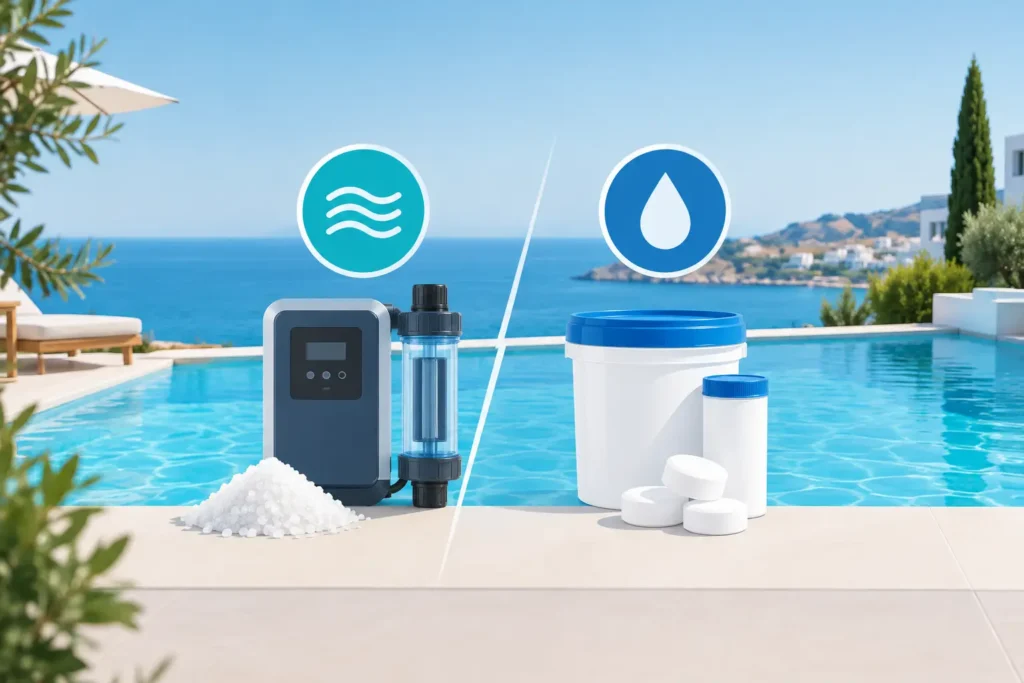
A saltwater chlorine comparison should begin with one clear fact: a salt pool is still a chlorine pool. The difference is how the chlorine is produced. Instead of regularly adding chlorine tablets, granules or liquid chlorine as the main sanitiser, a saltwater chlorinator uses dissolved salt and an electrical cell to generate chlorine continuously.
For many Cyprus pool owners, that sounds like an easy answer to hot weather, heavy summer use and the constant pressure of keeping water clear for family, residents or paying guests. It can be an excellent solution, but it is not maintenance-free and it is not suitable for every installation without proper assessment. Water hygiene, circulation and chemical control remain non-negotiable.
Saltwater chlorine comparison: what actually changes?
A conventional pool receives chlorine manually or through an automatic dosing arrangement. A saltwater pool contains a controlled level of salt, usually far below the salinity of seawater. As pool water passes through the chlorinator cell, electrolysis converts chloride into active chlorine. That chlorine sanitises the water in the same way as chlorine added from another source, then returns to salt as the cycle continues.
The practical advantage is steadier chlorine production. Rather than experiencing a high dose after a service visit followed by a gradual decline, the system can generate a smaller amount throughout the day. In a well-sized, properly balanced pool, this can reduce the peaks and troughs that allow algae to gain a foothold during a hot spell.
It does not remove the need for testing. A chlorinator cannot compensate for poor circulation, a blocked filter, contaminated water, incorrect stabiliser levels or an undersized pump. Nor does it make a pool immune to bather pollution. Sunscreen, body oils, leaves, dust and high guest turnover all increase chlorine demand.
Saltwater system versus manual chlorine treatment
The right choice depends on the pool’s construction, equipment, usage pattern and the person responsible for day-to-day oversight. For a private villa used occasionally, simplicity may be the priority. For a communal pool or holiday-rental property, reliable sanitation records and consistent water quality may matter more than the initial equipment price.
Water quality and swimmer comfort
When correctly controlled, saltwater chlorination often provides a more consistent free-chlorine level. Some swimmers describe the water as softer or less irritating, although this is not because the pool is chlorine-free. Irritated eyes and strong chemical smells are more commonly signs of unbalanced water, excessive combined chlorine, poor ventilation around an indoor pool, or insufficient fresh-water dilution.
A conventional chlorine programme can produce equally clean, comfortable water. In fact, it may offer more direct control where usage changes sharply, such as a rental property that is empty one week and fully occupied the next. A trained operator can raise or reduce dosing promptly, shock treat where necessary and verify readings with proper testing equipment.
The key comparison is not salt versus hygiene. Both methods rely on maintaining an effective disinfectant residual at the correct pH. A pool that looks blue can still present a microbiological risk if testing and corrective action are neglected.
Daily effort and professional oversight
Salt systems reduce the frequency of handling packaged chlorine, which is attractive to owners. Once commissioned, the chlorinator can be programmed to run in line with the circulation schedule and seasonal demand. However, the cell must be inspected, the output adjusted, and the water chemistry checked routinely.
In Cyprus, summer water temperatures can rise quickly. Higher temperatures, intense sunlight and frequent use consume chlorine faster. A chlorinator set correctly in April may be inadequate in July or August. After dust, wind-driven debris or heavy rain, the pool may still need manual intervention to restore safe water conditions.
Manual chlorine treatment involves more regular dosing, but it does not rely on a cell producing enough chlorine at the right time. It can be a sensible choice for smaller pools, older plant rooms or properties where equipment compatibility is uncertain. Automated liquid chlorine dosing is another option for larger or heavily used facilities, particularly where professional monitoring is already in place.
Upfront cost and running costs
A saltwater chlorinator costs more to install than a basic manual chlorine regime. The installation should include a correctly sized cell, compatible controller, suitable plumbing arrangement and an electrical supply installed safely. If existing pipework, valves or the circulation system are poor, those issues should be resolved rather than hidden behind new equipment.
Over time, salt chlorination can reduce spending on routine chlorine products. Yet savings are not guaranteed. Cells have a finite service life, and replacement can be a significant expense. Electricity consumption, water testing products, pH correction, salt top-ups and periodic cleaning still form part of the operating cost.
For a communal pool, the cost calculation should also include downtime risk. An ageing cell that fails during peak season can leave the pool without dependable disinfection. A planned inspection and replacement schedule is usually less costly than an emergency response when residents or guests expect the facility to be open.
pH control and water balance
This is where many saltwater installations disappoint. Salt chlorinators naturally tend to push pH upwards. If pH is allowed to rise, chlorine becomes less effective and scale can form inside the cell, heater and pipework. In hard-water areas, this requires particular attention.
A salt pool therefore needs regular monitoring of pH, total alkalinity, calcium hardness, cyanuric acid, free chlorine and salt concentration. The correct targets depend on the pool and its operating conditions, but the principle is straightforward: each reading affects the others. Adding salt alone does not fix low chlorine, and adding acid repeatedly without understanding alkalinity can create a different set of problems.
Conventional chlorine pools also require balanced pH and alkalinity, but salt-system owners should expect more frequent attention to cell condition and scale management. An automatic pH dosing system can be worthwhile where the pool is used heavily or left unattended for periods, provided it is installed, calibrated and serviced properly.
Equipment compatibility and corrosion risk
Salt is not harmless to every pool component. At the concentrations used in a salt pool, properly selected equipment can perform very well. But unsuitable metals, damaged fittings, low-grade stainless steel, certain natural stone finishes and poorly protected electrical components may be vulnerable to corrosion or staining.
Before converting an existing pool, inspect the shell, fittings, ladder anchors, lights, heat exchanger, valves and any decorative metalwork. The chlorinator itself must be matched to the pool volume and pump flow. An oversized promise of “fit and forget” equipment is not a substitute for engineering judgement.
This matters especially in coastal parts of Paphos, where airborne salt, heat and exposed equipment already place extra demands on plant rooms and external fittings. Good installation practice includes suitable materials, correct earthing and bonding, sound drainage and access for maintenance.
When a saltwater system is the better choice
Saltwater chlorination is often a strong option for a regularly used private pool where the owner wants stable day-to-day sanitation and is willing to maintain the system properly. It can also suit villas and managed properties where a professional service team checks water balance, output settings and equipment performance consistently.
It may be less attractive where the pool has incompatible finishes or fittings, weak circulation, unreliable electrical infrastructure or a very limited maintenance budget. A conventional chlorine programme, supported by competent testing and planned servicing, can be safer than a poorly installed salt system.
For commercial and communal facilities, the decision should be based on bather load, plant-room design, treatment records, chemical storage arrangements and the obligations of the responsible operator. European pool operating standards such as EN 15288-1 and EN 15288-2 place the emphasis where it belongs: risk management, safe operation and documented control, not a particular marketing label.
Questions to ask before converting
Ask whether the existing pump runs long enough to produce chlorine during the hottest months, whether the filter and circulation system are performing efficiently, and whether the pool materials are suitable for salt exposure. Also establish who will test the water, respond to abnormal readings and inspect the cell before scale restricts output.
A proper assessment should include more than the advertised price of a chlorinator. It should consider pool volume, hydraulic flow, electrical safety, current water condition, equipment age and how the property is actually used. The Pool People can assess these factors before recommending a chlorination approach suited to the installation.
The best system is the one that keeps the water consistently clean, healthy and safe through the full Cyprus season. Whether chlorine comes from a salt cell or a dosing programme, regular testing and timely technical care are what protect swimmers and the pool investment.