
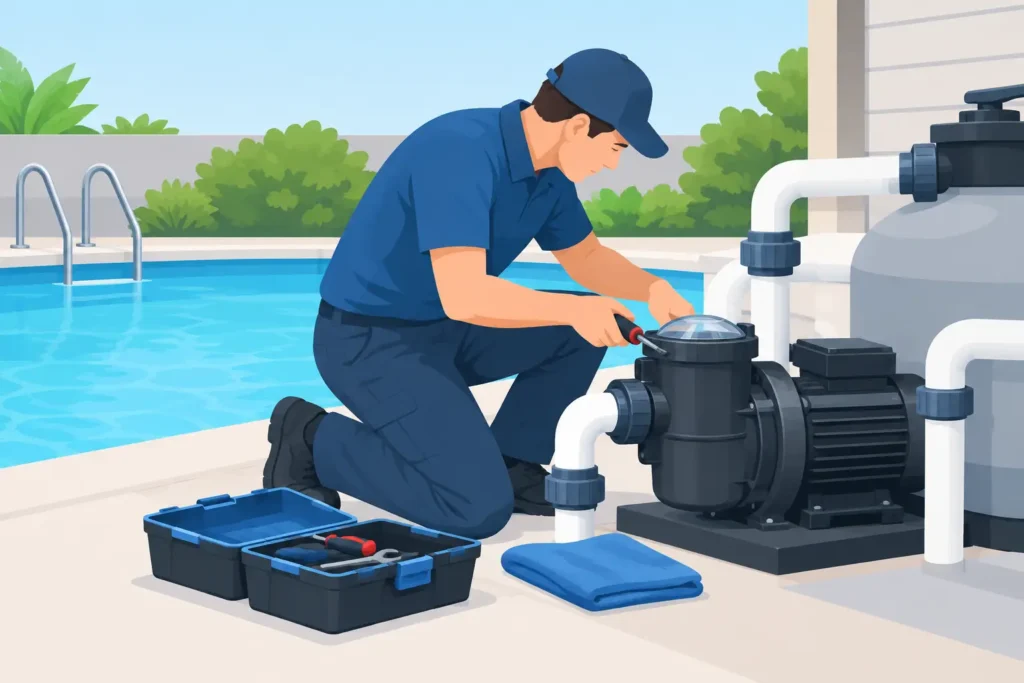
A pool can look acceptable at the surface while its circulation system is already failing. If the pump is noisy, losing prime, tripping the electrical supply or delivering weak flow through the returns, pool pump repair should not be delayed. The pump is not simply a convenience: it moves water through the filter and treatment equipment, helping to control contamination, distribute sanitiser and maintain clean, healthy and safe bathing water.
For villa owners, holiday-rental operators and communal-pool managers, a failing pump can quickly become a water-quality issue, an operational disruption and, in some cases, an electrical safety concern. The right response depends on the fault, the age of the equipment and the condition of the wider circulation system. Replacing a pump without identifying the underlying cause can waste money and leave the same problem waiting to return.
Pool pump repair starts with the symptoms
A healthy pump should run with a steady sound, a full or near-full pump basket housing and consistent water movement at the pool returns. A small amount of air may appear after cleaning the basket or starting the system, but persistent bubbles, fluctuating pressure or poor circulation need investigation.
A grinding, screeching or rumbling noise often points to worn motor bearings. A high-pitched whine may also indicate bearing wear, although vibration from loose pipework or an unstable pump base can produce similar symptoms. Water beneath the pump is another common warning sign. It may be simple splashback, but it can also indicate a failed mechanical seal, a leaking union or damage to the pump housing.
If the pump runs but does not move enough water, the cause is not always the motor. A blocked skimmer basket, clogged pump basket, dirty filter, closed valve, air leak on the suction side or a restriction in the pipework can all reduce flow. Equally, if the pump repeatedly trips the circuit breaker, smells hot or will not start, treat it as an electrical fault until a qualified engineer has assessed it.
Why a pump fault affects more than circulation
Pool water remains hygienic only when treatment and filtration work together. Chemicals cannot compensate for poor circulation, and filtration cannot compensate for unmanaged water chemistry. When a pump does not move the required volume of water, debris remains in the pool for longer, disinfectant may not be evenly distributed and fine contamination is less likely to reach the filter.
This matters especially in warm Cyprus weather. High temperatures, strong sunlight, wind-blown dust and intensive holiday use place a greater burden on the whole system. A period of weak circulation can contribute to cloudy water, algae growth and unstable chemical readings far more quickly than many owners expect.
For communal and commercial pools, reduced performance is not merely inconvenient. Responsible operation requires active attention to bather hygiene, water quality and safe plant-room conditions. European pool-operation standards, including EN15288 principles, place emphasis on risk management, documented operation and properly maintained equipment. A pump that is visibly struggling should be logged, investigated and resolved rather than left to run until it fails completely.
Safe checks before calling for pool pump repair
Owners can carry out a few sensible visual checks, provided they do not remove electrical covers, alter wiring or attempt work on a live system. Switch off and isolate the pump at the appropriate supply before opening the pump basket lid or handling nearby equipment.
Check whether the pool water level is high enough for the skimmer to draw water without pulling air. Empty the skimmer and pump baskets, inspect the transparent pump lid and O-ring for dirt or damage, and look for obvious water leaks around unions and valves. A dry, cracked or poorly seated lid O-ring can allow air into the suction line, causing the pump to lose prime or run with a large air pocket.
It is also useful to note the filter pressure before and after the problem developed. High pressure may indicate a dirty filter or downstream restriction. Low pressure combined with bubbles in the pump housing often suggests restricted suction or an air leak. These observations help an engineer diagnose the fault efficiently, but they are not a reason to continue operating an overheating, leaking or electrically unreliable pump.
Never bypass a protective device, repeatedly reset a tripped breaker or run a pump dry in the hope that it will recover. Those actions can turn a repairable fault into motor damage and introduce avoidable risk around water and electricity.
What a professional repair visit should investigate
A proper diagnosis considers the complete hydraulic and electrical picture, not only the part that has stopped working. An engineer will typically assess the motor, capacitor, bearings, mechanical seal, impeller, basket housing, lid seal, unions, valves, pipework and filter condition. Electrical checks may include supply voltage, earth protection, cable condition, connections and control equipment, depending on the installation.
The impeller deserves particular attention. It can become obstructed by leaves, hair, degraded basket material or fine debris that has passed through a damaged basket. A partly blocked impeller may allow the motor to run while delivering poor flow. Clearing it may resolve the issue, but the engineer should also establish why debris reached it in the first place.
Suction-side leaks can be difficult to find because they often draw air in without releasing much water out. A loose union, worn lid O-ring, split pipe or failing valve can create intermittent loss of prime, particularly after the system has been switched off. Pressure-side leaks are often easier to see, but they can still damage plant-room surfaces, waste water and place unnecessary strain on the pump.
At The Pool People, trained engineers approach pump faults as water-quality and system-performance issues as well as mechanical repairs. That is particularly valuable where the pump serves a salt-water chlorinator, heating equipment, automated dosing or a communal pool plant room, because poor flow can affect every connected component.
Repair or replacement: the practical decision
Pool pump repair is often worthwhile when the pump body is sound and the fault is limited to a seal, capacitor, bearing, lid, union or impeller obstruction. These repairs can restore dependable performance at a lower cost than replacement.
Replacement becomes more sensible when a motor has failed, the housing is cracked, corrosion is advanced or repeated repairs are adding up. Age alone is not the deciding factor. The correct choice depends on the pump’s duty, compatibility with the existing pipework and filter, energy use, availability of parts and the pool’s actual circulation requirement.
A larger pump is not automatically better. An oversized pump can create excessive flow through the filter, increase noise, consume more electricity and place stress on pipework or treatment equipment. An undersized model may struggle to achieve adequate turnover and filtration. The replacement should be selected against the pool volume, pipe diameter, hydraulic resistance, filter capacity and operating pattern.
Variable-speed pumps can reduce running costs significantly where they are correctly specified and programmed. They allow longer, lower-speed filtration periods while maintaining suitable water movement. However, savings depend on the installation and required flow for heating, chlorination and cleaning functions. They should be set up as part of a complete system assessment, not fitted as a one-size-fits-all solution.
Cyprus conditions make prevention worthwhile
The pool season in Paphos and the surrounding region puts equipment under prolonged demand. Heat can accelerate wear in seals and electrical components, while dust, storms and leaf debris can overload baskets and filters. A pump that sounds slightly louder at the beginning of summer may fail at the busiest point of the holiday season if the warning is ignored.
Routine maintenance should include cleaning baskets, monitoring filter pressure, checking for leaks and confirming that water returns have consistent flow. The frequency varies with pool use, surrounding planting, weather and whether the property is occupied year-round. Holiday lets and communal facilities usually need closer observation because a circulation problem can affect more bathers in less time.
Plant rooms should also be kept dry, ventilated and accessible. Chemical containers must be stored appropriately and never allowed to leak near electrical equipment. Good housekeeping makes early leaks easier to spot and gives engineers safe access when urgent work is needed.
A prompt response protects the whole pool
If your pump is making unusual noise, losing prime, leaking, overheating or repeatedly tripping its supply, switch it off where safe to do so and arrange a professional assessment. Record what happened, when it began and any recent changes to cleaning, filtration, weather or water treatment. Those details can shorten the diagnosis and help prevent a repeat fault.
A well-maintained pump is quiet evidence of a properly managed pool: water moves, filtration performs and treatment reaches every part of the system. Acting on early warning signs protects equipment, controls costs and, most importantly, supports the hygienic water conditions that every swimmer should be able to rely on.