
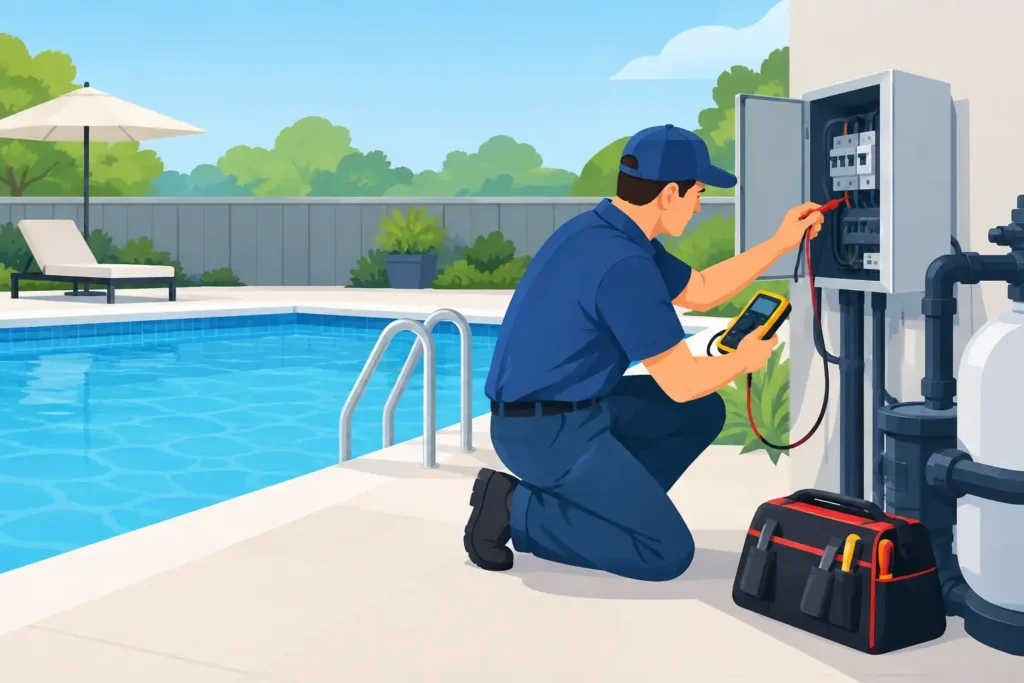
A pool can look perfectly clean while an electrical fault develops out of sight. Pool electrical safety is therefore not a cosmetic maintenance issue or a job to defer until the next refurbishment. Pumps, lights, heaters, chlorinators and control panels operate close to water, often through long Cyprus summers of heavy use, intense UV exposure and occasional storm rainfall. A fault can put swimmers at risk, damage expensive equipment and create a serious liability for landlords and communal-pool operators.
The safe approach is simple: treat any change in how electrical equipment performs as a reason to investigate, not as an inconvenience to work around. Switching off a tripping circuit repeatedly, ignoring a tingling sensation, or continuing to use a pool with damaged lighting is never acceptable.
Why pool electrical safety needs specialist attention
A swimming pool plant room brings water, electricity, chemicals and metal components together in one demanding environment. The circulation pump may run for many hours each day; lighting cable joints may sit underground or behind a niche; and saltwater systems can accelerate corrosion where installations are not properly protected.
Electrical protection is not only about the consumer unit. It relies on a correctly designed installation, suitable equipment, sound cable routes, watertight connections, effective earthing and equipotential bonding, and protection that disconnects the supply rapidly when a fault occurs. These measures must work together. Replacing a visibly damaged fitting without finding the cause of water ingress, for example, may leave the underlying hazard in place.
For communal and commercial pools, electrical condition is part of the wider duty to provide a clean, healthy and safe facility. European pool operating standards, including the principles behind EN 15288-1 and EN 15288-2, place safety management, documented procedures and competent operation at the centre of pool provision. A plant room should not be treated as an area where only basic cleaning knowledge is required.
The warning signs that should stop pool use
Some faults are obvious, but others are easily dismissed as a nuisance. If any of the following occurs, stop swimmers using the pool, isolate the affected equipment if it is safe to do so, and arrange a professional inspection:
- A person feels a tingling sensation, unusual vibration or an electric shock in the water, on metal handrails or near equipment.
- An RCD or circuit breaker trips when the pump, lights, heater, chlorinator or spa equipment starts.
- Pool lights flicker, fail intermittently, show condensation, or have cracked lenses, loose fittings or damaged cables.
- There is a burning smell, buzzing, heat discolouration, corrosion, water inside an electrical enclosure or signs of rodents damaging cables.
- The plant room has standing water near a control panel, socket, transformer or cable connection.
Do not test suspected live faults by touching equipment, entering the water, or resetting protective devices several times. An RCD that trips is doing its job by detecting an abnormal condition. The source may be a failing motor, moisture in a junction box, insulation breakdown, a damaged cable or a fault elsewhere on the circuit. It needs diagnosis, not repeated resetting.
Where electrical faults commonly start
Pool lights and their connections
Underwater lighting demands particular care. A light fitting may appear secure from the poolside, yet a degraded seal can allow water into the fitting or cable connection. Older installations may also have unsuitable joints, brittle cable insulation or transformers that no longer provide the correct protection.
Many pool lights are designed to operate at low voltage through an appropriate transformer or power supply. That does not make them maintenance-free. The transformer, junction boxes and cabling must be correctly specified, installed in suitable locations and protected from moisture. Any work involving underwater lights should be completed with the relevant circuit isolated and proven dead by a competent person.
Pumps, heaters and chlorinators
Pump motors work hard in hot weather. Blocked ventilation, worn bearings, water leaks around seals and electrical connections exposed to damp conditions can all shorten their life. A pump that hums, runs hot, starts slowly or trips protection should be assessed before it fails completely.
Heat pumps and electric heaters need equally careful attention. Their electrical supply, isolator, cable sizing and connection points must suit the unit’s load. Adding heating or upgrading to a variable-speed pump can reduce running costs, but it may also require changes to the electrical installation. Equipment should never simply be connected to the nearest available circuit because it is convenient.
Salt-water chlorinators add another consideration. Salt mist and corrosion can affect terminals, enclosures and nearby metalwork over time. Routine checks should look beyond the cell itself to the condition of the electrical supply and all associated controls.
Plant rooms, sockets and temporary equipment
Plant rooms are often practical spaces where cleaning products, tools and spare parts accumulate. That makes good housekeeping a safety control, not an optional extra. Electrical panels must remain accessible, dry and clearly identified. Chemicals should not be stored where fumes or spills can affect electrical equipment, and hoses or pipe leaks must not be allowed to drip onto cables and controls.
Temporary extension leads and domestic plug-in equipment are a frequent source of avoidable risk. They are rarely a sound long-term answer for pool equipment, especially where leads cross damp areas or remain exposed to sun and weather. If an additional electrical supply is needed, have it properly designed and installed.
What owners and managers can check safely
Property owners do not need to open panels or carry out electrical tests to manage risk well. A brief visual check during routine pool care can identify changes early. Look for cracked light lenses, damaged conduit, loose external fittings, corrosion around equipment, water leaks in the plant room and cables that have been pulled, crushed or exposed.
Keep the plant room dry, ventilated and orderly. Make sure anyone responsible for the property knows where the electrical isolators are and which equipment they control. For holiday rentals and complexes, this should form part of the operating procedure, alongside water testing, cleaning and incident reporting.
Record recurring trips, intermittent faults and equipment that behaves differently at certain times of day. Details such as whether a trip happens when the lights come on, after rain, or when the heat pump starts help an engineer trace the fault efficiently. A maintenance record also demonstrates that a responsible person has acted when a potential hazard was identified.
There is one useful distinction: visual observation is sensible; electrical fault-finding is not a homeowner task. Testing insulation resistance, verifying earthing and bonding, checking protective devices and working on fixed wiring require appropriate competence and test equipment.
A planned inspection is better than an emergency repair
The right inspection frequency depends on the pool’s age, equipment, usage and setting. A private villa pool used by one family has different demands from a busy communal pool, spa or holiday-rental property. However, every installation benefits from planned checks before the high-use season and after events likely to affect equipment, such as flooding, lightning, major storms or refurbishment work.
A competent inspection can assess the visible condition of equipment, the integrity of enclosures and connections, protective devices, earthing and bonding arrangements, lighting systems, pump and heating supplies, and any alterations made since the last review. It should also consider whether the electrical installation still matches the pool equipment now in use. A system that was adequate before a heater, automatic dosing unit or upgraded pump was added may no longer be suitable.
For managed facilities, coordinate electrical inspection with routine pool maintenance rather than treating them as separate responsibilities. Water chemistry, circulation performance and electrical reliability affect one another in practical ways. A leaking pump can become an electrical issue; poor circulation can increase demands on equipment; and a damaged control system can compromise water treatment.
In Paphos and the wider region, summer heat and long operating hours make preventative attention particularly worthwhile. The cost of correcting a corroded terminal or leaking light fitting early is generally far lower than replacing a failed pump, repairing a flooded plant room or closing a pool while an urgent fault is investigated.
When to call a qualified pool engineer
Call for professional help whenever protective devices trip, a light or pump behaves unpredictably, water reaches electrical equipment, or a pool system is being altered. For work on fixed electrical systems, use an appropriately qualified electrician. Where the issue involves pool hydraulics, lighting, heating, control equipment or plant-room design, a pool engineer should work alongside the electrician so the complete system is assessed.
The Pool People can identify how pool equipment, operating conditions and maintenance history may be contributing to an electrical concern, helping owners and managers move from repeated breakdowns to a safer planned solution.
A quiet plant room, reliable lighting and equipment that starts and stops correctly are reassuring signs, but they are not a substitute for inspection. If something changes, act early. Around a swimming pool, electrical safety is the condition that allows every other part of the facility to be enjoyed with confidence.