
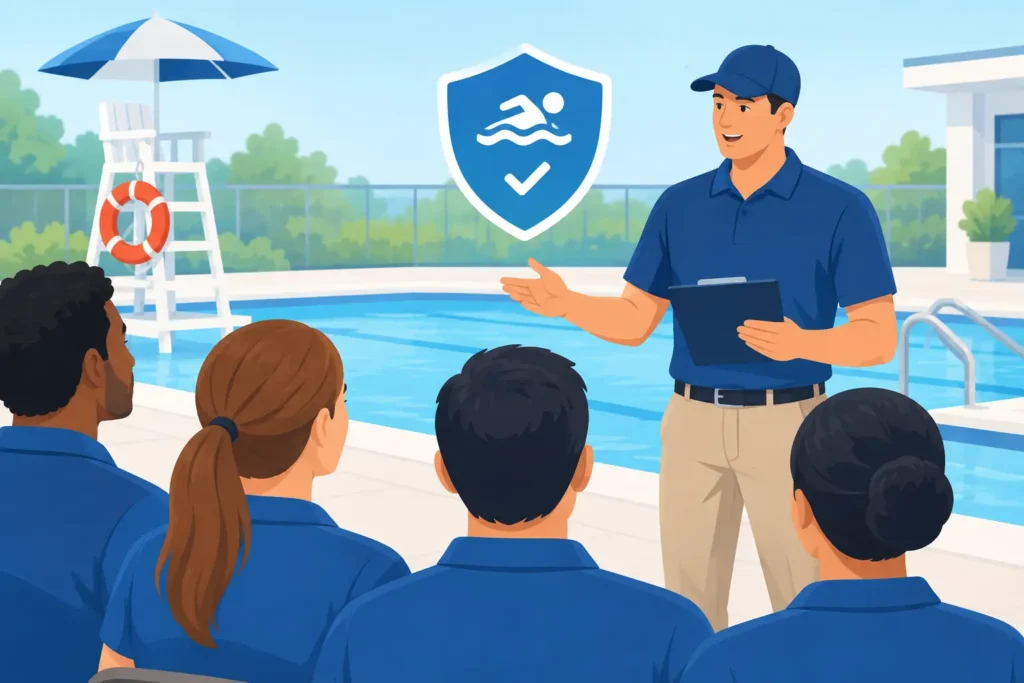
A pool can look clear and still be unsafe. That is the uncomfortable truth behind many water-quality problems, particularly after heavy use, a dust storm, high summer temperatures or a period without proper circulation. PHTA CPO training gives pool operators the knowledge to look beyond appearance and manage the conditions that protect swimmers, equipment and the property itself.
For a villa owner, this may mean confidence that family and guests are using hygienic water. For a communal-pool committee, landlord or holiday-rental operator, it means being able to demonstrate that water treatment, plant-room operation and routine checks are being handled with professional accountability. Clean, healthy and safe water is not achieved by adding chlorine when the pool turns green. It is the result of consistent testing, informed adjustment and properly maintained equipment.
What is PHTA CPO training?
PHTA CPO training refers to the Certified Pool & Spa Operator programme associated with the Pool & Hot Tub Alliance. It is a recognised professional qualification for people responsible for operating and maintaining pools and spas. The course addresses the practical relationship between water chemistry, disinfection, filtration, circulation, bather load, equipment condition and record keeping.
That relationship matters because pool problems rarely have one cause. Low disinfectant readings may be linked to intense sunlight, an incorrect stabiliser level, poor circulation, excessive contamination or a dosing issue. Cloudy water may point to filtration performance, an unsuitable chemical balance, inadequate backwashing, a damaged pump component or several factors at once. A trained operator works through the system rather than treating the visible symptom alone.
The qualification is not a substitute for site-specific risk assessment, manufacturer guidance or applicable local requirements. It does, however, provide a disciplined operating foundation. This is particularly valuable in Cyprus, where long periods of intense heat and high seasonal use can quickly expose weaknesses in water treatment and circulation.
Why trained pool operation protects people
Disinfection is central to pool hygiene, but a safe pool is not simply one with chlorine in it. The disinfectant must be present at an effective level, the pH must allow it to work efficiently, filtration must remove suspended debris and contaminants, and the circulation system must deliver treated water throughout the pool.
When one part of that chain fails, water can become less effective at controlling microorganisms even if it still appears blue. Swimmers introduce sweat, body oils, cosmetics and other organic material. In spas, the smaller volume of water and warmer temperature can make conditions change even more quickly. Without active management, contamination increases disinfectant demand and creates conditions that are unsuitable for bathers.
PHTA CPO training helps operators understand why test results matter rather than simply recording numbers. It also reinforces the need to respond proportionately. A minor adjustment may be appropriate after a routine test. A serious chemical imbalance, equipment fault or suspected contamination event may require the pool to be taken out of use until water quality has been restored and verified.
This safety-led approach aligns closely with the principles behind EN 15288-1 and EN 15288-2, the European standards covering safety requirements for pool design and operation. For shared, commercial and hospitality facilities, proper operation is part of protecting residents, guests and staff, not an optional extra during the busy season.
The technical areas a certified operator understands
A CPO-trained operator is taught to view the pool as an operating system. The water, filters, pumps, dosing equipment, pipework and user behaviour all affect each other. In practical terms, this includes several essential areas:
- Water balance, including pH, alkalinity, calcium hardness and the factors that affect disinfectant performance.
- Disinfection and oxidation, including how chlorine demand changes and why combined chlorine requires attention.
- Filtration and circulation, including flow, filter condition, backwashing and the consequences of poor turnover.
- Plant-room awareness, including pumps, valves, heaters, dosing systems and the warning signs of an emerging fault.
- Testing, logging and corrective action, so decisions are traceable rather than based on guesswork.
For property owners, the value lies in what this prevents. Poorly balanced water can contribute to corrosion, scale formation, damaged finishes and premature equipment wear. A neglected filter can allow water clarity to deteriorate and force the rest of the system to work harder. An incorrectly adjusted salt-water chlorinator may leave the pool under-sanitised during the very period when demand is highest.
Training does not mean every issue can be solved with a test kit. Electrical faults, pump failures, leaking pipework, damaged liners and automated dosing problems may need engineering diagnosis and repair. The advantage of a qualified operator is knowing where routine maintenance ends and when specialist intervention is necessary.
PHTA CPO training and the realities of Cyprus pools
Cyprus pools face conditions that are different from those in cooler climates. Strong sun can reduce available disinfectant more quickly. Windborne dust, pollen and debris increase the burden on filters. Hot weather encourages heavier use, while a sudden storm can introduce contamination and disturb chemical balance. Pools at holiday villas may also experience irregular use: quiet for several days, then heavily used by a full group of guests.
That is why a fixed, minimal service routine is not always enough. A private pool may need additional checks after a period of exceptional heat or bad weather. A communal pool may require a stricter testing and logging schedule because the bather load is less predictable. Spas require particular care because high water temperatures and concentrated use leave less room for error.
A competent operator adjusts maintenance to the conditions on site. They consider how the pool is being used, whether the equipment is correctly sized, how the water is responding and whether recurring problems indicate an underlying design or plant-room issue. This is more dependable than repeatedly adding chemicals to chase a short-term reading.
What owners and managers should expect from a professional
You do not need to become a pool chemist to manage a property responsibly, but you should expect more than a quick skim and an occasional tablet added to a floating dispenser. A professional maintenance provider should be able to explain what is being tested, what the results mean and what action is being taken where readings fall outside the appropriate operating range.
For communal facilities, records matter. They create a clear operational history, support accountability and help identify patterns such as repeated disinfectant loss, rising chemical consumption or declining filter performance. If a complaint arises, documented checks and corrective actions are far more meaningful than verbal reassurance.
It is also reasonable to ask who is responsible for the plant room, how faults are escalated and whether maintenance staff have recognised pool-operator training. The answer should be clear. In a shared facility, unclear responsibility is a risk in itself.
The Pool People applies trained operator knowledge alongside practical engineering experience, so routine water care is considered alongside pumps, filtration, heating, salt systems and the wider condition of the installation. This matters when the same recurring water issue may be caused by a mechanical fault rather than poor day-to-day care.
When training is especially valuable
Certified operational knowledge is valuable for every pool, but the need is strongest where the consequences of poor management are higher. Communal developments, hotels, rental villas, spas and facilities with frequent guest turnover all require close attention to hygiene and documentation. A pool that is used by multiple households cannot be managed as though it were an occasionally used private feature.
It also becomes essential after persistent water problems. Repeated algae, cloudy water, strong chemical odours, staining, unexplained chemical use or frequent pump issues are not normal maintenance inconveniences. They are signs that the system needs proper assessment. Continuing to treat each episode separately can increase running costs and delay the real repair.
For private owners, the decision often comes down to time, confidence and risk. Some owners are happy carrying out basic daily observations between professional visits. Others prefer a contracted service because they are away from Cyprus for long periods or want a qualified team to take full responsibility. Either approach can work, provided testing, treatment and plant care are not neglected.
A well-run pool should feel uncomplicated to the people enjoying it. Behind that experience should be informed checks, accurate records, clean circulation and an operator who understands that water quality is a health responsibility. That is the practical value of PHTA CPO training: fewer assumptions, earlier intervention and safer water when people step in.