
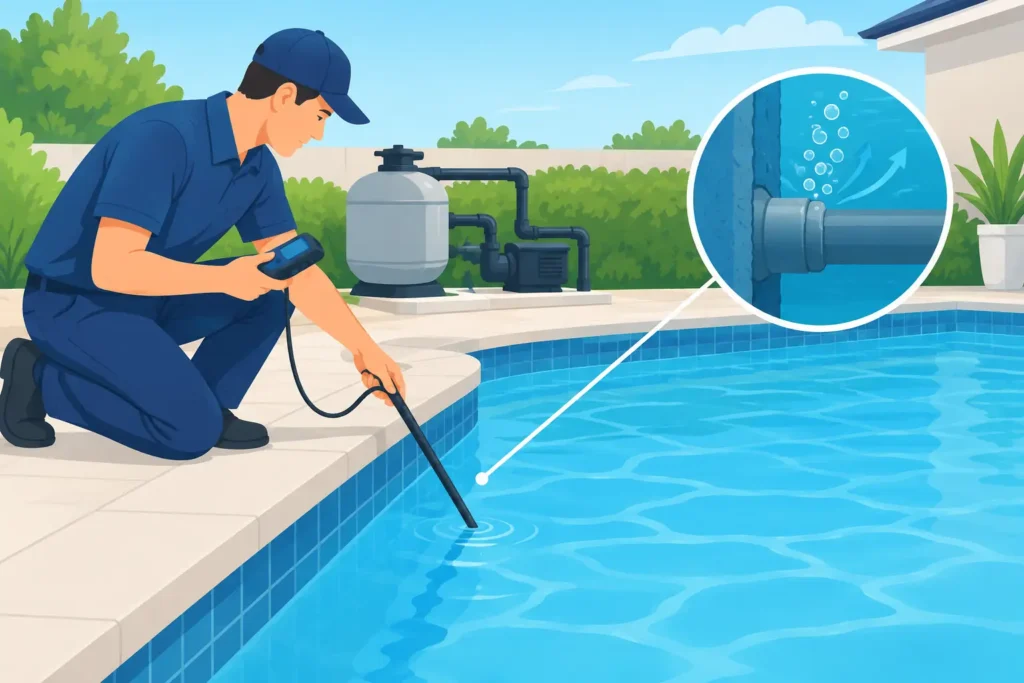
A pump basket that will not stay full, bubbles returning through the inlet jets, or a pump that loses prime after being switched off are not minor cosmetic faults. They are common signs that air is entering the circulation system. To diagnose swimming pool air leaks properly, start with the pump and pipework before changing chemicals or assuming the pump itself has failed. An air leak can reduce filtration, strain equipment and leave water circulation too weak to maintain reliable hygiene.
For holiday villas, communal pools and commercial facilities, this matters beyond convenience. Poor circulation makes it harder to distribute sanitiser, remove debris and maintain consistently clean, healthy and safe water. In Cyprus, long hot periods and heavy seasonal use leave little margin for a pump system that is not operating correctly.
What a pool air leak usually means
Most swimming pool air leaks occur on the suction side of the circulation system. This is the section running from the skimmer, main drain or vacuum point towards the pump inlet. While the pump is running, this pipework is under vacuum, so a tiny imperfect seal may draw air in without releasing any visible water.
This is why a suction-side leak can be difficult to find. You may see no wet ground, no dripping joint and no obvious drop in the pool water level. A pressure-side leak, by contrast, occurs after the pump and is more likely to push water out through a fitting, valve or pipe joint.
A small amount of air in the pump lid immediately after cleaning the basket is normal. Persistent air, repeated loss of prime, a rattling pump or bubbles at the return jets are not. Do not ignore them, particularly if the pump begins to run louder than usual or filtration flow falls away.
Start with the symptoms, not the chemicals
Before dismantling anything, observe the system during a normal filtration cycle. Look through the clear pump lid. A properly primed pump basket should be substantially full of water, with no continuing stream of air entering from the suction port. The water may move, but it should not repeatedly collapse into a large air pocket.
Check the return jets in the pool as well. Intermittent bubbles can indicate air being drawn in upstream of the pump. However, bubbles alone are not conclusive. A water feature, solar heating line, recently cleaned filter or an automatic chemical dosing arrangement may also introduce air temporarily.
Record when the fault occurs. If the pump loses prime only after the pool vacuum is connected, the vacuum hose, adaptor or skimmer plate becomes the first suspect. If it occurs only when drawing from the main drain, the relevant valve, pipework or drain line needs closer investigation. If it is present on every setting, begin at the pump and its immediate connections.
How to diagnose swimming pool air leaks step by step
Check the water level and skimmer first
Low water is one of the simplest causes of air entering the system. The pool water level should normally sit around the middle of the skimmer opening, subject to the pool design. If it drops below the skimmer mouth, the pump can draw a whirlpool of air into the line.
Remove leaves and debris from the skimmer basket and make sure the floating weir can move freely. A stuck weir or a blocked basket can alter flow enough to create erratic suction. Following storms, wind and heavy swimmer use, this check is particularly worthwhile.
Inspect the pump lid, O-ring and basket housing
Switch off electrical power at the appropriate isolator before opening the pump lid. Never work on a pump that may start automatically from a timer or controller. Remove the lid, clean the sealing surface and inspect the O-ring for flattening, cracks, stretching or grit trapped underneath it.
Lubricate the O-ring only with a suitable silicone-based lubricant intended for pool equipment. Petroleum-based products can damage some seals. Refit the lid squarely and tighten it by hand. Excessive force can distort the lid, damage threads or create the very sealing problem you are trying to solve.
Also inspect the lid itself for hairline cracks, particularly around the handles and locking ring. A damaged transparent lid may admit air even when the O-ring appears sound.
Examine valves, unions and suction fittings
With the pump running and fully primed where possible, inspect accessible suction-side joints. Pay attention to threaded fittings immediately before the pump, isolation valves, multiport valve connections, pipe unions and any equipment added to the suction line.
A practical test is to apply water carefully around one suspect joint at a time, using a small bottle or hose on a gentle flow. If the pump basket suddenly fills more completely or the visible air reduces, that joint may be drawing air. Use care around electrical equipment and keep water away from motors, control panels and exposed electrical connections.
Do not rely on this test as final proof. Water can travel, and a response may be delayed. It is a useful way to narrow the search before a qualified engineer carries out a more controlled assessment.
Isolate individual suction lines
Pools with separate skimmer, main-drain and vacuum lines allow a more precise diagnosis. Operate the pump with one line open at a time, following the valve positions specified for the installation. If air appears only when one line is selected, the fault is likely within that line or at its associated valve and fittings.
Never close valves blindly. Some systems require a minimum flow to protect the pump, and incorrect valve operation can cause cavitation or leave the pump running dry. If the pipework is unlabelled, the valves are stiff, or the pool serves multiple users, arrange professional assistance rather than experimenting.
Rule out a blocked or restricted system
Not every apparent air leak is an air leak. A blocked skimmer basket, clogged pump basket, heavily soiled filter or obstructed impeller can reduce water reaching the pump. The resulting low flow can mimic loss of prime and may create turbulence in the pump housing.
Check baskets first, then confirm that the filter pressure is within its usual operating range. A significantly higher pressure commonly points to a dirty filter, while unusually low pressure alongside poor flow may indicate a suction restriction, an air leak or an impeller problem. Compare readings against the pool’s normal clean-filter baseline rather than relying on one generic pressure figure.
When the fault is likely underground
If accessible seals and fittings appear sound but the pump continues to pull air, concealed pipework becomes more likely. This is especially relevant in older pools, installations with settling ground, or systems that have undergone previous repairs or refurbishment.
Clues include one suction line consistently causing loss of prime, unexplained water loss, damp ground near equipment runs, or a problem that becomes worse when the pool water level falls. Underground leaks need methodical testing. Pressure testing, line isolation and specialist leak-detection methods can locate the issue without unnecessary excavation.
For communal pools and holiday-rental properties, avoid prolonged operation while waiting for certainty. A circulation fault can rapidly become a water-quality problem, particularly during busy periods. Keep accurate maintenance records, including pump pressure, chemical readings, corrective actions and any periods when the system was not operating normally.
Protect the pump while you investigate
A pump depends on moving water for cooling and lubrication. Repeatedly allowing it to run dry can damage seals, baskets and, in severe cases, the motor. If the pump will not prime within a reasonable period after the basket has been filled and the lid secured, switch it off rather than leaving it to struggle.
Do not use sealants, adhesive tape or improvised fixes on pressurised pool pipework. They may conceal the source temporarily while introducing a more expensive failure later. Likewise, replacing a pump before confirming the suction side is sound can waste money, because a new pump will behave much the same if it is drawing air through the existing system.
A trained pool engineer can assess the pump, valves, filtration equipment and hydraulic arrangement together. That matters because water quality, energy use and equipment life all depend on the same circulation system. The Pool People investigates these faults with the operational standards expected of residential, communal and commercial pool installations.
If your pump basket repeatedly fills with air, treat it as an early warning rather than a nuisance. A prompt, controlled inspection protects circulation now and helps keep the pool fit for the people who rely on it.