
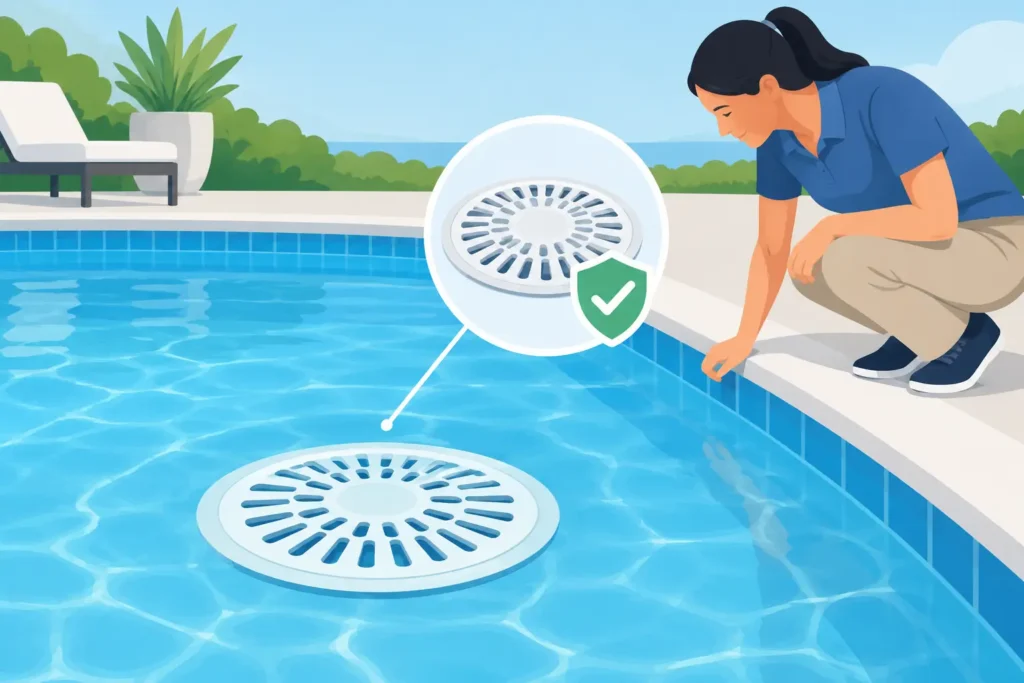
A drain cover is easy to overlook when the water is clear and the pool is running well. Yet it is one of the few components designed to protect bathers from a serious mechanical hazard. So, are pool drain covers safe? They can be, but only when the cover, drain arrangement, pipework and pump system are correctly specified, securely fitted and regularly inspected.
For villa owners, landlords and communal-pool managers, this is not a cosmetic maintenance point. A cracked, loose or unsuitable drain grille can create an entrapment risk, particularly where a powerful circulation pump is operating. Children are most vulnerable, but any swimmer can be affected if clothing, hair or a body part becomes held against a suction outlet.
Why pool drain covers matter
A pool drain cover, often called a grille, sits over a suction outlet that draws water towards the filtration system. Depending on the pool design, outlets may be located on the floor, wall or in a balance tank. Their job is to allow water to pass while preventing direct access to the pipework and spreading suction over a larger surface area.
Without an appropriate cover, or with one that has been damaged or removed, suction is concentrated at the opening. This can produce a force that is difficult to overcome, especially near a main drain connected to a high-flow pump. The danger is not limited to a bather being held underwater. Entrapment can also involve hair, jewellery, loose swimwear or fingers caught in broken grille sections.
The cover is therefore a functional safety component, not an interchangeable piece of plastic. Its shape, open area, fixings and condition all affect how the suction point performs.
Are pool drain covers safe in older pools?
Older pools deserve particular attention. Many properties in the Paphos region have pools built in different decades, refurbished in stages or altered after leaks, liner replacements and equipment upgrades. A drain cover may look intact while no longer being appropriate for the circulation system now installed.
For example, a pump may have been replaced with a more powerful model, or a variable-speed pump may have been set to run too fast. A previous repair may have substituted a grille that physically fits the sump but was never designed for that outlet or flow rate. Missing screws, worn threads and sun-degraded plastic can then turn a seemingly minor issue into a safety concern.
A sound assessment considers the whole system, including the outlet body behind the cover, the number and positioning of suction points, pipework layout, pump performance and any protective devices. Simply fitting a new-looking grille does not automatically make a system safe.
What a compliant cover should do
A suitable drain cover must be designed for pool use and matched to its intended fitting. It should resist breakage, have openings that do not permit hazardous access, sit flush and secure against the sump, and provide sufficient flow capacity for the system. It must not flex, lift or rotate under normal use.
European pool equipment requirements, including the relevant parts of EN 13451, address safety expectations for fittings such as suction outlets. Operational standards under EN 15288-1 and EN 15288-2 also reinforce the wider responsibility to identify hazards, maintain equipment and manage safe pool use. In a communal or commercial setting, documented inspections and prompt corrective work are particularly important.
There is no universal visual test that proves a cover is suitable. Colour, size and a neat fit are not enough. The manufacturer’s specification and the engineering of the connected system matter.
Warning signs that need action
Pool owners should make a habit of looking at drain covers during routine checks, especially before the busy summer period and after storms, heavy debris loads or maintenance work. A cover needs professional attention if it is cracked, faded and brittle, loose under hand pressure, raised above the pool surface, warped, or missing a fixing screw.
Also treat these signs seriously: unusually strong pull around a drain, a cover that repeatedly becomes displaced, a recent pump or plumbing alteration, or a pool that has been left partially drained. Draining can expose fittings to impact damage and makes defects easier to miss once the pool is refilled.
Do not ask swimmers to test suction with hands, feet or loose objects. If you suspect a fault, stop the circulation system, prevent pool use until the issue is assessed, and arrange for a qualified pool engineer to inspect it. Switching off a pump is a sensible immediate control, but it is not a repair and should not be treated as one.
The system behind the grille is equally important
A safe suction arrangement is based on redundancy and controlled flow, not on one cover alone. Modern approaches may use more than one suction outlet, carefully balanced pipework or other engineered means of reducing the risk that one blocked outlet creates excessive suction. The correct approach depends on the pool’s age, hydraulic design, intended bather load and the equipment installed.
This is why one-off alterations can have unintended consequences. Blocking a troublesome drain, joining lines incorrectly or changing valve positions may affect filtration, circulation and water treatment as well as safety. A poorly performing circulation system can leave areas of the pool with weak chemical distribution, contributing to cloudy water, algae growth and hygiene problems during Cyprus’s hottest months.
For pools with a balance tank, spa suction outlets, water features or separate booster pumps, the inspection should be wider still. Each system can have its own suction points and operating conditions. Spas require particular care because their smaller volume and higher jet action can create different risks from a standard residential pool.
Covers need routine inspection, not occasional attention
A practical inspection programme should be part of normal pool maintenance. During a service visit, the engineer should check that outlet grilles are present, secure, undamaged and appropriate to the fitting. Where possible, the condition of fixings and surrounding surfaces should also be reviewed, along with pump operation and any unusual hydraulic behaviour.
For shared pools, managers should keep a written record of inspections, defects found and remedial work completed. This supports responsible management and provides a clear history if a component has needed repeated replacement. It is also useful when a new managing committee, maintenance contractor or property manager takes responsibility for the site.
Private owners may not need the same formal record keeping, but a simple note of replacements and equipment changes is worthwhile. It helps prevent the common problem of ordering a visually similar but incorrect replacement several years later.
Replacement is not a DIY guesswork job
Replacing a damaged cover may appear straightforward, but the correct part must match the outlet housing and the hydraulic duty. Even where the cover is secured with accessible screws, forcing old fixings can damage threads or compromise the seat. A cover fitted too tightly, too loosely or with unsuitable screws can fail in service.
Use only a component intended for the exact fitting or a professionally verified compatible replacement. Avoid improvised mesh, modified grilles and generic covers bought solely by diameter. These can restrict water flow, create sharp edges, trap debris or fail under use.
If the original fitting is obsolete, an engineer may need to identify the manufacturer, assess the sump and recommend a suitable upgrade rather than trying to make an unsuitable part work. That can involve local tile or liner work, but it is a better outcome than retaining an uncertain suction point.
A sensible safety check before guests arrive
Holiday-rental owners and communal-pool operators should inspect drain covers before reopening after winter, before a high-occupancy period and after any engineering work. Clear communication with cleaners, gardeners and maintenance staff also matters. Anyone who notices a loose or broken grille should know that it must be reported immediately and not pushed back into place as a temporary fix.
Good pool care is preventative. Clean water, correctly operating equipment and sound safety fittings are connected responsibilities, not separate tasks. A qualified inspection can establish whether your drain covers are suitable for the pool as it operates today, rather than as it may have been built years ago.
If a cover is loose, damaged or of uncertain origin, treat it as a reason to pause and have the suction system checked properly. That small decision protects swimmers and helps keep the pool clean, healthy and safe.