
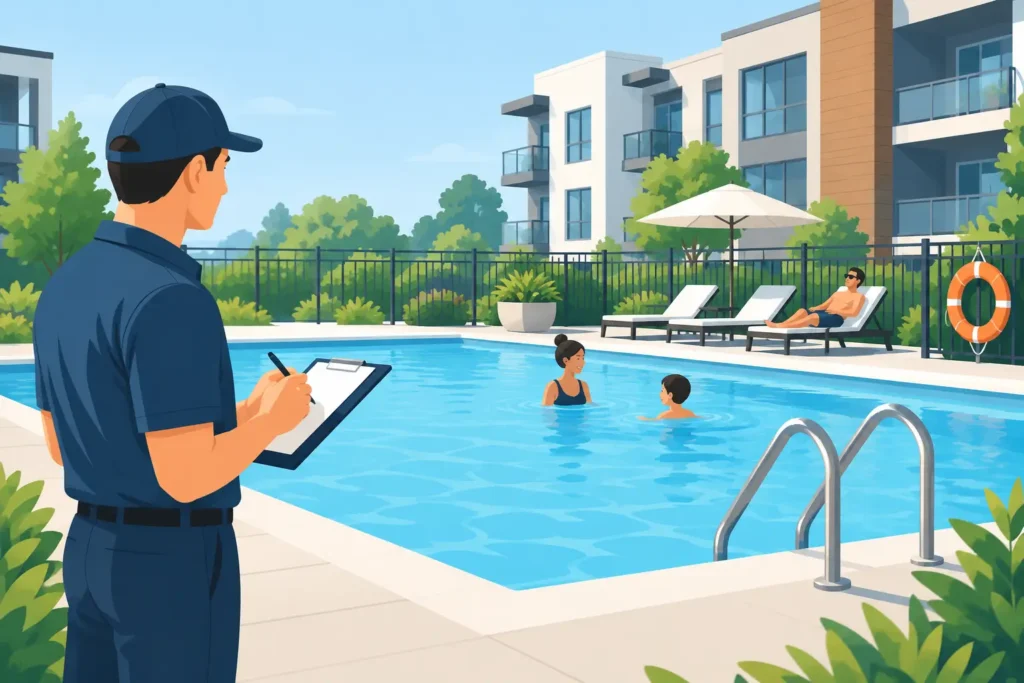
A communal pool can look clear at 9am and still present a hygiene, equipment or operating risk by the afternoon. That is why flat pool management is not simply a cleaning arrangement. It is the planned control of water quality, circulation equipment, access, records and contractor accountability for a facility used by many different people.
For flat-complex committees and property managers, the responsibility is greater than it is for a private villa pool. Residents expect a clean, attractive pool, but they also rely on the people managing it to prevent avoidable illness, chemical incidents and expensive plant-room failures. In Cyprus, intense sun, high bather loads, dust, wind and sudden rain can change pool conditions quickly. A proper management plan keeps the facility clean, healthy and safe throughout the season.
What Flat Pool Management Really Involves
The visible part of pool care is straightforward: skimming leaves, vacuuming the floor and cleaning the waterline. These tasks matter, but they are only one part of the work. The less visible parts – testing and balancing water, checking circulation, maintaining filters, monitoring chemical dosing and recording actions taken – are where safety and long-term costs are controlled.
A communal pool should be managed as an operating system. Water treatment, pump run times, filtration, drainage, electrics, chemical storage and user behaviour all affect one another. If circulation is poor, adding more sanitiser may not solve the problem. If the filter is blocked, clear-looking water may not be receiving effective treatment. If the pH is wrong, chlorine can become less effective and bathers may experience eye or skin irritation.
This is why trained pool operators work to recognised principles rather than treating each visit as a cosmetic clean. European standards EN 15288-1 and EN 15288-2 provide a useful framework for safe pool design, operation and management. They support a disciplined approach: identify risks, set operating procedures, inspect the facility, maintain records and act before a minor issue becomes a closure or major repair.
Water Quality Is a Resident Health Issue
Communal water receives a far more variable load than a private pool. One busy weekend can introduce sunscreen, body oils, organic debris and bacteria at a level that alters water balance significantly. Children, visitors and holiday guests may use the pool for long periods, particularly during peak summer heat. The water therefore needs regular testing and prompt correction, not assumptions based on appearance.
Effective water-quality management considers sanitiser level, pH, alkalinity, stabiliser where relevant and the condition of the water itself. It also considers how well the system is circulating. Dead spots, poor return flow and insufficient filtration time allow contaminants to remain in the pool rather than reaching the filter and treatment system.
There is no single test schedule that suits every complex. It depends on pool volume, bather numbers, equipment type, weather and the condition of the installation. A lightly used residential pool may need a different regime from a holiday-led complex with frequent guest turnover. The key is that testing is recorded, interpreted and followed by the correct action. A number written in a logbook is of little value if no one responds when it falls outside the operating range.
The Plant Room Determines Whether the Pool Performs
The pool plant room is often ignored until the water turns green, the pump becomes noisy or the circulation stops altogether. By then, a preventable problem may have become an emergency. Pumps, filters, valves, pipework, dosing equipment, heaters and electrical components should be inspected as part of the management programme, not only when they fail.
In Paphos and the surrounding coastal areas, heat places extra pressure on equipment and evaporation changes water chemistry rapidly. Fine dust can also increase filter loading. After storms, debris and contaminated run-off can overwhelm a system that was already operating at its limit. Regular filter cleaning, pressure checks and inspection of seals, baskets and valves help protect both water quality and equipment life.
Energy use also deserves attention. Longer pump run times can be necessary during heavy use or extreme temperatures, but running inefficient equipment around the clock is not a sound solution. Variable-speed pump technology, correctly sized filtration and properly programmed circulation can reduce unnecessary consumption while maintaining the turnover the pool requires. Savings should never be achieved by cutting circulation below a safe operating level.
Small faults become expensive faults
A minor leak, a worn pump seal or a failing light fitting can be easy to miss during a basic cleaning visit. Left unresolved, these defects can lead to water loss, corrosion, electrical concerns or damage to surrounding finishes. Managers should expect their maintenance provider to report faults clearly, explain the practical consequence and recommend a proportionate repair.
This matters particularly for committee-managed properties, where decisions may need approval before work starts. Clear reporting allows the committee to budget and act early rather than facing an urgent, higher-cost repair in the middle of the holiday season.
Clear Roles Prevent Gaps in Responsibility
Many communal-pool problems are not caused by a lack of effort. They happen because everyone assumes someone else is responsible. The committee may believe the cleaner is monitoring the plant room; the cleaner may be contracted only for routine cleaning; the managing agent may not receive test results; and residents may report issues informally after the problem has worsened.
A workable flat pool management arrangement defines who is responsible for daily visual checks, water testing, chemical handling, routine maintenance, fault reporting, contractor authorisation and communication with residents. It should also set out what happens when the pool needs to be restricted or temporarily closed due to water quality, equipment failure or a safety concern.
The operating record should be treated as a management tool, not paperwork for its own sake. It provides a history of test results, chemical adjustments, filter maintenance, faults, repairs and unusual events. If water becomes cloudy after a storm or a recurring issue develops, the record helps identify whether the cause is weather, equipment, treatment practice or usage patterns.
Resident Communication Supports Better Water Quality
Residents do not need technical instructions on dosing systems, but they do need clear, sensible expectations. Showering before swimming, keeping food and glass away from the pool area, supervising children and not using the pool when unwell are practical measures that reduce contamination and protect other users.
Communication should be calm and specific. A notice about a temporary closure should explain that the pool is being treated or inspected before reopening, rather than leaving residents to assume poor maintenance. This reinforces that health and hygiene come before convenience.
It is also worth establishing a simple reporting route. A resident who notices cloudy water, a noisy pump, a damaged drain grille or an electrical issue should know whom to contact. Fast reporting gives the management team the chance to isolate and resolve a problem before it affects more people.
Choosing the Right Maintenance Standard
The cheapest contract is rarely the lowest-cost option if it limits visits, excludes plant inspections or leaves the committee responsible for interpreting water results. Equally, a complex does not always need the same level of attendance as a hotel or water park. The right service level depends on bather load, equipment complexity, seasonal use and the condition of the pool.
Ask practical questions before appointing a contractor. Are water tests documented? Is the plant room inspected routinely? Can the provider diagnose and repair pumps, filters, lighting and dosing equipment, or will separate trades be needed? Are operators formally trained, and do they work to recognised standards? A provider with PHTA/NSPF Certified Pool & Spa Operator training and engineering capability can bring greater accountability than a cleaning-only arrangement.
The Pool People supports communal facilities with routine maintenance, complex management, water-quality control and engineering support, giving committees one professional point of contact when operations, hygiene and equipment performance overlap.
Plan Before Peak Season, Not After the First Problem
Before summer use intensifies, arrange a condition review of the pool and plant equipment. Check the filtration system, circulation, chemical treatment, drains, lighting, tiles, liner condition and visible pipework. Review last season’s faults and records as well. Repeated cloudy water, frequent chemical corrections or recurring pump issues are signs that the underlying cause needs attention.
A well-managed flat pool should feel uncomplicated to residents because the complex work is being done properly behind the scenes. When water testing, equipment care and clear responsibility are built into the routine, the pool remains a valued shared facility rather than a source of complaints, risk and unexpected expense.