

A communal pool can look crystal clear at 9am and still be unsafe for use. Water that has lost its disinfectant residual, a blocked circulation line or a neglected plant room may not be visible to residents and guests, but each can create a genuine hygiene or injury risk. Public pool standards turn pool care from an occasional cleaning task into a controlled operating system – one that protects bathers, staff, property owners and the equipment itself.
For flat committees, villa-rental operators and hospitality managers, this matters particularly during the Cyprus season. High bather loads, intense heat, sunscreen, dust and sudden rain all place extra pressure on water treatment. A reliable facility needs more than regular skimming. It needs documented checks, competent operators and prompt action when readings or equipment fall outside safe limits.
What public pool standards are designed to achieve
Public pool standards are built around one simple principle: every person using the pool should be able to do so in water that is clean, healthy and safely managed. That covers microbiological control, chemical balance, circulation, physical condition, supervision arrangements and emergency readiness.
European standards EN 15288-1 and EN 15288-2 provide an important framework for public-use swimming pools. EN 15288-1 focuses on safety requirements for design, while EN 15288-2 addresses safety requirements for operation. Together, they encourage managers to look beyond the pool basin and consider the entire facility: access areas, signs, plant-room systems, maintenance procedures, user information and staff competence.
They are not a substitute for understanding applicable local requirements, insurance conditions or site-specific risks. A small communal pool and a busy hotel facility do not have identical operational demands. However, the discipline is the same: identify risks, control them consistently and retain evidence that the controls are working.
Water quality is an operational responsibility
Clear water is not proof of safe water. Many hazards cannot be seen, including bacteria and the chemical conditions that allow contamination to persist. Effective water management therefore depends on frequent testing and informed adjustment, not guesswork or a weekly visual inspection.
Disinfectant level, pH, alkalinity and stabiliser must work together. If pH is too high, chlorine becomes less effective even when a test appears to show an acceptable chlorine reading. If pH is too low, water can become aggressive to metal components, grout and finishes, while also causing discomfort for bathers. Excess stabiliser can reduce chlorine performance, especially in outdoor pools receiving regular top-up treatment.
Testing frequency should reflect the facility and its use. A lightly used shared pool may need a different schedule from a holiday complex with daily guest turnover, but every public or communal facility needs checks at suitable intervals, results recorded and corrective action taken without delay. During periods of heavy use or extreme heat, more frequent monitoring is often necessary.
When water becomes cloudy, green or persistently difficult to balance, simply adding more chemicals is rarely the professional answer. The underlying cause may be inadequate circulation, a dirty or damaged filter, poor dosing practice, excessive organic contamination or an incorrect chemical balance. Treating the cause prevents repeated closures, unnecessary chemical spend and damage to the pool finish.
Filtration and circulation cannot be ignored
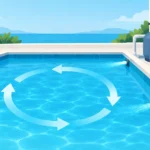
Disinfection works best when all water is regularly passed through a correctly functioning treatment system. Pump run times, flow rates, filter condition and backwashing procedures are therefore central to hygiene. Dead spots in a pool, poor return flow or a failing pump can leave parts of the water insufficiently treated even where test results from one point appear reasonable.
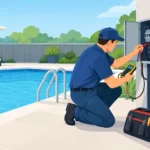
Plant rooms deserve the same attention as the pool surface. They should be orderly, adequately ventilated and accessible only to authorised people. Chemical containers must be stored safely, clearly identified and kept away from incompatible products. Acid and chlorine products, for example, require careful handling and must never be mixed.
A competent operator also looks for early warnings: pressure changes across the filter, unusual pump noise, air in the system, leaks, recurring loss of water or erratic automatic dosing. Addressing these signs early is far less disruptive than responding after equipment failure or a pool closure.
Safe facilities need more than good water
Water quality is only one part of safe operation. Public pool standards also require managers to consider the condition and use of the environment around the water.
Steps, handrails, drains, pool surrounds, depth markings, lighting and electrical equipment should be inspected routinely. Loose fittings, cracked tiles, damaged grilles and poor illumination can quickly become safety issues, particularly in busy shared facilities where wear is higher and individual users may not report a fault.
Clear user information is equally practical. Rules should reflect the site and its risk assessment, with guidance on showering, hygiene, appropriate behaviour, young children and the actions users should take if they see contamination or damage. Signs do not replace management, but they help set expectations and support staff when intervention is needed.
Emergency procedures must be proportionate and understood. The responsible people should know how to isolate equipment, respond to a faecal or vomit contamination incident, manage a chemical spill and obtain assistance in an emergency. A folder left unopened in a plant room is not a procedure. Staff and contractors need to know their roles before an incident occurs.
Documentation is evidence of control
For a property-management company or committee, records are not paperwork for its own sake. They show that the facility is being actively managed. This is valuable when investigating a complaint, planning repairs, demonstrating responsible practice or handing responsibility between committee members and contractors.
A useful operating record normally includes water-test results, chemical additions, cleaning work, filter backwashing, maintenance visits, faults, repairs and any incident or closure. It should identify who carried out the check and when. Where automatic dosing is installed, manual verification remains important because sensors, probes and dosing equipment also require calibration, cleaning and maintenance.
Risk assessments should be reviewed when the facility changes. A refurbishment, new heating system, altered operating hours, increased holiday occupancy or repeated misuse may all affect the controls required. Standards work best when they are living procedures, not documents created once and forgotten.
Competence matters when conditions change
Routine tasks may appear straightforward until the readings do not make sense, equipment starts tripping or bathers report irritation. This is where trained pool operation makes a material difference. A qualified operator understands how treatment chemistry, hydraulics and mechanical systems interact, and can distinguish a temporary adjustment from a condition that requires the pool to be taken out of service.
For communal and commercial facilities, the safest approach is to define who has day-to-day responsibility, who can make operational decisions and when an engineer must be called. This avoids the common problem of several well-meaning people adding chemicals or resetting equipment without a coordinated record.
The Pool People applies trained operational and engineering knowledge to facilities across the Paphos region, including routine water management, plant-room troubleshooting and planned maintenance aligned with EN 15288 principles. The aim is not merely to keep a pool presentable, but to maintain it in a condition that is safe, dependable and economical to run.
A standard-led approach protects the asset
Poor pool management is expensive in ways that are not always immediate. Repeatedly unbalanced water can corrode heaters and metalwork, scale heat exchangers, shorten pump life and stain or degrade finishes. Unplanned closures can disrupt residents, disappoint guests and create avoidable pressure for property managers.
By contrast, a planned maintenance programme gives owners a clearer picture of chemical use, equipment condition and likely future costs. It allows pumps, filters, dosing systems and heating equipment to be serviced before small defects become major failures. It also helps preserve the experience people expect from a communal or hospitality pool: water that feels clean, looks inviting and can be used with confidence.
The right question is not whether a pool looks acceptable after it has been cleaned. It is whether its water, equipment, records and operating procedures would stand up to scrutiny on the busiest, hottest day of the season. That is the standard worth maintaining.


Leave A Comment