
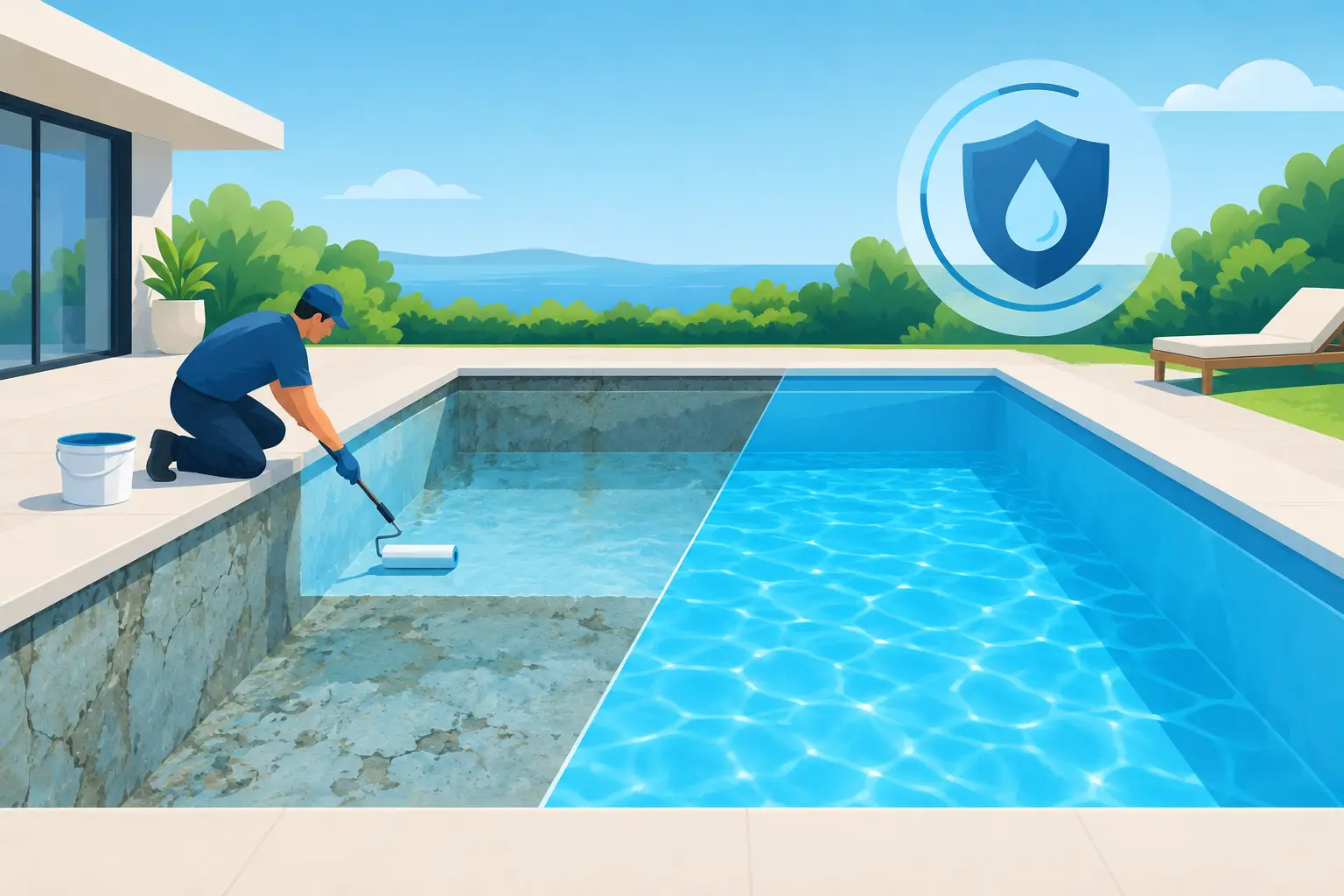
A pool can look tired long before it stops working – but visible wear is rarely only cosmetic. Loose tiles, stained finishes, fading liners, poor circulation and recurring cloudy water can all point to underlying problems. Proper pool refurbishment addresses the condition of the structure, water treatment and equipment together, so the result is not merely a smarter-looking pool but one that is clean, healthy and safe to use.
For property owners in Cyprus, timing matters. Intense sun, high bather loads during the holiday season, hard water, wind-blown debris and periods of inactivity all place strain on a pool. Leaving deterioration until a pump fails, a liner splits or water quality becomes unmanageable often turns a planned improvement into an urgent and more expensive repair.
When pool refurbishment is the right answer
Refurbishment is appropriate when individual repairs no longer solve the wider problem. Replacing one broken tile is sensible. Replacing tiles repeatedly because the substrate is failing, or because water is getting behind the finish, calls for a more thorough assessment.
The same principle applies to circulation equipment. A pool with an ageing pump, blocked or undersized pipework and ineffective filtration may still appear acceptable on some days. Yet it will use more electricity, require more chemical intervention and struggle to recover after heavy use or a summer storm. That creates a hygiene concern as well as an operating cost.
Common signs that a refurbishment should be considered include persistent algae despite appropriate treatment, rough or damaged surfaces, cracked grout, leaking pipework, unreliable lights, discoloured or wrinkled liners, and plant room equipment that is noisy, inefficient or difficult to service. In communal and rental settings, recurring complaints about water clarity or uncomfortable surfaces should be taken seriously. These are operational warning signs, not simply presentation issues.
A competent inspection distinguishes between a finish that needs renewing and a system that needs redesigning. There is little value in installing an attractive new surface over unresolved leaks, inadequate drainage or poor filtration.
Start with the pool system, not the finish
The visible shell is only one part of the installation. Before selecting tiles, a liner or new coping, refurbishment planning should examine the whole water path: skimmers or overflow channels, suction lines, pump, filter, return inlets, dosing arrangements and drainage.
Water must circulate effectively through every part of the pool. Dead areas encourage poor chemical distribution and algae growth, while weak flow through the filter reduces the removal of suspended debris. A new finish cannot correct a circulation fault. Equally, a high-quality pump cannot compensate for damaged pipework or a filter that is no longer suited to the pool’s volume and use.
For commercial, communal and hospitality pools, the assessment should also consider operational responsibilities under EN 15288-1 and EN 15288-2. These standards place proper emphasis on risk management, water quality, plant operation and safe facilities. Even for a private villa pool, the same disciplined approach is sensible: water care should be designed around bather health, not just appearance.
An engineer should investigate suspected leaks before refurbishment begins. Water loss may come from the shell, fittings, pipework, valves or even excessive evaporation, particularly during very hot weather. Guesswork can lead to unnecessary excavation or a newly finished pool that continues to lose water.
Choosing the right scope for pool refurbishment
Every pool has different priorities. A private pool may need a practical liner replacement and more efficient circulation. A holiday-rental pool may need durable finishes, dependable automation and water treatment that can cope with fast turnover. A communal pool requires a solution that considers hygiene controls, accountable maintenance and the expectations of residents and insurers.
Surface and liner work
Tiles, mosaic, render and liners all have different maintenance demands. Tiles can provide a long-lasting finish when preparation and installation are correct, but failed grout, hollow areas and poor waterproofing need attention before retile work begins. A liner can be an effective refurbishment option for suitable pools, offering a clean, uniform surface with less structural work than some alternatives. Its success depends on accurate measuring, sound preparation and correct fitting around steps, inlets and fittings.
The right choice depends on the existing pool construction, budget, expected use and the condition of the substrate. It is worth considering how the chosen finish will perform after years of exposure to strong sunlight, chemical treatment and frequent cleaning, rather than choosing only on first appearance.
Plant room and energy efficiency
Refurbishment is the ideal time to replace obsolete equipment. Older single-speed pumps can consume considerable electricity, especially where they run longer than necessary to maintain water quality. Modern energy-saving pump technology can offer more controlled circulation and lower running costs when correctly specified for the pool.
Filtration should be assessed alongside the pump. The pump, filter and pipework operate as one system; changing only one component without checking flow rates can create new problems. Heating systems, salt-water chlorinators, automatic dosing equipment and controls can also be evaluated at this stage. These additions can reduce daily intervention, but they do not remove the need for routine testing, cleaning and trained oversight.
Lighting, electrical work and fittings
Underwater lighting must be treated as electrical safety work, not a decorative extra. Damaged housings, poor seals, ageing transformers and unsuitable connections require investigation by appropriately qualified professionals. Refurbishment provides an opportunity to replace unreliable fittings and verify that electrical components are suitable for the pool environment.
Skimmer lids, return fittings, ladders, drains and handrails also deserve attention. These items experience regular use and chemical exposure. A small defect can become a source of injury, water loss or contamination if ignored.
Refurbishment without compromising water hygiene
During works, a pool should be managed as a controlled work area. Debris, dust, adhesives and construction residue must not enter the circulation system or remain in the pool where they can affect water quality. Once work is complete, the system requires thorough cleaning, commissioning and testing before bathers return.
Commissioning is more than filling the pool and switching on the pump. It involves checking circulation, confirming filtration performance, balancing water chemistry and ensuring that disinfection is working as intended. pH, disinfectant level, alkalinity and stabiliser levels all affect how well the water treatment performs. A clear pool is not automatically a safe pool.
This is especially relevant after liner installation, extensive tile work or plant room upgrades. Fresh water still needs to be balanced, and new equipment needs operating settings that match the pool’s size, bather load and local conditions. For shared pools, maintenance records should show what has been tested, adjusted and serviced. Good documentation supports consistent standards when staff or contractors change.
Avoid the false economy of cosmetic repairs
The cheapest quotation is not always the lowest-cost decision. A refurbishment that omits leak testing, waterproofing preparation, equipment sizing or proper commissioning may look satisfactory at handover, then fail after the first demanding season. The resulting disruption is particularly costly for holiday lets and communal properties, where closure affects residents, guests and reputation.
A clear scope should identify what is being repaired, replaced or retained, and why. It should also explain whether problems such as poor water turnover, damaged pipework or failing electrical components have been ruled out or included in the works. This gives owners and management committees a basis for comparing proposals properly.
At The Pool People, refurbishment decisions are approached through trained operational and engineering knowledge, not surface appearance alone. That means looking at the pool as a live water-treatment system with a duty to protect everyone who uses it.
A well-planned refurbishment should make the next season easier, not simply make the pool look better for a photograph. Arrange an assessment while there is time to investigate the system carefully, choose suitable materials and return the pool to reliable service before demand is at its highest.


Leave A Comment