
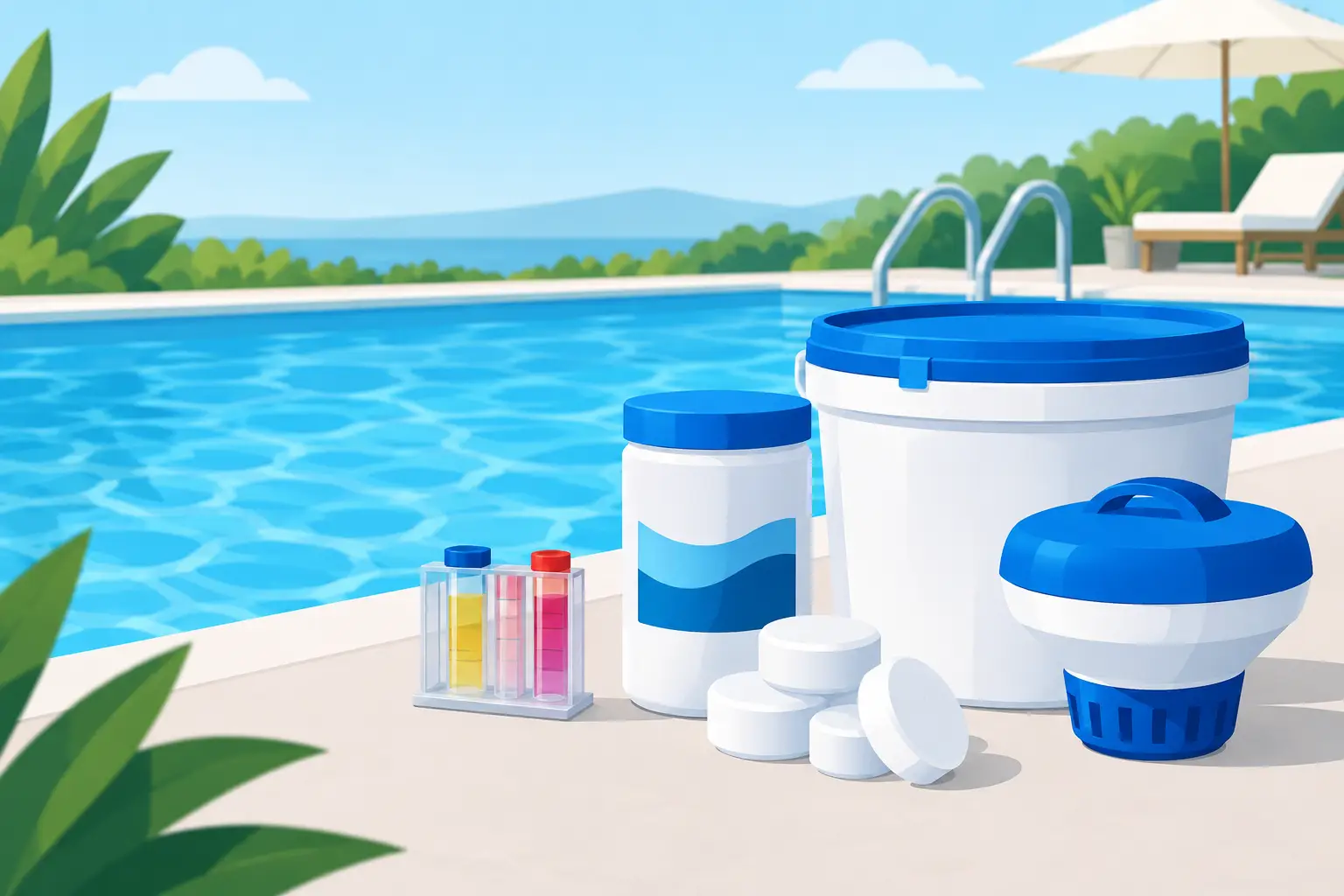
A pool can look blue and still be unsuitable for swimming. In Cyprus, high temperatures, heavy bather use, wind-blown dust and sudden rain can change water balance quickly. Pool chemicals are therefore not a cosmetic extra or a shortcut for clear water. Used correctly, they control harmful microorganisms, protect equipment and help maintain a clean, healthy and safe swimming environment.
The right chemical programme is never simply a matter of adding chlorine on a fixed day. It depends on test results, pool volume, water temperature, circulation, the number of bathers and the condition of the filtration system. For private villas, holiday rentals and communal pools alike, the objective is stable, properly sanitised water – not the strongest possible chemical smell.
Pool chemicals work as a system
Every treatment affects another part of the water balance. Chlorine may be the primary sanitiser, but it cannot perform reliably if pH is out of range, the filter is overloaded or stabiliser has accumulated to an excessive level. Equally, repeatedly adding products without testing can create expensive problems that are harder to correct than prevent.
A professional maintenance visit should combine water testing with practical checks of circulation, filtration, dosing equipment and visible contamination. Water quality is an operating system, not a single test strip result.
Sanitiser: controlling bacteria and algae
Chlorine remains the most common sanitiser for outdoor swimming pools because it provides a measurable residual disinfectant in the water. That residual matters: it continues to control contamination introduced by swimmers, leaves, insects and airborne debris between maintenance visits.
However, chlorine demand rises sharply during hot weather and busy periods. A pool used daily by guests will need more attention than a lightly used private pool, even if both are the same size. Rain can also introduce organic matter and dilute the water, while strong sunlight breaks down unstabilised chlorine.
Salt-water pools still require chemical management. A salt chlorinator generates chlorine from salt, but the pool needs regular testing for pH, free chlorine, salt level and overall balance. The equipment reduces manual handling of some products; it does not remove the need for competent water management.
pH: the figure that changes everything
pH measures whether water is acidic or alkaline. If pH is too high, chlorine becomes less effective, water may turn dull and scale can form on tiles, heaters and equipment. If it is too low, water can become corrosive, irritating to swimmers and damaging to metal components, grout and pipework.
For most pools, pH is normally managed within a narrow operating range set by the treatment method and equipment manufacturer. The precise target should be confirmed through regular testing rather than guesswork. Adding pH reducer or increaser in large doses to chase a result is poor practice. Small, calculated adjustments with time for circulation and retesting are safer for the pool and more economical.
Total alkalinity and calcium hardness
Total alkalinity helps resist sudden pH movement. When it is too low, pH can swing unpredictably. When it is too high, pH becomes difficult to adjust and the risk of scale increases. This is one reason a pool may seem to need constant chemical correction even when chlorine readings look acceptable.
Calcium hardness also deserves attention, particularly where source water is naturally hard. Insufficient calcium can contribute to corrosive water conditions, while excessive calcium encourages scale formation. Scale reduces heat-transfer efficiency, restricts pipework and can shorten the working life of heaters, pumps and salt cells.
Stabiliser, shock treatment and algaecide
Some pool chemicals have a specific job and should not be treated as routine additions without a reason.
Cyanuric acid, often called stabiliser, protects chlorine from rapid destruction by ultraviolet light. That can be useful under the Cyprus sun, but more is not always better. Excess stabiliser can reduce chlorine’s sanitising effectiveness, leaving a pool apparently treated yet poorly protected. When stabiliser becomes too high, dilution through partial draining and refilling may be required.
Shock treatment is a higher-dose oxidising treatment used to deal with contamination, heavy bather load, developing algae or combined chlorine. It is not a substitute for daily sanitation or a dirty filter. The pool should remain closed to swimmers until testing confirms that chemical levels have returned to a safe operating range.
Algaecide can be useful as part of a targeted treatment plan, particularly after early signs of algae or following severe weather. It will not solve an underlying circulation failure, low chlorine level or blocked filter. Adding algaecide to green water without correcting the cause usually delays the real repair.
Clear water is not always clean water
Cloudiness, green water and a strong chemical odour are warning signs, but they are not the only indicators of poor water quality. A sharp chlorine smell is often associated with chloramines, formed when chlorine reacts with contaminants. It does not mean the pool has been properly sanitised. In many cases, it indicates that the water needs testing and corrective treatment.
Likewise, perfectly clear water can contain insufficient disinfectant. This is especially relevant to holiday properties where the pool may look untouched in the morning but have had intensive use the previous afternoon. Reliable testing protects swimmers and avoids the reputational damage of closing a pool after guests report irritation or illness.
For communal and commercial facilities, water quality management should be documented and consistent with the pool’s risk assessment and operating procedures. European standards EN 15288-1 and EN 15288-2 place clear emphasis on safe design, operation and supervision. Committees and property managers should expect recorded checks, accountable treatment decisions and prompt action where readings fall outside operational limits.
Safe handling matters as much as dosing
Pool treatment products are concentrated chemicals. Even familiar products can cause burns, respiratory irritation or dangerous reactions when handled carelessly. Store them in their original labelled containers, in a dry, ventilated and secure area away from direct sun, ignition sources and unauthorised access.
Never mix products together, never add water to chemicals, and never use a damp scoop in a dry chemical container. Chlorine products must be kept separate from acids and other reactive materials. Follow the manufacturer’s instructions for dilution, dosing order and personal protective equipment, and ensure that anyone responsible for a communal pool understands the procedure.
Do not pour chemicals directly into a skimmer unless the product instructions and system design specifically allow it. Concentrated chemicals can damage pipework, equipment and finishes. Circulation should be operating as required during dosing, and the water should be retested after sufficient mixing time.
When a pool needs more than chemicals
If the same fault keeps returning, adding more products is rarely the answer. Persistent algae may point to poor circulation, inadequate filtration, a failing pump, blocked returns or incorrect dosing equipment. Recurrent cloudiness may indicate a dirty or damaged filter, while unusually high chemical demand can reveal hidden contamination or a water-balance issue.
This is where qualified pool engineering support becomes valuable. A trained operator can distinguish between a simple correction and a system fault that is wasting chemicals, increasing electricity use or putting swimmers at risk. The Pool People applies this approach across private, communal and commercial installations: test the water, inspect the system and correct the cause rather than masking the symptom.
For property owners, the most useful habit is simple: treat every unexpected change in water appearance, smell or test result as a prompt to investigate. Fast, measured action keeps a small imbalance from becoming a closure, a costly repair or a preventable hygiene issue.


Leave A Comment