
A pool can look clean while its circulation, filtration or electrical systems are working outside safe limits. That is why pool engineering is more than replacing a failed pump or fitting a new light. It is the practical assessment, repair and improvement of the systems that keep water clean, healthy and safe for the people using it.
For villa owners, landlords and communal-property managers, engineering work often becomes necessary after a visible problem: cloudy water that will not clear, a pump that loses pressure, repeated chemical instability or a rising electricity bill. The cause is not always obvious. In Cyprus, prolonged heat, heavy bather loads, wind-blown debris and occasional storm water can expose weaknesses in a system that appeared to be coping perfectly well.
What pool engineering actually covers
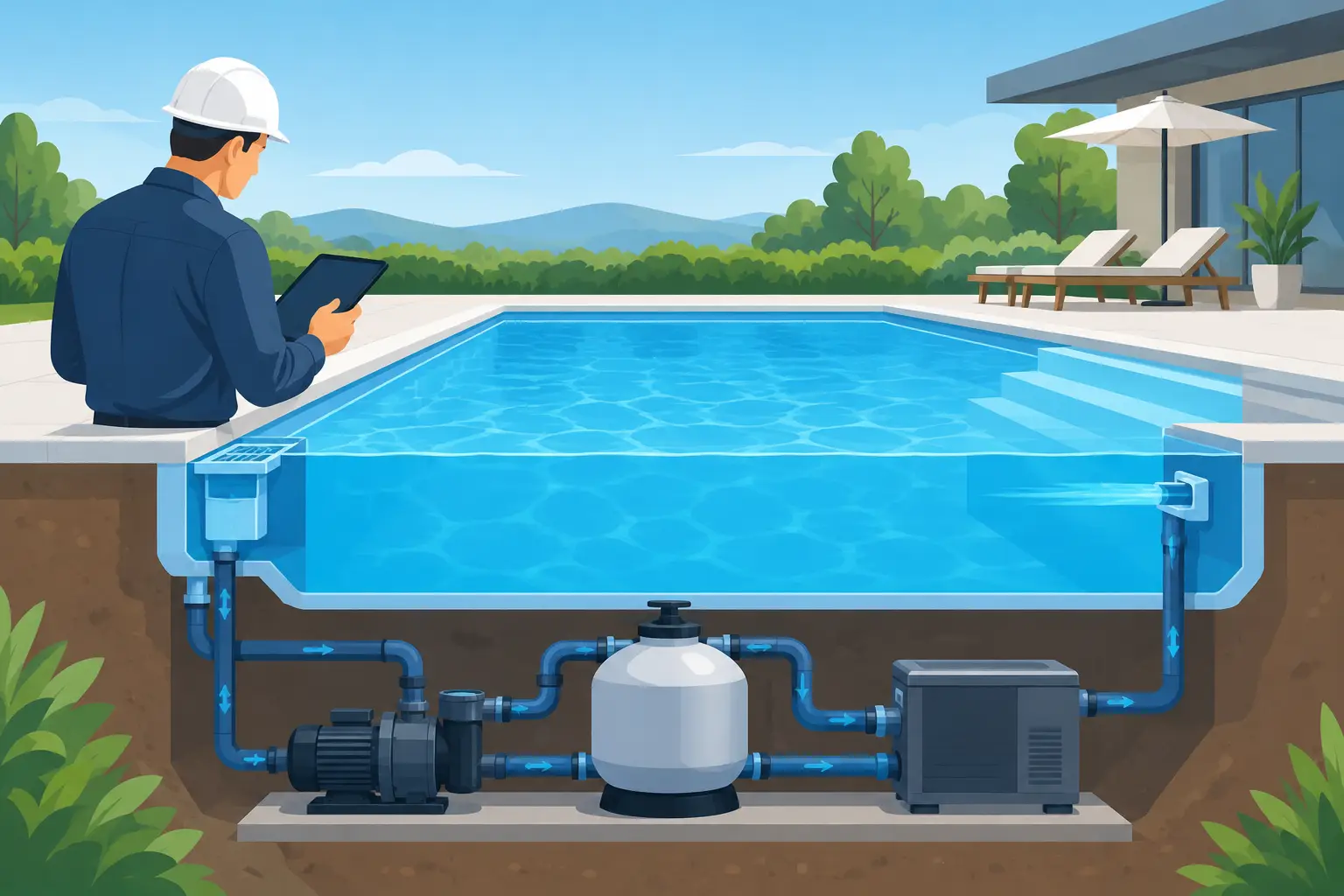
Routine servicing keeps a well-designed pool operating day to day. Engineering addresses the performance and condition of the installation itself. It considers how water moves from the pool through the skimmers, pipework, pump, filter and treatment equipment, then returns evenly to the pool. It also covers heating, lighting, controls, drainage, liners, pool surrounds and the electrical components that support them.
A sound engineering assessment starts with the whole system rather than the most obvious fault. A noisy pump, for example, may be nearing the end of its life. Equally, it may be oversized, starved of water by a blocked line, affected by an air leak, or working against a dirty filter. Replacing it without identifying the cause can leave the property owner paying twice.
The same principle applies to water quality. Repeated algae growth is not always a chemical problem. Poor circulation can leave areas untreated, an ineffective filter can allow fine contamination to return to the pool, and incorrect operating hours can leave the water unprotected during the hottest part of the day. Engineering and water treatment must work together.
Circulation and filtration are the foundation
The pump and filter do the unglamorous work that makes safe swimming possible. The pump draws water through the system, while the filter removes suspended debris and helps treatment chemicals work effectively. If either component is wrongly sized, poorly maintained or incorrectly configured, water quality becomes harder and more expensive to control.
Turnover rate matters, particularly in communal pools and holiday properties where use can increase sharply without warning. Water needs to circulate through the treatment system at a rate suitable for the pool volume, bather load and operating conditions. Running equipment for too few hours may save a small amount of electricity in the short term, but it can lead to chemical demand, algae recovery work and unnecessary strain on equipment.
There is no single pump setting that suits every pool. A quiet private pool may benefit from an energy-efficient variable-speed pump programmed around the property’s pattern of use. A communal pool requires a more disciplined approach based on its design, occupancy and water-quality obligations. The correct solution depends on the installation, not on a generic timetable.
Treatment equipment must be matched to the pool
Salt-water chlorinators, dosing systems, heaters and automatic controllers can reduce manual workload and improve consistency. They are not fit-and-forget devices. Their output, calibration and installation must match the pool’s volume, circulation and use.
A salt system that is undersized or operating in unsuitable water conditions may fail to maintain an adequate disinfectant level. A dosing system with an incorrectly positioned probe can produce misleading readings. Heating equipment may underperform because of restricted flow, poor hydraulic design or a neglected filter. Good pool engineering looks at these relationships before recommending a repair or upgrade.
This is especially relevant to rental villas. Guests expect clear, inviting water, but high use and sunscreen contamination can change water demand quickly. Automatic equipment supports good management; it does not remove the need for competent testing, inspection and adjustment.
When a pool engineering inspection is sensible
Engineering work is often reactive, but it should not wait for a total failure. A professional inspection is worthwhile when a pool begins consuming more chemicals than usual, losing water, tripping electrical protection, developing persistent cloudy patches or taking longer to heat. These are operational warnings, not cosmetic inconveniences.
A refurbishment is another sensible point to review the system. Replacing a liner, renewing borders or modernising a plant room provides an opportunity to inspect pipework, valves, drains and connections that are normally hidden from view. Leaving deteriorated components in place can undermine otherwise good refurbishment work.
For properties with older equipment, the financial question is usually repair versus replacement. Repair is often sensible when the fault is isolated and the equipment remains appropriately sized. Replacement may be better value when a pump is inefficient, parts are becoming difficult to source, repeated repairs are mounting up or the existing system cannot meet the demands placed on it. The cheapest immediate option is not always the lowest-cost option over several seasons.
Pool engineering and user safety
Water hygiene and mechanical safety are closely linked. Inadequate circulation can increase the risk of poorly disinfected water. Faulty lighting, damaged fittings or unsuitable electrical work can create more direct hazards. A pool should be maintained as an operating system, not treated as a decorative feature of a property.
For communal and commercial facilities, this responsibility is greater. Committees and managers need documented checks, clear maintenance arrangements and competent technical support. European standards EN15288-1 and EN15288-2 provide an important framework for safe pool design, operation and management. They help focus attention on risk assessment, operating procedures, water quality and the condition of the facility itself.
Standards do not replace practical judgement. A plant room can look tidy yet contain a failing valve, poor ventilation, damaged insulation or control settings that do not reflect actual pool use. Conversely, a visible repair does not necessarily mean the system is unsafe. A trained engineer assesses the condition, performance and risk together.
Electrical work needs particular care
Poolside electrical systems operate in a wet environment, so shortcuts are unacceptable. Underwater lights, transformers, junction points, timers and pump connections should be inspected and repaired by suitably qualified people who understand pool-specific requirements. A flickering light or repeated circuit trip should not be treated as a minor annoyance.
Electrical faults can also affect day-to-day pool management. A timer that fails to run the pump at programmed intervals may quickly contribute to water-quality problems. Correct diagnosis protects both users and the wider equipment system.
Planning for Cyprus conditions
Paphos region pools face a demanding operating environment. Summer heat accelerates chlorine consumption and encourages algae when circulation or treatment slips. Fine dust and wind-blown material increase filter loading. Heavy rain can dilute treatment levels, upset water balance and carry contaminants into the pool.
The practical response is not simply adding more chemicals. After unusual weather or intensive use, the water should be tested and the equipment checked. Filters may need cleaning or backwashing, baskets may need clearing, and circulation times may need adjustment. If the same problem returns, the underlying system deserves investigation.
Energy use also deserves attention. Pumps commonly account for a significant share of a pool’s running costs. Efficient equipment, sensible programming and correctly maintained hydraulics can reduce wasted consumption without compromising water quality. However, reducing runtime or pump speed too far is a false economy if turnover and filtration suffer. The objective is efficient operation, not minimal operation.
Choosing the right engineering support
A credible pool engineer should explain the reason for a recommendation in plain language. Property owners should be able to understand what has failed, what can be repaired, what should be monitored and why an upgrade may be justified. This matters when decisions involve hidden pipework, plant-room equipment or communal budgets.
Professional training also matters. Engineers trained to PHTA/NSPF Certified Pool & Spa Operator standards understand that water chemistry, hydraulics, filtration and hygiene are connected. For a landlord or committee, that knowledge provides more useful protection than a cleaning-only visit that treats each symptom in isolation.
The Pool People approaches engineering with this wider responsibility in mind: to keep installations dependable, water properly managed and users protected. Whether the task is tracing a circulation problem, renewing tired equipment or planning a refurbishment, the work should leave the pool easier to operate safely, not merely better looking for the next few weeks.
A well-engineered pool gives owners something more valuable than clear water on the day of a visit: confidence that the system is prepared for the next hot spell, busy holiday week or unexpected equipment demand.



Leave A Comment