
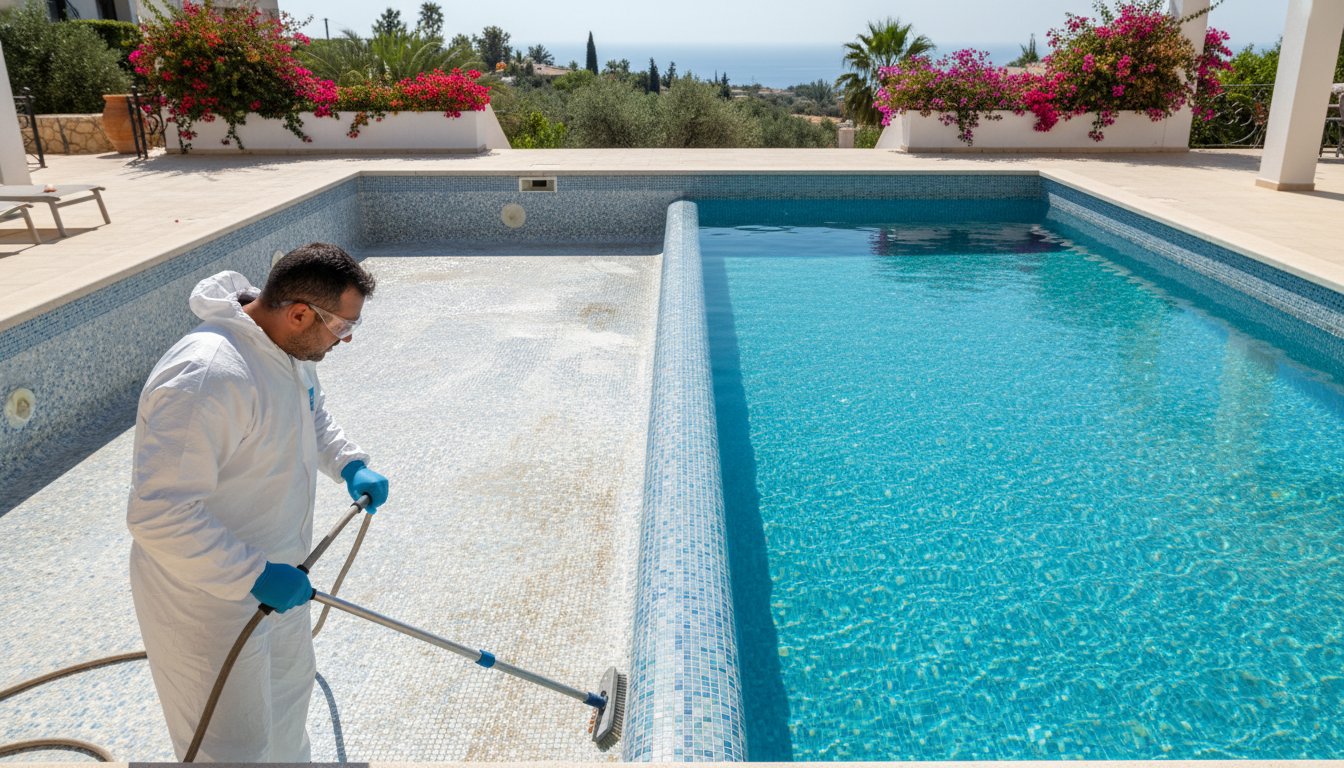
With Paphos calcium hardness levels frequently exceeding 300 ppm, your pool surface faces a constant mineral onslaught that standard scrubbing simply cannot beat. Over time, this buildup transforms once-smooth tiles into rough, sandpaper-like surfaces that trap dirt and harbor stubborn black stains. If you’ve noticed your swimming environment losing its luster, a professional pool acid wash paphos service offers a precision chemical exfoliation designed to strip away years of scale without the need for a costly full liner replacement.
It’s frustrating to invest in a beautiful property only to feel embarrassed by unsightly mineral deposits or rough walls that irritate the skin. You deserve a pool that feels as premium as it looks. In this 2026 restoration guide, you’ll discover how a CPO-certified approach can safely restore your pool to its original brilliance while ensuring the underlying structure remains sound. We’ll walk through the technical process of acid washing, the impact of the 2025 Swimming Pools Law on maintenance standards, and why this deep-cleaning method is the most efficient way to achieve a like-new finish in our challenging local climate.
Key Takeaways
- Understand why the unique mineral profile of local water makes a pool acid wash paphos essential for removing stubborn calcium scale and restorative maintenance.
- Learn the technical steps professionals take to manage hydrostatic pressure and acid-to-water ratios to protect your pool’s structural integrity during the process.
- Discover why controlled chemical stripping is often safer and more effective for your pool surface than high-pressure washing or standard chemical shock treatments.
- Identify the ideal seasonal “windows” in the Cyprus climate to schedule your restoration for the best results and minimal property disruption.
- Recognize the critical role of CPO-certified expertise in ensuring your pool restoration meets international safety standards and long-term value goals.
What is a Pool Acid Wash and Why is it Essential in Paphos?
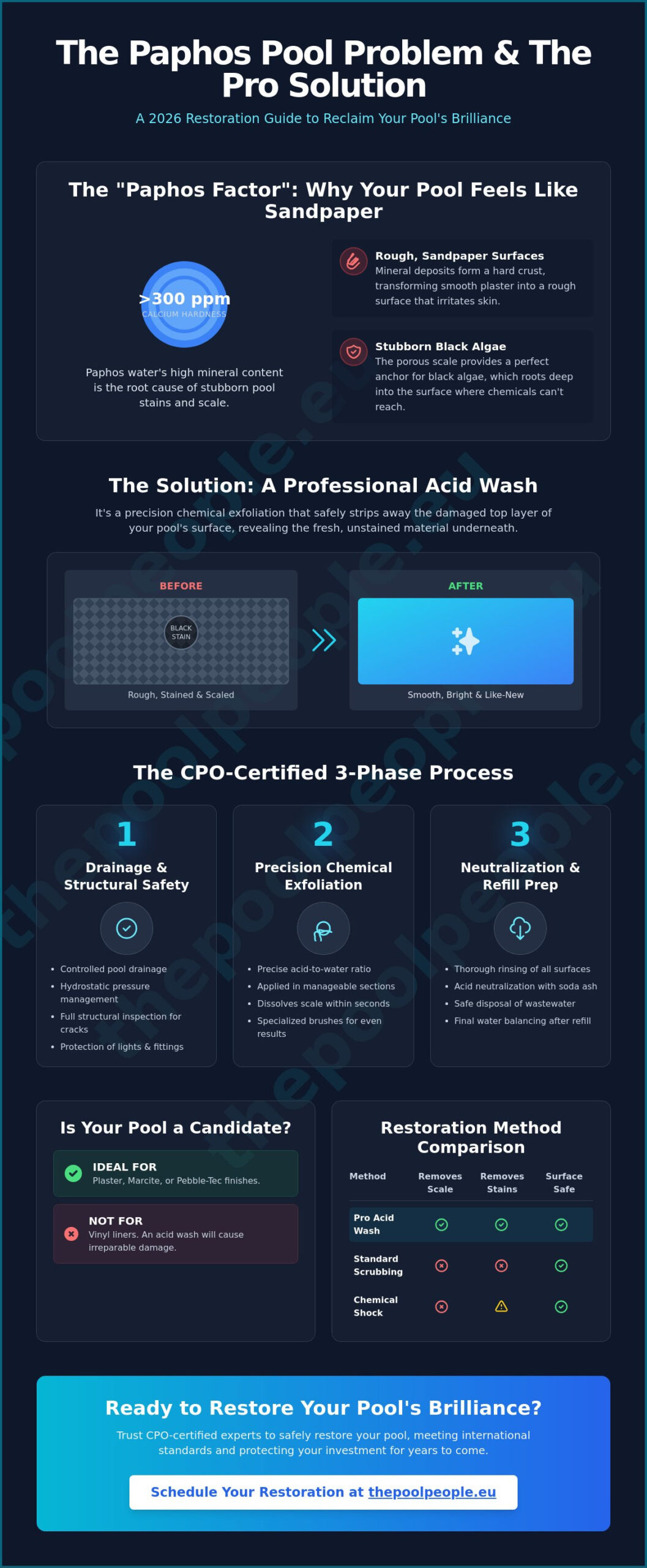
A pool acid wash is essentially a specialized chemical “exfoliation” for your swimming environment. During this process, a professional technician uses a precise mixture of water and muriatic acid to carefully strip away a very thin layer of the pool’s plaster or tile grout. This reveals the fresh, unstained material underneath. While it sounds intense, it’s a standard restorative procedure for concrete and plaster pools that have lost their luster. In the local context, a pool acid wash paphos service is often the only way to reverse the damage caused by our region’s exceptionally hard water.
Paphos water supplies are notorious for their high mineral content, with calcium hardness levels frequently exceeding 300 ppm. This “Paphos Factor” means that calcium carbonate constantly precipitates out of the water, bonding to your pool walls. Over several seasons, these minerals form a hard, white crust that traps dirt and organic matter. You’ll know you’ve reached the “point of no return” when standard swimming pool sanitation chemicals and vigorous scrubbing no longer lift the brown or black discolorations. At this stage, the scale has become part of the wall itself.
The Science of Staining: Calcium and Algae
The high mineral density in Paphos creates a rough, sandpaper-like texture on pool surfaces. This isn’t just an aesthetic issue; it’s a functional hazard. These microscopic peaks and valleys provide the perfect anchor for black algae. Unlike green algae, black algae roots itself deep into the porous plaster. The intense Cypriot sun then acts as a kiln, effectively baking these minerals and organic stains into the finish. Without a professional acid wash, these stains remain protected by a mineral shield that chlorine cannot penetrate. This leads to a cycle of high chemical consumption with very little visual improvement.
Is Your Pool a Candidate for an Acid Wash?
Not every pool surface is suitable for this treatment. It’s designed specifically for plaster, Marcite, or Pebble-Tec finishes. If your pool uses a vinyl liner, an acid wash will cause irreparable damage. In those cases, a professional pool liner replacement is the correct restoration path. For plaster pools, we perform a “scratch test” to ensure the surface is thick enough to withstand the treatment. Older pools with thin, patchy plaster might require a gentler approach or a different restoration strategy to avoid exposing the underlying concrete shell. We always prioritize the structural safety of your investment before proceeding with any chemical application.
The Professional Acid Wash Process: Step-by-Step
Executing a pool acid wash paphos requires more than just a bottle of chemicals; it’s a technical operation that demands structural awareness. We follow a disciplined, step-by-step sequence to ensure that your pool is restored without compromising the integrity of the plaster or the surrounding property. This methodical approach transforms a high-risk task into a safe, predictable restoration project.
Phase 1: Drainage and Structural Inspection
The process begins with a controlled drainage. We monitor Paphos groundwater levels closely and never drain a pool during or immediately after heavy rains. This precaution prevents “pool popping,” a catastrophic event where the entire shell lifts out of the ground due to external water pressure. During drainage, we manage the hydrostatic valve to equalize this pressure. Once the water is gone, we perform a detailed inspection for hollow spots or hidden cracks. We also take care to protect plastic fittings and pool lighting upgrades from acid contact, as these components are easily etched or damaged by corrosive mixtures.
Phase 2: The Chemical Exfoliation
Precision is vital when mixing the acid and water. We apply the solution in small, manageable sections, typically starting at the deep end and moving toward the shallow end. As the mixture hits the walls, a distinct bubbling reaction occurs. This effervescence indicates that the acid is successfully dissolving the calcium scale and organic stains. According to Professional Acid Wash Safety Guidelines, the chemical should only remain on the surface for a matter of seconds. Our technicians use specialized brushes to agitate the area, ensuring an even “exfoliation” across the entire surface before the acid can penetrate too deeply into the healthy plaster underneath.
Phase 3: Rinsing and Refilling
Once the desired finish is achieved, we rinse the walls thoroughly with fresh water. This creates an “acid puddle” at the bottom of the pool that is highly corrosive. Before disposal, we use Soda Ash to neutralize the pH of this residue, making it safe for the local environment and your drainage system. The final step is an immediate refill. Leaving a pool empty under the intense Paphos sun is a recipe for plaster cracking and delamination. By refilling the pool quickly, we preserve the newly smoothed finish and maintain the structural stability provided by the weight of the water.
Acid Wash vs. Alternatives: Choosing the Right Restoration
Many homeowners initially turn to high-pressure water or heavy chlorination to solve surface issues. While these methods are part of a standard maintenance toolkit, they often fail to address the deep-seated mineral scaling typical in Cyprus. A professional pool acid wash paphos serves as a specific restorative middle ground. It’s more aggressive than a routine scrub but far less invasive than a total resurfacing. Choosing the correct method depends on whether you’re fighting organic debris or the chemical bonding of calcium carbonate.
It’s a common misconception that “Liquid Gold” or heavy chemical shock treatments can fix stained walls. These products are designed for sanitation and water clarity, not for mineral removal. If your pool walls feel like sandpaper, adding more chlorine won’t smooth them out. In fact, high chemical loads without proper balancing can sometimes accelerate the scaling process. When the stains are mineral-based, the only solution is to physically remove the layer of scale where those stains reside.
The Limits of Pressure Washing
Pressure washing relies on mechanical force to blast away dirt. In a pool environment, this force is often counterproductive. High-pressure water can easily pit aged plaster, creating microscopic craters that become the perfect breeding ground for future algae colonies. It’s also common for excessive pressure to blow out tile grout or damage plastic fittings. Most importantly, water pressure alone doesn’t dissolve calcium. You might remove the surface dirt, but the white mineral crust remains. An acid wash uses a chemical reaction to melt the bond between the scale and the plaster, providing a much smoother and more uniform result without the risk of “streaking” the finish with uneven pressure.
When to Consider a Full Refurbishment
There are instances where even a professional acid wash isn’t the right choice. If your plaster is already thin, brittle, or showing the dark grey of the underlying gunite shell, further acid treatment could cause structural harm. In these cases, we may recommend a professional pool liner replacement to ensure long-term water tightness and aesthetic quality. This is also the ideal time to perform pool leak detection Paphos. If you’re losing water, an acid wash might temporarily hide the problem, but it won’t fix a structural crack. We aim to provide the most cost-effective path to a safe pool, which means knowing exactly when to stop washing and when to start a more comprehensive refurbishment.
Preparing Your Paphos Property for a Pool Wash
Proper preparation ensures that a pool acid wash paphos proceeds safely and efficiently. It’s about protecting your property as much as it’s about cleaning the pool. We work closely with homeowners to establish a timeline that minimizes disruption while maximizing the quality of the final finish. When the logistics are handled professionally, the transition from a scaled surface to a brilliant, smooth finish is seamless.
Timing is the most critical factor for this service. Spring and autumn are the “Golden Windows” for pool restoration in Cyprus. During the peak of summer, the intense heat can cause damp plaster to dry too quickly, leading to structural cracks or delamination. Conversely, the winter months bring higher groundwater levels, which increases the risk of hydrostatic pressure issues when the pool is empty. By scheduling during the temperate shoulder seasons, we ensure the plaster remains stable throughout the treatment.
On the day of the service, we require clear access to the pool area and nearby drainage points. We also establish strict safety zones. It’s essential to keep pets and children indoors during the chemical application phase to avoid exposure to acid fumes or splashes. Once the wash is complete, the first 48 hours of the refill process are vital. You’ll need to monitor the water level to ensure it doesn’t stop before reaching the tile line, as interruptions can leave permanent marks on the fresh surface.
Water Management and Refilling Logistics
Local mains pressure in Paphos can be inconsistent, especially during periods of high demand. If your property’s water flow is insufficient, we coordinate the arrival of water bowsers to ensure a steady, high-volume refill. This prevents “water rings” from forming on your newly exfoliated plaster. As soon as the pool is full, the water requires a scientific restart. We rebalance the chemistry immediately using professional pool chemicals to lock in the finish and protect your equipment from the aggressive nature of fresh, unbalanced water.
Environmental and Safety Protocols
Acid is non-discriminatory; it will harm your landscaping if not managed with care. We use protective barriers and pre-soak surrounding plants with water to minimize the impact of any accidental runoff. Our Paphos-based technicians always wear industrial-grade PPE, including respirators and acid-resistant suits, to maintain international safety standards. Before any water leaves your property, we neutralize the “acid puddle” with Soda Ash. This ensures that the wastewater is pH-balanced and safe for disposal according to local environmental regulations.
Why Paphos Homeowners Trust The Pool People for Restoration
Trust isn’t just about a clean pool; it’s about the security of knowing your property is in expert hands. In a region where water conditions are as aggressive as ours, the margin for error during a chemical restoration is slim. Choosing a professional pool acid wash paphos service means partnering with a team that views your pool as a long-term investment rather than just a one-day task. We combine technical precision with a deep understanding of the local environment to deliver results that are both beautiful and structurally sound.
Our approach is rooted in the philosophy of the “Professional Mentor.” We don’t just perform the service; we educate our clients on why their pool reacted to the local water and how to prevent future degradation. This transparency builds a foundation of reliability and safety. Whether you’re managing a private villa in Peyia or a large communal facility in the Universal area, our goal is to alleviate the stress of property maintenance through proven, international standards.
The Value of PHTA/NSPF Certification
There’s a significant difference between a general pool cleaner and a certified technician. Every restorative wash we perform is guided by the principles taught in our CPO training Cyprus courses. This certification ensures that our team understands the exact chemical ratios required to strip scale without eating into the healthy plaster underneath. Amateur attempts often lead to “burned” surfaces or uneven etching that can’t be repaired. By adhering to PHTA standards, we protect your health and your shell’s longevity by using the precise science of water chemistry.
Long-term Maintenance Integration
An acid wash is a fresh start, but it’s also the first step in a more efficient care routine. Once the mineral “sandpaper” is removed, your surfaces become much easier to keep clean. This restoration sets the stage for superior pool maintenance Paphos by allowing your chemicals to work on the water rather than fighting surface-bound scale. We help you transition into a preventative mindset, utilizing sequestering agents and precise pH management to keep that “like-new” brilliance for as long as possible.
If your pool has lost its vibrant color or feels rough to the touch, it’s time for a professional assessment. We invite homeowners across Paphos and Peyia to request a detailed site visit. Our technicians will perform a surface check and provide a clear, technical plan to restore your swimming environment to its original, elite standard. Let us take the guesswork out of your pool restoration and provide the peace of mind you deserve.
Reclaim Your Pool’s Original Brilliance
Restoring a pool in the Cyprus climate requires a technical response to the high calcium levels that characterize our local water supply. A professional pool acid wash paphos service isn’t just about aesthetic improvement; it’s a vital maintenance step that preserves the longevity of your plaster. By removing the rough mineral scale that traps dirt and algae, you return your swimming environment to a state that is both beautiful and easy to manage.
Our team brings over 20 years of Paphos pool expertise to every project, ensuring that your property is handled with the highest level of care. As PHTA/NSPF CPO Certified Technicians, we utilize precise chemical ratios and environmentally safe neutralisation protocols to protect your investment and the surrounding landscape. This disciplined approach eliminates the risks associated with amateur restoration and guarantees a finish that meets international standards.
Restore Your Pool with a Professional Acid Wash – Contact The Pool People Today
Your swimming pool should be a source of effortless relaxation and pride. We’re ready to help you achieve a smooth, “like-new” finish that lasts throughout the 2026 season and beyond.
Frequently Asked Questions
How often should I acid wash my pool in Paphos?
You should consider a pool acid wash paphos every five to seven years for most plaster or tile-and-grout pools. The high calcium levels in local water supplies, often exceeding 300 ppm, accelerate mineral buildup and make this timeframe a standard for maintaining a smooth finish. Frequent washing can thin the plaster too much, so we recommend a professional inspection to determine if your specific surface requires treatment earlier or can wait longer.
Will an acid wash remove black algae for good?
An acid wash is highly effective at removing black algae because it physically strips away the thin layer of plaster where the algae roots are embedded. While chemical shocks often fail to reach these deep roots, the acid-water mixture dissolves the protective mineral shell. To prevent the algae from returning, you must maintain precise chemical balance and use sequestering agents to keep the surface smooth and inhospitable to new spores.
Is it possible to acid wash a pool with a vinyl liner?
You cannot acid wash a pool with a vinyl liner as the muriatic acid will cause the material to become brittle and fail immediately. This restorative process is exclusively designed for hard surfaces like plaster, Marcite, or Pebble-Tec. If your vinyl liner is heavily stained or scaled, we recommend a professional pool liner replacement to restore the aesthetic and structural integrity of your swimming area without risking chemical damage.
How long does the entire pool acid wash process take?
The entire process typically takes two to three days to complete, depending on the size of the pool and the severity of the mineral scaling. This timeline includes the initial drainage, the chemical application, the neutralization of wastewater, and the start of the refilling process. Our technicians coordinate each step meticulously to ensure the pool isn’t left empty for longer than necessary, which protects the plaster from sun damage and cracking.
Can I stay in my house while the pool is being acid washed?
You can certainly stay in your home while the work is being performed, though we advise keeping windows closed near the pool area. Our technicians use industrial-grade PPE to manage the concentrated fumes during the application phase. We establish a safety zone around the pool perimeter and request that children and pets remain indoors or away from the site until the acid has been thoroughly rinsed and neutralized.
Does an acid wash make the pool surface rougher?
A professional pool acid wash paphos actually makes the surface smoother by dissolving the sharp, sandpaper-like calcium deposits that trap dirt. While the acid does remove a microscopic layer of plaster, the resulting finish is far more comfortable for swimmers than the mineral buildup it replaces. If your plaster is already very thin or compromised, we’ll advise you during the initial inspection to avoid over-etching the underlying surface.
What is the best time of year to drain and wash my pool in Cyprus?
The best time to drain and wash your pool in Cyprus is during the spring or autumn months. These temperate windows prevent the plaster from drying out too quickly or cracking in the extreme summer heat. Additionally, avoiding the peak rainy season in winter reduces the risk of high groundwater pressure affecting the structural stability of your empty pool shell, ensuring a safer and more predictable restoration process.
How much water will I need to refill my pool after the wash?
You will need to refill the pool to its full capacity, which for a standard 8×4 meter residential pool is approximately 45 to 50 cubic meters of water. It’s important to have a reliable water source ready, as an uninterrupted refill prevents “water rings” from forming on the fresh surface. We’ll help you determine if your mains pressure is sufficient or if a water bowser is necessary to complete the refill quickly.



Leave A Comment