
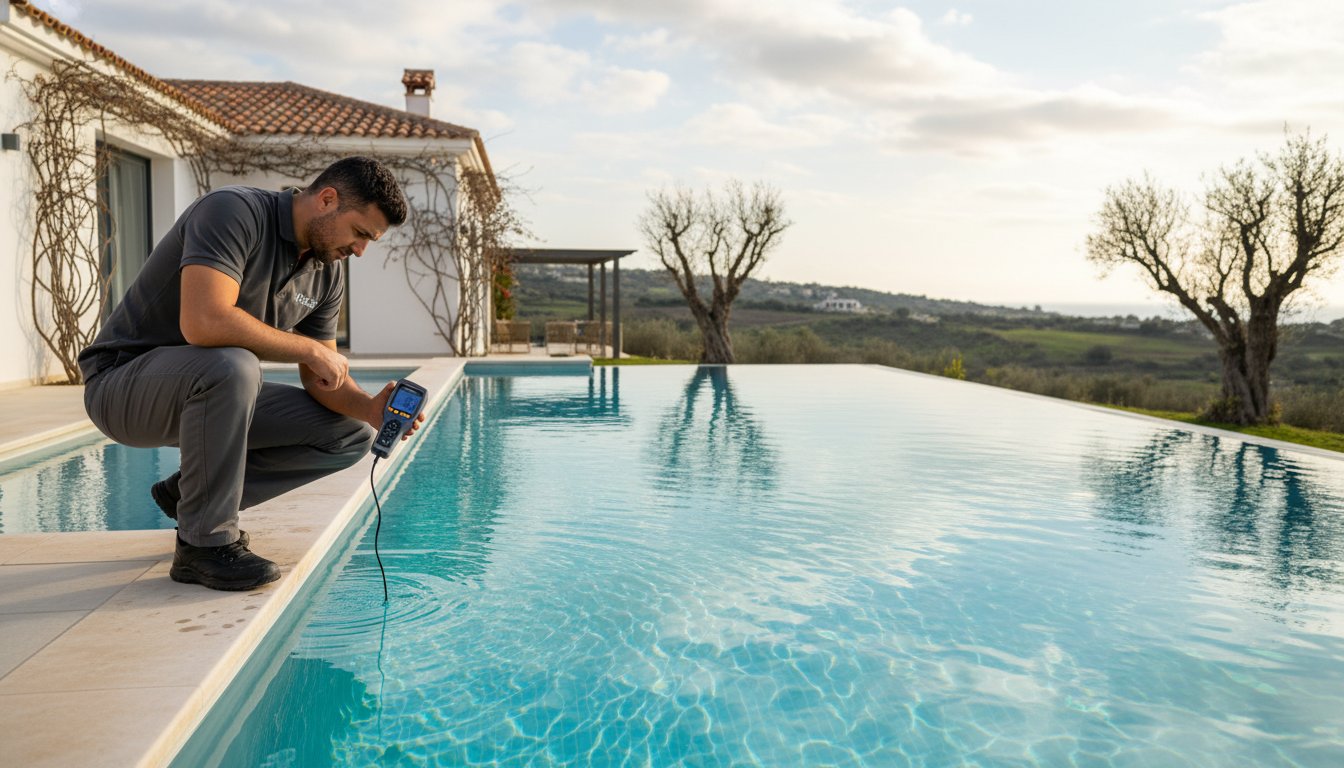
Turning your pool pump off for the winter is the single most expensive mistake a Paphos pool owner can make. It’s a tempting thought, isn’t it? With electricity costs on the rise, the idea of shutting everything down seems logical when you’re not swimming. You’ve likely heard this advice from well-meaning neighbours, but this common misconception can lead to thousands of Euros in damage from black algae infestation and equipment failure come spring, especially with debris blowing in from the hills.
This guide is designed to provide professional peace of mind. We’ll deliver the definitive, PHTA-certified strategy for the winter pool care Paphos residents need, showing you exactly how to protect your liner and pump, prevent stubborn algae, and actually reduce your winter energy consumption by up to 60% without shutting down completely. We’ll walk you through a step-by-step maintenance schedule, explain the correct chemical balancing for cooler temperatures, and reveal the optimal pump running times to keep your pool crystal-clear and ready for the first warm day of 2026.
Key Takeaways
- Discover why the unique Paphos climate demands an “active winter” strategy, not a traditional closure, to protect your pool from local environmental challenges.
- Implement a professional maintenance schedule to significantly reduce your winter energy costs while ensuring your equipment remains in peak condition.
- Understand how to prevent costly damage to your pool’s liner and plumbing by learning the professional techniques for off-season infrastructure protection.
- Master the key differences between casual maintenance and professional winter pool care Paphos to safeguard your investment and avoid expensive springtime surprises.
Understanding the Paphos Winter: Why Your Pool Can’t Just Be Ignored
Many homeowners who move to Cyprus from Northern Europe mistakenly believe they can “close” their pool for winter. This involves draining equipment, adding potent chemicals, and sealing it with a heavy-duty cover for 5-6 months. In Paphos, this approach is not just ineffective; it’s a direct path to costly damage. Our mild, humid winters demand a different strategy. A Cyprus pool never truly sleeps. Instead, it enters an “Active Winter” state, a period of reduced use but ongoing chemical and biological activity that requires professional oversight.
The myth of the “off” switch is perhaps the most dangerous misconception in local pool ownership. Simply turning off the pump and filtration system from November to March to save on electricity is a false economy. Stagnant water is a breeding ground for bacteria and algae. More critically, it can lead to seized pump motors and damaged seals. We regularly see homeowners faced with spring repair bills exceeding €1,000 for green pool recovery, shock treatments, and equipment replacement, all of which could have been avoided with a proper maintenance schedule. Effective winter pool care Paphos homeowners can rely on starts with understanding this unique climate.
Our environment presents specific challenges. The strong winds, particularly those sweeping down from the Akamas peninsula, deposit a constant stream of dust, leaves, and agricultural debris into your pool. This organic matter is a chemistry killer. It rapidly consumes free chlorine, creating the perfect nutrient-rich environment for algae to thrive. Furthermore, Paphos’s temperature fluctuations are deceptive. A sunny 19°C day in January provides more than enough warmth and UV light to trigger an algae bloom in a pool where chemical levels have been allowed to drop. Ignoring these fundamental pool sanitation principles during winter guarantees a green, expensive problem in the spring.
The Paphos Microclimate and Your Pool
Paphos isn’t a single climate. Coastal properties experience higher humidity, which can affect water chemistry, while hillside homes in areas like Peyia or Tala face stronger winds and more debris. Winter rains, with an average pH of 5.6, consistently dilute your pool’s chemicals and lower its Total Alkalinity, making the water corrosive and pH levels unstable. This is why a “set it and forget it” approach with a simple timer fails during the Cypriot rainy season.
Common Winter Risks for Cyprus Pools
Beyond a simple green pool, two specific threats emerge in winter. Black algae, a silent invader, can take root in plaster and grout during periods of low sanitation and is notoriously difficult and expensive to eradicate. Secondly, cold water chemistry makes balancing calcium levels more complex. Improper pH management in cooler water can lead to calcium scaling on surfaces and, more critically, inside your heater and filtration equipment, reducing efficiency and lifespan.
The Paphos Winter State is best defined as a period of low-intensity biological activity requiring consistent monitoring, not a complete shutdown of your pool’s systems.
The Professional Winter Maintenance Schedule for Paphos Homeowners
Effective winter pool care Paphos homeowners can rely on goes beyond simply reducing chlorine. It’s a structured, proactive schedule designed to protect your investment, save significant money on electricity, and ensure a seamless start to the swimming season. At The Pool People, we’ve refined this process based on decades of experience with the unique Cypriot climate. This isn’t just about surviving the winter; it’s about setting your pool up for excellence in the spring.
Optimizing Pump Run-Times for 2026
Your pump is the heart of your pool, but it’s also a major energy consumer. In winter, you can dramatically cut its run-time without sacrificing water quality. We recommend the “4-hour rule” for most residential pools in Paphos: running your pump for just four hours a day is sufficient to circulate the water and prevent stagnation. This simple adjustment can slash your pool’s electricity consumption by up to 60% compared to summer settings. For even greater efficiency, a variable speed pump allows for longer circulation at an extremely low speed, offering superior filtration for a fraction of the cost. A critical local tip: avoid running your pump only at night. While electricity tariffs may be lower, the coldest pre-dawn hours in January and February bring a risk of frost, and circulating water is your best defense against frozen, cracked pipes.
Winter Chemistry: The Cold Water Formula
Cold water chemistry behaves differently. While you’ll use significantly less chlorine, with no swimmers and lower UV exposure, your pH levels require more vigilant monitoring. Colder water can cause pH to rise, which reduces your chlorine’s effectiveness. We advise testing and adjusting your pH levels every 1-2 weeks to keep them stable between 7.2 and 7.6. Before winter sets in, it’s also crucial to treat the water with a phosphate remover. Phosphates are algae’s primary food source, and eliminating them now prevents a “green pool” surprise when the water warms up in March. Finally, using a copper-free, winter-specific algaecide provides a protective barrier, ensuring your water remains crystal clear and algae-free until spring.
After the strong winds and rain that often sweep through Paphos in winter, your pool’s “Debris Defense” becomes a top priority. Within 24 hours of any storm, it’s essential to empty your skimmer and pump baskets. A clogged basket restricts water flow, putting immense strain on your pump motor and potentially leading to costly damage. A well-fitted pool cover is an invaluable tool here, not only keeping debris out but also helping to reduce pool heating costs and chemical evaporation, as confirmed by energy experts.
Finally, institute a monthly “Deep Check” to catch small issues before they become major problems. This is a habit that provides true peace of mind. Once a month, perform a slow, deliberate walk around your pool, looking for:
- Water Level: A consistent drop of more than 5cm a month could indicate a leak.
- Equipment Integrity: Listen for any new or unusual noises from the pump motor, like grinding or high-pitched whining.
- Surface Condition: Check for any new cracks in the pool’s plaster or tile, or any tears in the liner.
Identifying a potential leak is the first step; accurately locating it requires professional expertise. If you suspect an issue, our certified technicians can perform advanced, non-invasive leak detection to protect your property and your pool’s structural integrity.
Protecting Your Infrastructure: Liners, Pumps, and Leak Detection
Proper winter pool care is about more than just water chemistry; it’s a crucial period for safeguarding the very structure of your investment. Your pool’s liner, pump, and plumbing are its skeleton and heart. The mild but humid Paphos winter presents unique challenges that can turn minor issues into expensive springtime repairs. Protecting this core infrastructure now ensures your pool is ready for enjoyment, not emergency maintenance, when the sun returns.
Even a small, unnoticed drip can become a major problem over several months of reduced use. As the ground shifts with winter rains, a tiny leak can expand, compromising the pool shell and leading to significant water loss and repair bills potentially exceeding €1,500. This is why proactive infrastructure checks are non-negotiable.
Liner and Surface Care
Your pool liner’s health is directly impacted by winter conditions. Once water temperature drops below 18°C, a vinyl liner loses a significant amount of its elasticity, making it more brittle and susceptible to punctures. To prevent “Winter Staining,” especially from fallen leaves from olive or carob trees, it’s vital to brush the pool floor and walls weekly. This prevents tannins from leaching into the liner and causing stubborn brown stains. Critically, you must maintain the water level at least halfway up the skimmer opening. Allowing it to drop lower exposes the liner to air, causing it to dry out, shrink, and develop wrinkles that can become permanent weak points.
Look for these signs that you may need a professional liner inspection before the 2026 season: visible bleaching or fading above the waterline, any small tears (especially around steps or fittings), or a liner that feels stiff and brittle. If your liner is already 8-10 years old, it’s approaching the end of its typical lifespan in Cyprus’s high-UV climate.
Equipment Longevity in the Mediterranean Climate
Your pump and filter are constantly exposed to the corrosive effects of Paphos’s humid, salty air. A simple visual and auditory check can prevent a complete system failure. Winter is the perfect time for this, as any required downtime won’t disrupt your swimming season. Use this checklist for a basic inspection:
- Corrosion Check: Look for any rust or white, chalky residue on the pump motor’s metal housing.
- Auditory Test: Listen for any grinding or high-pitched whining noises, which often signal failing motor bearings. A healthy pump should produce a consistent, low hum.
- Seal Inspection: Check that all O-rings and seals are pliable and free of cracks. A perished seal is a common source of air and water leaks.
- Pressure Gauge: Ensure the filter’s pressure gauge reads zero when the pump is off and holds a steady reading when running.
The off-season is also the ideal time for a filter media change. The sand in your filter becomes less effective after 3-5 years, while superior glass media lasts 7-10 years. A change ensures your filtration is at peak efficiency for the start of the next season. For complete confidence, our “Peace of Mind” audit provides the most thorough approach to winter pool care Paphos homeowners can get. A certified technician inspects the entire circulation system, verifies the safety of all electrical connections, and pressure-tests the plumbing to detect micro-leaks invisible to the naked eye. It’s the ultimate guarantee that your pool’s core systems are protected and ready for another year of flawless performance.
Energy Efficiency: Saving Money While Maintaining Quality
Effective winter pool care in Paphos isn’t just about maintenance; it’s a strategic opportunity to reduce your annual running costs significantly. By making smart decisions during the cooler months, you can enhance your pool’s efficiency, extend your swimming season, and see a tangible return on your investment when summer returns. It’s about working smarter, not harder, to achieve that crystal-clear water while keeping your utility bills in check.
The single biggest drain on your pool’s budget is often an outdated, single-speed pump. These traditional pumps run at one constant, high speed, consuming a tremendous amount of electricity. Think of it as driving your car everywhere in first gear. A modern Variable Speed Pump (VSP), by contrast, operates at lower speeds for longer filtration cycles. This simple upgrade can slash your pump’s energy consumption by up to 80%. For an average residential pool in Paphos, this translates into direct savings of €400 to €600 per year, meaning the pump often pays for itself in less than three years.
Another powerful tool for efficiency is a high-quality winter pool cover. Its benefits are threefold:
- Reduced Evaporation: A cover can prevent up to 95% of water evaporation, saving you thousands of litres of water and the cost of refilling.
- Heat Retention: It acts as a thermal blanket, retaining up to 75% of the heat your pool absorbs from the sun, which is crucial if you use a heat pump.
- Chemical Savings: By blocking UV rays and preventing debris from entering the water, a cover reduces chlorine consumption by 30-50%.
The Salt Water Dilemma in Winter
Many Paphos pool owners with salt water chlorinators notice a “Low Salt” or “Low Temp” error once the water temperature drops below 15°C. This is normal. The electrolysis process that creates chlorine becomes highly inefficient in cold water. Your system shuts down to protect its expensive salt cell. During these coldest months, you must switch to manual chlorination to keep the water sanitized. This is also the perfect time to have your salt cell professionally cleaned to prevent calcium buildup.
Winter Upgrades for Spring Savings
The off-season is the most intelligent and cost-effective time to upgrade your pool’s equipment. With lower demand, scheduling professional installations for new VSPs or energy-efficient LED lighting is easier and often more affordable. Investing in a solar cover during winter ensures you’re ready to capture the free heat from the spring sun, allowing you to comfortably swim as early as April. While planning, it’s wise to ensure your pool is structurally sound. Our team provides Expert Pool Leak Detection Services in Paphos to identify any hidden issues before you invest in new hardware.
By focusing on these key areas, your approach to winter pool care Paphos transforms from a seasonal chore into a smart financial strategy. To get a personalised energy-saving audit for your pool and discuss the best winter upgrades, contact The Pool People today for a professional consultation.
Professional Care vs. DIY: Choosing the Right Strategy for Your Villa
As winter approaches, many Paphos homeowners face a critical decision: manage the pool themselves, hire a casual “pool boy,” or engage a professional service. While the allure of a quick €50 cash-in-hand service is strong, this approach often overlooks the complex science of winter pool maintenance, leading to costly problems when you’re ready to swim again in spring.
The casual cleaner focuses on the visible; they’ll scoop leaves and add a dose of chlorine. What they almost always miss are the critical preventative checks. They don’t test for subtle pH shifts caused by heavy winter rains, inspect pump motor seals for wear, or ensure the filtration system is protected from the cold. This oversight can result in stained plaster, seized equipment, and a frustratingly green pool come April, transforming a small saving into a significant repair bill.
For those managing communal pools in Paphos apartment complexes or villa developments, the stakes are even higher. Management committees have a legal duty of care to ensure the pool area is safe year-round, even when not in use. Improperly balanced water and unsecured equipment pose a genuine liability risk. Professional winter pool care Paphos isn’t just about maintenance; it’s about compliance and protecting your community’s investment.
Why Certification Matters (PHTA/NSPF)
There is a fundamental difference between “cleaning” and engineering-led maintenance. Our technicians are CPO® (Certified Pool Operator) qualified through the Pool & Hot Tub Alliance (PHTA), the world’s leading educator for pool professionals. This isn’t a simple online course; it’s an intensive program covering water chemistry, filtration hydraulics, and critical safety protocols. This expertise ensures your rental property or communal complex meets the highest safety standards, giving you and your guests total peace of mind.
The Pool People: Your Paphos Winter Partners
We believe professional pool care should be a partnership, not just a service. Our “Peace of Mind” winter maintenance packages are fully customisable to your property’s specific needs. Whether you require a simple monthly check-up to ensure chemical balance and equipment function, or a comprehensive full-service management plan, our CPO-certified team provides a level of technical oversight that casual cleaners simply cannot match. We protect your pool through winter so it’s sparkling and ready the moment the sun returns.
Protect your investment this winter. We offer free, no-obligation winter consultations for all residents in Peyia and the greater Paphos area to assess your pool’s specific needs.
Request a Winter Maintenance Quote
Ensure a Flawless Spring: Your Next Steps for Pool Protection
Your swimming pool is a significant investment. Neglecting it during the mild Cypriot winter can lead to liner damage and equipment failure that costs thousands of Euros to repair. A proactive maintenance plan is essential. It protects your pump and filtration systems and ensures your water remains perfectly balanced, preventing costly issues before they begin. For comprehensive year-round care strategies that complement your winter preparations, our ultimate guide to pool maintenance Paphos provides the complete technical framework for maintaining crystal-clear water throughout all seasons. Ultimately, a structured approach to winter pool care Paphos is the difference between a pristine pool and a costly problem come the 2026 season.
Just as a proactive plan protects your pool, the winter off-season offers a great opportunity to invest in your own wellbeing. Many find this is the perfect time to focus on health and fitness goals for the year ahead. For those inspired by a holistic approach, companies like Ultimate Personal Training AG provide a model for integrating training, nutrition, and recovery to ensure you’re also in peak condition when the warm weather returns.
Don’t leave your villa’s centrepiece to chance. As PHTA/NSPF Certified Pool Operators serving Paphos and Peyia since 2005, The Pool People deliver unparalleled expertise. We don’t just service pools; as the only CPO training provider in Cyprus, we set the standard for safety and quality. Entrust your investment to the professionals who train the industry and gain complete peace of mind.
Get Professional Winter Pool Care in Paphos Today and step into next season with a pool that is ready when you are.
Frequently Asked Questions About Winter Pool Care in Paphos
Can I turn off my pool pump in Paphos during the winter?
No, you should never turn your pool pump off for an extended period, even during the mild Paphos winter. Water circulation is essential for distributing chemicals and preventing the growth of algae and bacteria. Stagnant water can lead to costly problems that are difficult to fix in the spring. Instead of shutting it down completely, you should reduce the pump’s daily run-time to maintain a healthy and clear pool with minimal energy consumption, ensuring it’s ready for the first warm day.
How often should a pool be cleaned in Paphos during the winter months?
A pool in Paphos should be professionally cleaned at least once every two weeks during winter, or weekly if you have heavy leaf fall. Regular cleaning involves skimming surface debris, emptying skimmer and pump baskets, and brushing the walls. This routine prevents organic matter from staining your pool surfaces and consuming your sanitiser. Consistent cleaning is a cornerstone of effective winter pool care in Paphos, protecting your investment and ensuring a simple spring opening.
Why is my salt chlorinator showing an error message in December?
Your salt chlorinator is likely showing an error because the water temperature has dropped below its operational threshold, typically around 15°C. Most modern salt cells automatically shut down in cold water to prevent damage to the electrode plates. This is a normal protective feature, not a fault. You will need to manually supplement your pool with liquid or granular chlorine during these colder periods to maintain proper sanitation levels until the water warms up again in spring.
Does my Paphos pool need a cover during the winter?
Yes, a winter cover is a highly recommended investment for any Paphos pool. A quality cover can reduce water evaporation by up to 95% and cut chemical consumption by 30-50% by blocking UV rays. It also significantly reduces the amount of leaves, dust, and debris entering the pool, which means less cleaning for you. Using a cover is the most effective way to keep your pool clean, safe, and cost-effective through the off-season, offering you complete peace of mind.
How do I prevent black algae from forming in my pool this winter?
You prevent black algae by maintaining consistent water chemistry and circulation. Ensure your free chlorine level stays between 1.0 and 3.0 parts per million (ppm) and brush the pool walls and floor weekly, even in areas that look clean. Using a high-quality, copper-based preventative algaecide at the start of the season adds another layer of protection. This proactive approach is far more effective and less expensive than treating a stubborn black algae outbreak in the spring.
Is it cheaper to maintain a pool in winter or let it go green and fix it later?
It is significantly cheaper to maintain your pool through the winter. A basic winter maintenance plan may cost between €60 and €90 per month. In contrast, a full “green-to-clean” recovery service in the spring can easily cost over €400, not including the potential cost of repairing equipment damage or acid washing stained surfaces. Consistent winter care protects your pool finish and equipment, saving you hundreds of euros and significant hassle when swimming season returns.
What is the ideal pump run-time for a pool in Paphos during January?
The ideal pump run-time for a Paphos pool in January is between 4 to 6 hours per day. Colder water and less sun exposure mean you need less filtration and chemical production compared to the summer. To optimise energy savings and chemical distribution, we recommend splitting this run-time into two separate cycles; for example, one 3-hour cycle in the morning and another in the afternoon. This ensures the water is consistently circulated without excessive electricity costs.
Should I drain my pool if I am leaving Paphos for the winter?
No, you should absolutely not drain your pool for the winter. An empty pool in Cyprus is vulnerable to serious structural damage. Hydrostatic pressure from groundwater, especially after heavy winter rains, can lift or “pop” the entire pool shell out of the ground, leading to catastrophic and expensive repairs. The plaster or liner is also susceptible to cracking and damage from direct sun exposure. It is always safer and more cost-effective to leave the water in and maintain it properly.



Leave A Comment